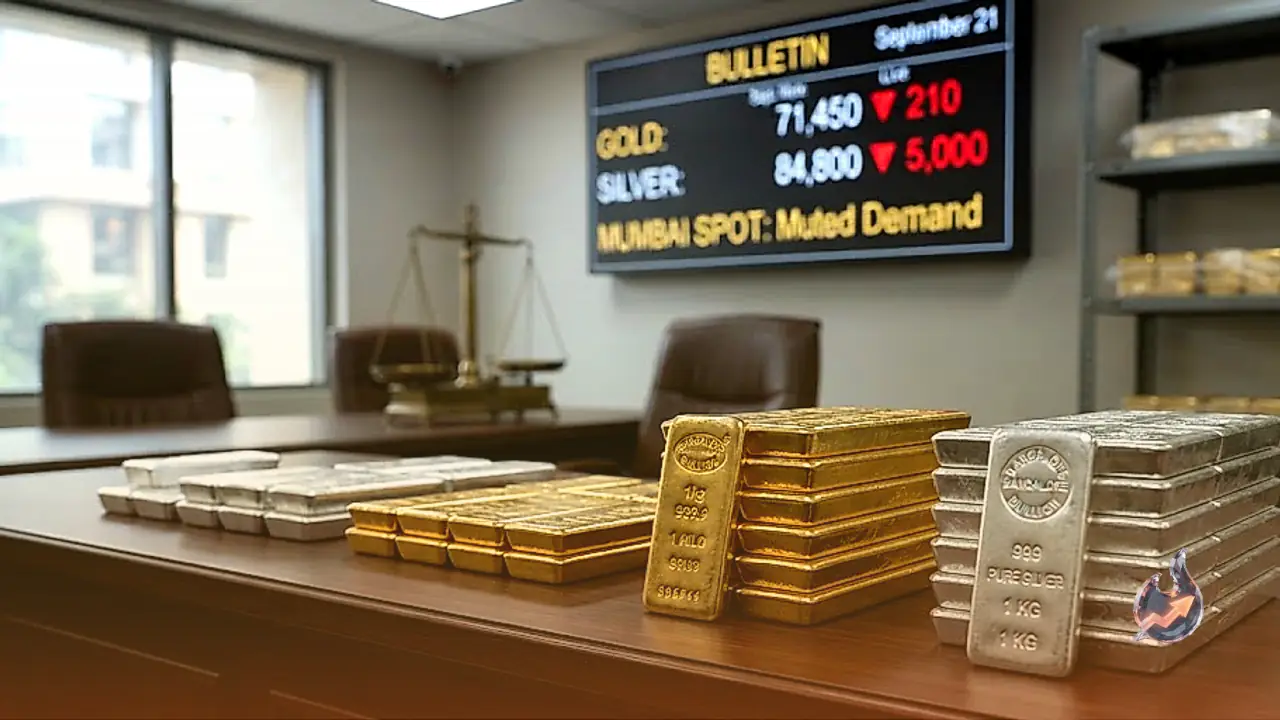

























Precious metals faced another wave of intense selling pressure on February 18 as domestic silver prices extended their steep downward spiral. The cost of 1 kilogram of silver plunged by Rs 5,000 to settle at Rs 2.55 lakh across several major retail hubs. Smaller weight categories mirrored the downward movement in equal proportion. Retailers marked 100 grams of silver down by Rs 500 to Rs 25,500, while 10 grams dropped by Rs 50 to trade at Rs 2,550. For smaller bar and coin purchases, 8 grams slipped by Rs 40 to Rs 2,040, and single gram prices trimmed Rs 5 to settle at Rs 255.
The Steep Rs 40,000 Crash Over Six Sessions
The latest single-day cut is part of an ongoing multi-session selloff that has drastically eroded the metal's valuation in less than a week. Just a day prior on February 17, 1 kilogram of silver plummeted by Rs 8,000, which followed a significant decline of Rs 7,000 recorded on February 16. The weakness was equally pronounced late last week: prices dropped by Rs 5,000 on February 14 immediately after a massive collapse of Rs 15,000 on February 13. Taken together, silver has shed an astonishing Rs 40,000 per kilogram across the past six trading days, catching short-term buyers off guard and shaking confidence in the physical retail market.
Current Pricing Trends Across Major Indian Metros
Regional variations continue to shape retail billing across the country depending on local supply dynamics, warehousing expenses, and transportation. In leading commercial centers including Mumbai, Delhi, Kolkata, Pune, Ahmedabad, and Bengaluru, 1 kilogram of silver stood firmly at Rs 2.55 lakh on February 18. Conversely, southern states continue to price the metal at a mild premium. Across Chennai, Hyderabad, and throughout Kerala, silver traded at Rs 2.60 lakh per kilogram, maintaining a consistent Rs 5,000 premium over northern and western domestic centers.
COMEX Technical Picture and Global Triggers
Weighing in on the international trajectories, Ponmudi R, CEO of Enrich Money, provided an in-depth breakdown of prevailing market structures. On the global COMEX exchange, silver has retreated to trade within the $73 to $80 zone, representing a substantial correction from its historic all-time highs above $121 per ounce. While higher timeframes still reflect an intact broader bullish architecture, the aggressive drop has pulled prices below pivotal moving averages. This shift underscores clear short-term bearish momentum and points to an extended corrective phase before any meaningful recovery can take shape.
Technically, a crucial demand cushion is situated in the $65 to $70 support band, which aligns directly with historical swing lows and long-term trend support. If the asset successfully defends this structural foundation and manages a breakout and close above the $85 to $92 barrier, upside momentum could resume toward target ranges of $95 to $105, opening the door for a potential retest of record peaks. Over the medium to long horizon, the broader backdrop remains constructive, anchored by relentless industrial consumption and ongoing structural constraints in global supply, despite prevailing short-term volatility.
MCX Outlook and Trading Strategy
The domestic futures landscape on the Multi Commodity Exchange reflects a parallel technical setup. MCX silver contracts are oscillating within the Rs 2,30,000 to Rs 2,70,000 band, pulling back dramatically from historic record levels registered near Rs 4,20,000. Much like its international counterpart, the long-term bullish trend remains valid, but the velocity of the recent drop has forced contracts below key moving averages, signaling persistent corrective headwinds in the near term.
Substantial dip-buying interest remains anchored around the Rs 2,25,000 to Rs 2,35,000 support band, a zone bolstered by prior structural floors and intermediate swing lows. A solid defense of this territory, accompanied by a decisive rebound, could re-energize bullish momentum toward the Rs 3,00,000 to Rs 3,25,000 targets. For positional market participants, pullbacks toward these defined support levels may offer calculated accumulation opportunities. However, an outright breakdown beneath this support base could trigger accelerated liquidation, extending the ongoing corrective phase further into uncharted lower bounds.