





















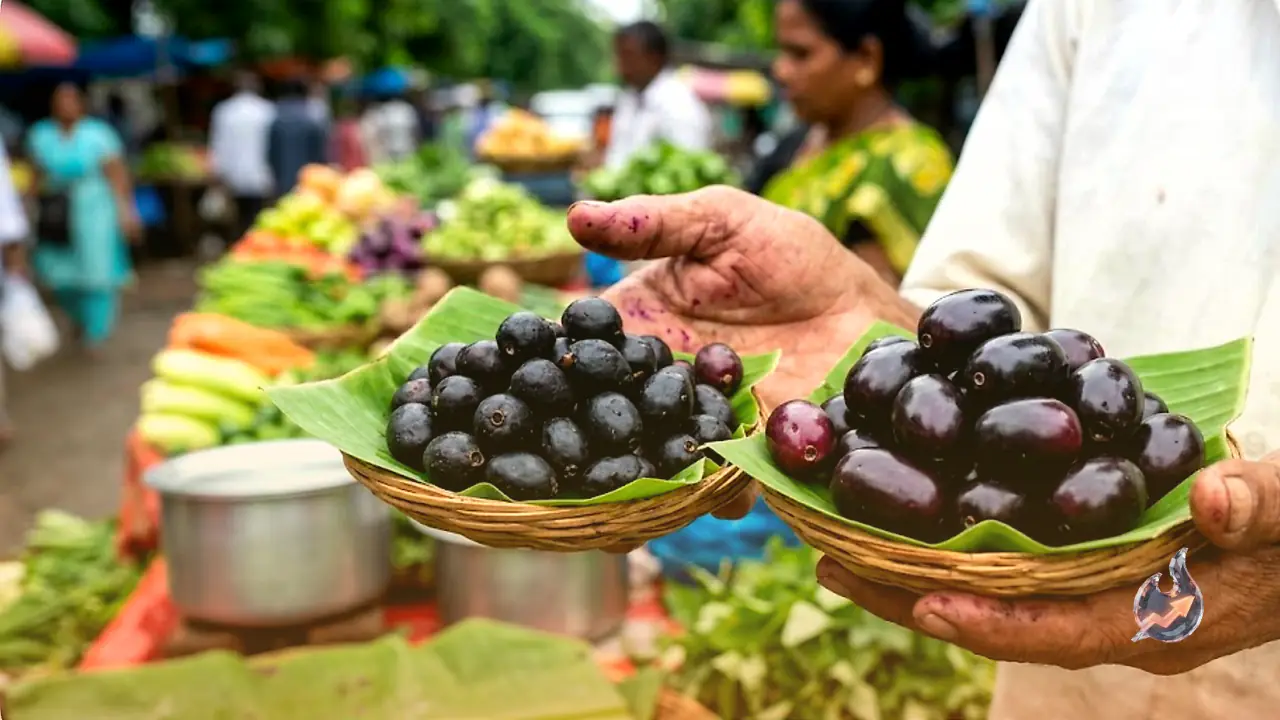

The moment the first monsoon showers arrive, fruit markets fill up with heaps of dark, purplish jamun. Ayurveda treats this little fruit as a powerful medicine, and for people managing diabetes it is considered nothing short of a blessing. But here is the catch: not every big, glossy jamun on display is as good for your health as it looks.
In the rush for profit, markets are now flooded with hybrid jamun and fruit ripened using chemicals. Shoppers are drawn to the large size and shine and pick them up, but these lack the real medicinal strength of true desi jamun. The compound called Jamboline found in jamun helps keep blood sugar in check, and it is this element that defines a genuine desi fruit.
So to avoid being fooled next time, keep these five easy tests in mind. They let you spot the difference between desi and hybrid jamun in just a few minutes.
1. Look at the size and shape
Desi jamun is usually small to medium in size. It is not perfectly round or uniformly shaped; instead it can look slightly uneven or oval. Hybrid jamun, by contrast, is noticeably larger, and the fruits all look identical, perfectly plump and as big as grapes or ber.
2. Natural finish versus artificial shine
The skin of desi jamun has a soft, lightly velvety, matte tone. It does not feel overly sticky or oily to the touch. Hybrid or long-stored jamun, on the other hand, is often sprayed with wax or chemicals to make it look attractive, which leaves it excessively glossy and waxy.
3. The taste test is the surest sign
This is the most reliable method. When you eat desi jamun, sweetness comes mixed with a mild sourness and an astringent edge that makes your tongue and palate feel slightly tight. Hybrid jamun, however, is either only sweet or completely bland like water, with that traditional astringency missing altogether.
4. The pulp to seed ratio
Cut a jamun in half or bite into it. In desi jamun the seed is larger and the layer of pulp around it is fairly thin. Hybrid jamun is engineered so that it carries plenty of thick pulp while its seed stays very small.
5. Tongue colour and the water test
After eating desi jamun, your tongue turns deep purple, and that stain lasts for several hours. Also, if you rinse desi jamun in water, the water will not change colour. But if a hybrid jamun has been coated with artificial colour, it will start bleeding that colour the moment you drop it into water.
Why desi jamun matters for your health
According to health experts and Ayurveda practitioners, the Jamboline present in jamun helps control blood sugar, and it is found in abundance in the desi fruit and its seed. Hybrid jamun holds more water and very little medicinal value. So the next time you head to the market, do not fall for size alone; choose the small but potent desi jamun for the sake of your health.