






















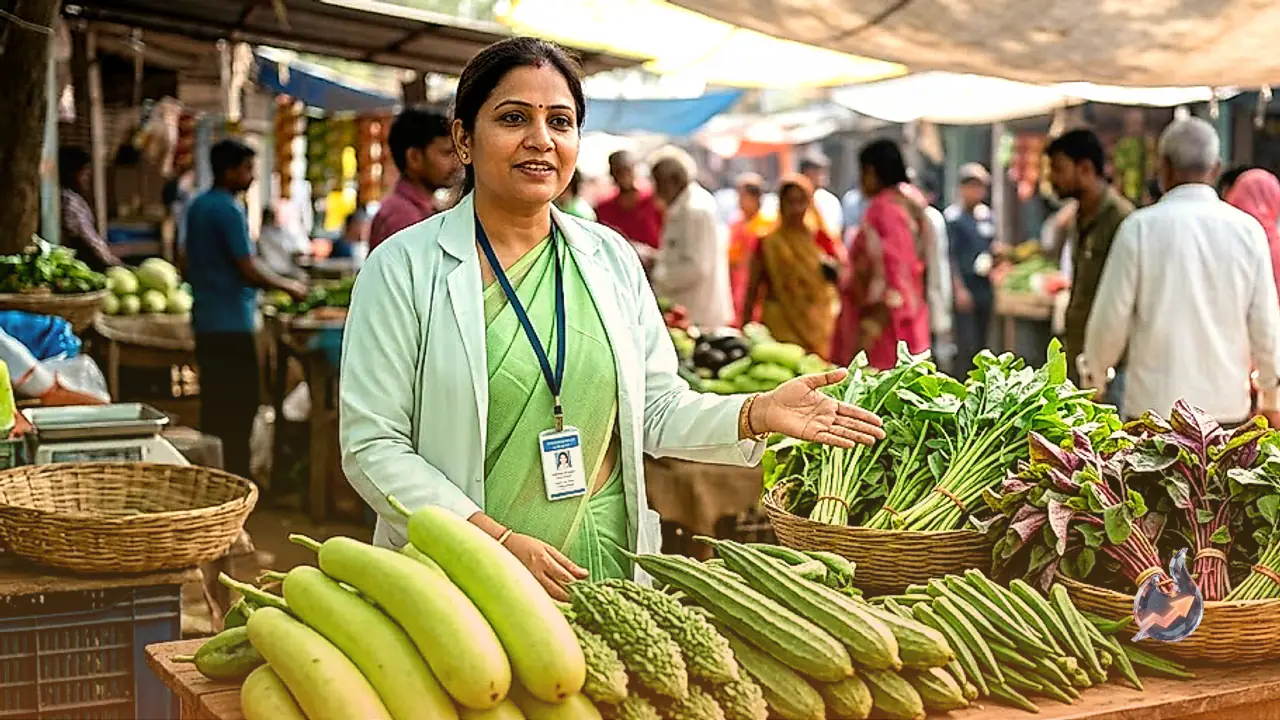

A small shift in weather is often enough to trigger colds, stomach upsets and a string of other health complaints, and much of the blame lies with how our eating habits change along with it. Dietitian Jyoti Singh from Mirzapur says that picking the right vegetables for the plate can significantly cut the risk of falling sick when the season turns.
Why seasonal eating matters
Singh follows a simple rule she sums up as eat regional, eat seasonal, choosing vegetables that grow locally and in the current season. She says people who make this their guiding principle tend to stay largely free of illness through the changing weather, and sickness stops bothering them.
The benefits of bottle gourd, ridge gourd and bitter gourd
According to Singh, bottle gourd is an excellent way to keep the body cool during this season. Alongside it, vegetables such as sponge gourd, ridge gourd, bitter gourd, okra and amaranth greens are currently available in the market, and she describes all of them as being as good as nectar for the body. She adds that eating these regional, seasonal vegetables is extremely beneficial for keeping the body healthy, for weight loss, and for keeping blood sugar levels under control.
Who should stay away from amaranth greens
Singh also flagged an important caution. She explained that amaranth greens contain a high amount of sodium, so anyone with blood pressure problems or a kidney related condition should avoid it. Bottle gourd, okra, bitter gourd, ridge gourd and bell pepper, on the other hand, are vegetables that any patient can eat without concern.
Safe even for kidney patients
Singh made clear that even kidney patients, who typically need to be the most cautious about what they eat, can safely consume these vegetables. That means they too can add these to their diet without hesitation. She says these vegetables prove especially valuable during changing weather: eating them not only strengthens the body's immunity but also lowers the chances of developing any kind of health problem. That is precisely why these vegetables are considered evergreen, useful in every season.