


















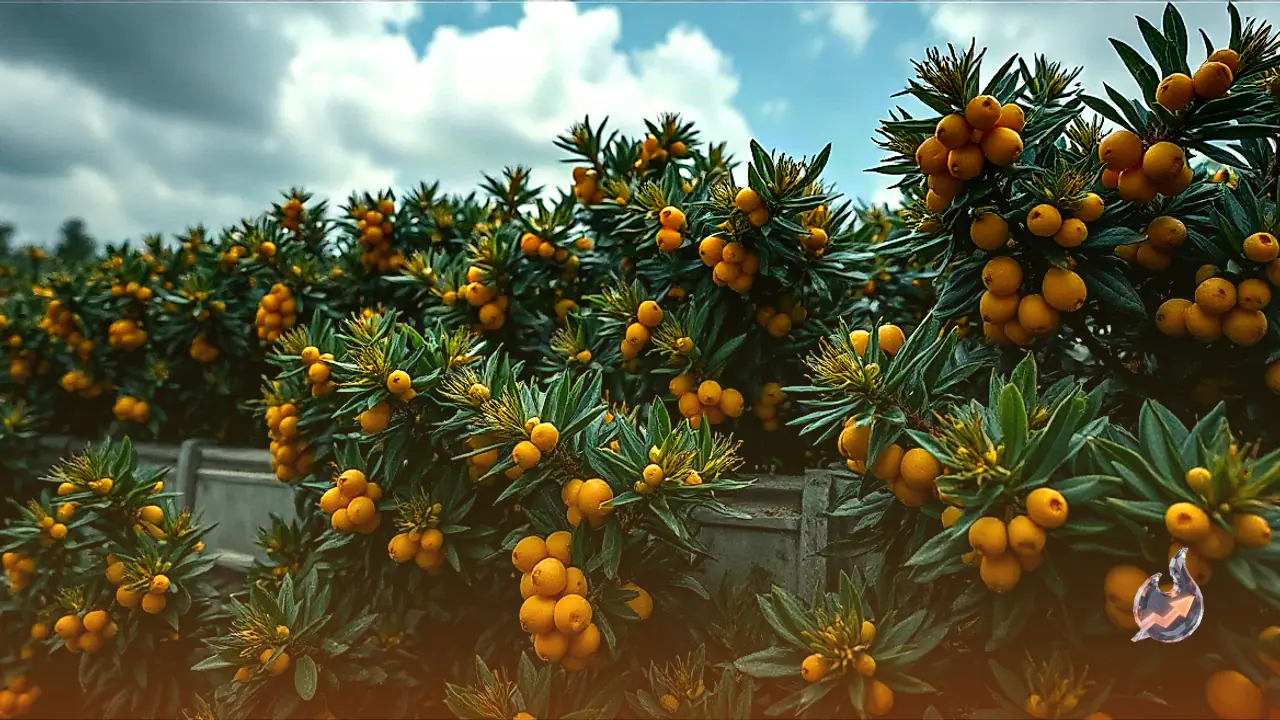

An evergreen shrub bearing vibrant clusters of small yellow berries is a common sight along boundaries of residential homes, temples, schools, parks, and public roadsides. Widely known as Duranta (Duranta erecta), this plant is primarily cultivated for landscaping and hedge framing. However, traditional folk medicine has long utilized its leaves for topical applications. According to Gonda-based Ayurvedic practitioner Jamuna Prasad Yadav, Duranta thrives year-round with minimal maintenance, offering both natural security and aesthetic charm. Despite its decorative and traditional appeal, experts warn that the plant requires careful handling, as its bright berries carry toxic properties.
Botanical Features and Environmental Contribution of Duranta
Duranta is a bushy, evergreen shrub that typically reaches a height of 4 to 8 feet. It is characterized by small, smooth, deep green leaves. During the rainy and winter seasons, the shrub produces delicate flowers in shades of purple or light blue. Once these blossoms fade, they give way to hanging clusters of tiny, round, yellow fruits that closely resemble shiny beads or pearls.
In regions like Gonda, urban planners and residents plant Duranta extensively along government office compounds, parks, educational institutions, and garden perimeters. Beyond its ornamental value, the shrub offers practical ecological benefits. Its dense foliage acts as a natural air filter by trapping airborne dust particles. Furthermore, its flowers attract bees and butterflies, thereby supporting local biodiversity and pollination.
Traditional Folk Applications of Duranta Leaves
Practitioner Jamuna Prasad Yadav highlights that traditional folk remedies often involve grinding fresh Duranta leaves into a smooth paste. This herbal paste is applied topically to soothe minor skin irritations, itching, mild burns, small surface wounds, and insect bites. Applying the crushed leaf mixture provides a cooling sensation and temporary relief to affected areas.
In rural communities, people also use the leaf paste to alleviate localized pain and mild swelling. However, Jamuna Prasad Yadav emphasizes that these remedies stem strictly from traditional folk practices rather than validated clinical treatments. They should never replace professional medical care. In instances of deep cuts, severe inflammation, or bacterial infection, consulting a qualified physician is essential.
Toxicity Warnings and Safety Precautions
While the Duranta shrub enhances outdoor aesthetics, its attractive fruit poses significant health risks. Practitioner Jamuna Prasad Yadav cautions that the small yellow berries are toxic. Ingesting these berries can trigger severe gastrointestinal symptoms, including acute stomach pain, nausea, vomiting, and diarrhea.
Consequently, households must ensure that young children and domestic pets are kept away from the plant's fruits. Ayurvedic expert Jamuna Prasad Yadav stresses that no botanical remedy should be administered without accurate identification and expert guidance. Relying solely on unverified folk beliefs for health conditions can lead to adverse outcomes, making professional medical consultation imperative for any skin or systemic ailment.