





















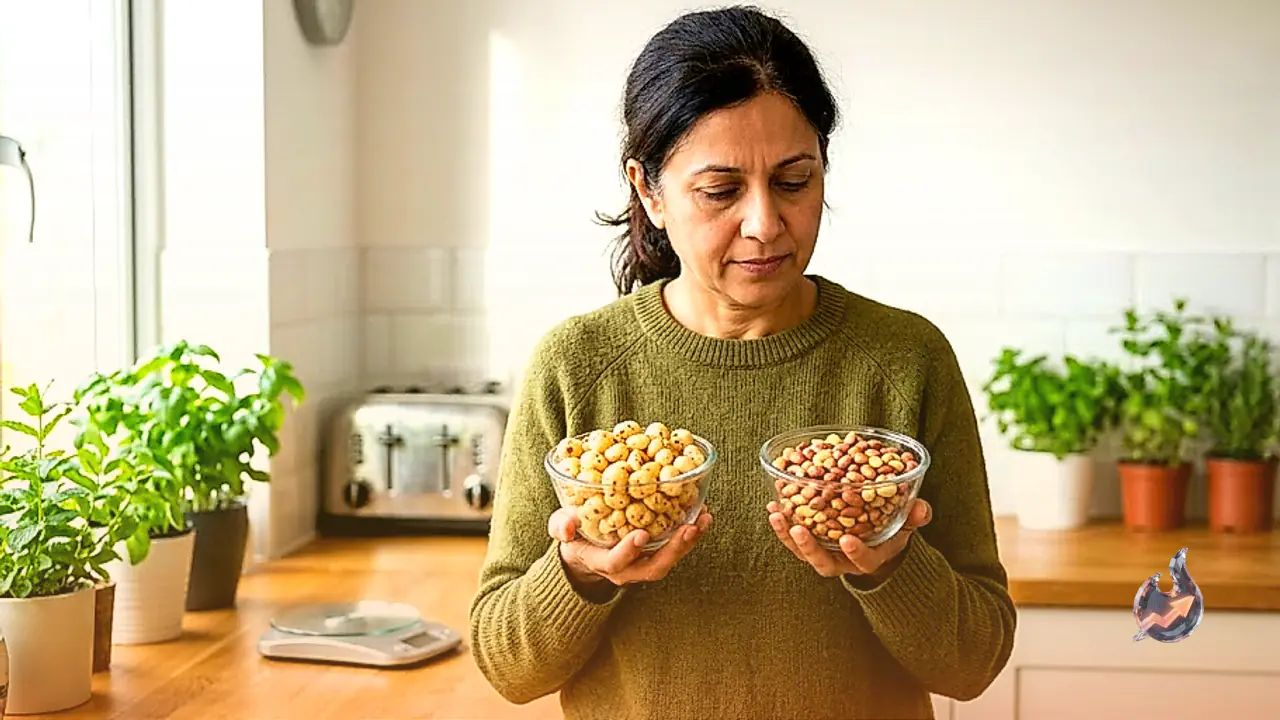

Managing unscheduled hunger pangs remains one of the greatest challenges during a weight loss journey. When cravings strike between meals or in the late afternoon, most individuals search for nutritious options that satisfy hunger without causing a caloric surplus. In Indian households, peanuts and makhana (fox nuts) are the two most trusted healthy snacks. While both offer impressive nutritional profiles, their roles in a structured weight loss plan differ significantly based on individual dietary goals.
Caloric Density and Portion Management
For individuals strictly tracking their daily caloric intake, makhana emerges as the more forgiving option. A full cup of plain roasted makhana contains significantly fewer calories than a small handful of roasted peanuts. Due to this lower caloric density, makhana allows for volume eating, helping individuals feel satisfied visually and physically without overshooting their energy budget. Conversely, peanuts are energy-dense. Even a modest increase in peanut consumption can rapidly elevate total daily calories, making precise portion control essential.
Satiety and Digestion Dynamics
When it comes to keeping hunger at bay for extended periods, peanuts hold a clear advantage. They are packed with plant protein, healthy fats, and dietary fiber. This combination slows down the digestive process, supplying a continuous release of energy and preventing premature hunger. On the other hand, while makhana provides an immediate feeling of fullness, its lower fat and protein content means it digests much faster, which may lead to renewed appetite shortly after snacking.
Selecting the Right Snack for Your Lifestyle
Choosing between these two snacks largely depends on daily activity levels and routines. Individuals who engage in regular workout sessions, go to the gym, or experience long gaps between primary meals benefit more from measured portions of peanuts, as the sustained energy aids recovery and wards off fatigue. Alternatively, for those seeking a light evening bite alongside tea or a guilt-free late-night option, oil-free roasted makhana serves as the ideal choice.
Integrating Both Snacks into a Balanced Routine
Dietary experts suggest that weight management does not require choosing one snack to the total exclusion of the other. Instead, combining both strategically yields optimal benefits. A small handful of dry-roasted peanuts can be consumed during the first half of the day or around physical activity. Later in the evening or night, plain roasted makhana can address light hunger. It is crucial to avoid roasting makhana in excess butter, ghee, or heavy sodium seasonings, as these additions neutralize its low-calorie advantage. Individuals should consult a certified dietitian or physician before making significant modifications to their dietary regime.