





















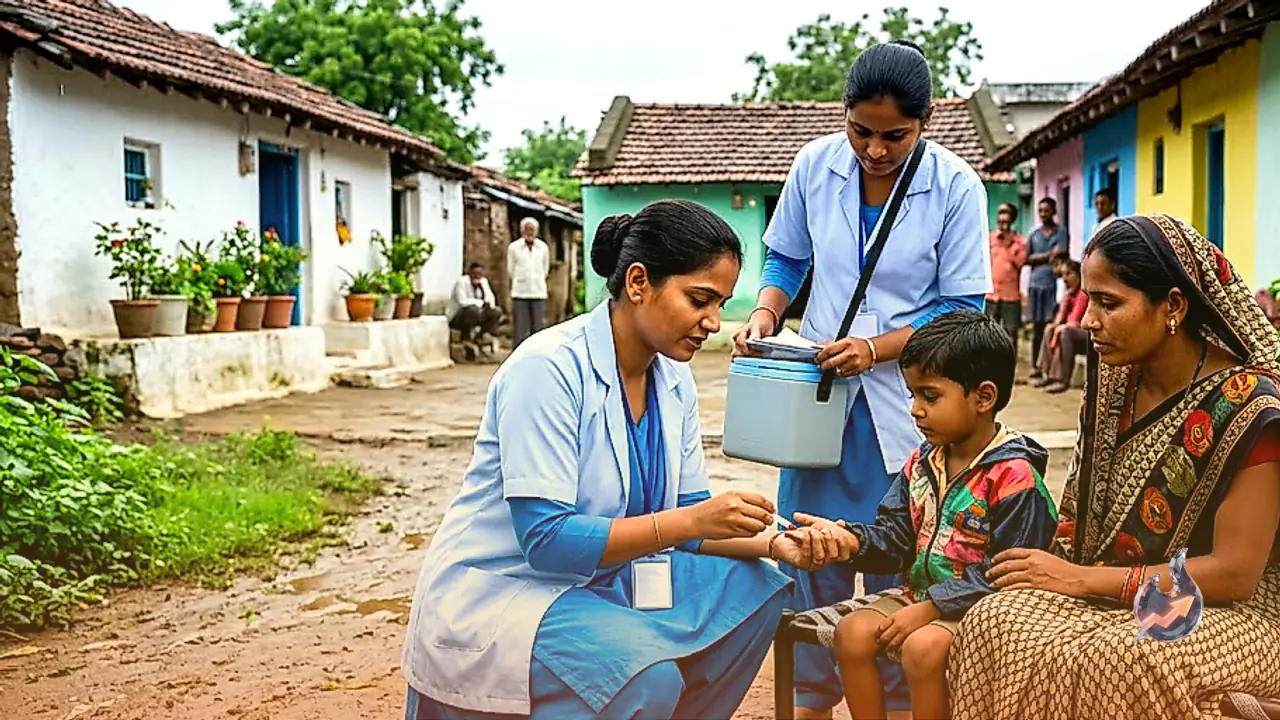

A serious health alert has been issued across Gujarat following a deadly outbreak of the rare Chandipura virus infection, which has claimed the lives of at least 22 children during the ongoing monsoon season. In response to the escalating crisis, Gujarat Health Minister Praful Pansheriya confirmed that state public health laboratories evaluated blood samples from 184 patients, including both suspected and clinical cases. Laboratory diagnostics confirmed positive Chandipura virus (CHPV) infection in 35 individuals. To contain further transmission and identify potential infections at the earliest stage, the Gujarat Health Department has intensified active door-to-door surveillance, rapid diagnostic testing, and field monitoring throughout all affected districts and high-risk rural pockets.
Understanding Chandipura Virus Pathogenesis and Its Impact on Children
Chandipura virus is an extremely dangerous and rare pathogen belonging to the Rhabdoviridae family of RNA viruses. Upon entering the human body, the virus directly targets the central nervous system, triggering Acute Encephalitis Syndrome (AES). This neurological condition causes acute and severe inflammation of the brain tissues, which can progress rapidly within hours, resulting in altered consciousness, convulsions, and high mortality rates if urgent medical intervention is not provided.
Epidemiological observations confirm that the disease primarily infects infants and young children under 15 years of age, specifically within the 0 to 14 years age bracket. This vulnerability is largely attributed to the developing and relatively weaker immune systems in pediatric patients. Medical experts emphasize that the pathogen attacks brain tissue directly. If healthcare teams detect the infection early before the virus invades deep brain structures, intensive supportive care can save the child's life. However, if viral destruction affects 60 to 70 percent of the brain tissue, reversing the neurological damage becomes extraordinarily difficult, leading to fatal outcomes in a high percentage of cases.
Historical Outbreaks and Geographic Expansion Since 1965
The Chandipura virus has a recorded history in India spanning over six decades. Epidemiologists first isolated the pathogen in 1965 from Chandipura village in the Nagpur district of Maharashtra, after which the virus derived its name. Initial clinical presentations resembled Dengue fever, featuring high fever, body aches, and joint discomfort. For several decades following its discovery, up until 2003, the medical community categorized Chandipura as a minor, low-threat seasonal virus that did not pose major public health risks.
That perception shifted dramatically in 2003 when a devastating outbreak hit Andhra Pradesh, resulting in the tragic deaths of 183 children. The following year, in 2004, Gujarat witnessed an outbreak that claimed 18 young lives. In 2005, the pathogen emerged in West Bengal, causing 49 pediatric fatalities. Following a period of sporadic occurrences, Gujarat suffered another severe resurge in 2024, during which 82 children succumbed to the infection. In the current year 2026, Gujarat has recorded 22 child deaths so far during the monsoon period, with at least 1 pediatric death reported in the urban hub of Ahmedabad. Since its discovery in 1965, documented cases and outbreaks have been recorded across several Indian states, including Maharashtra, Gujarat, Madhya Pradesh, Andhra Pradesh, Telangana, Odisha, and Bihar.
Transmission Dynamics: The Role of Sandflies and Mosquitoes
The transmission of Chandipura virus relies primarily on insect vectors, with sandflies acting as the primary carrier alongside certain mosquito species. The sandfly vector responsible for carrying CHPV is extremely tiny, measuring approximately four times smaller than the common housefly. Due to its microscopic dimensions, the insect is nearly invisible to the naked eye, allowing it to bite human hosts unnoticed.
Sandflies thrive in high-humidity environments and reside in the cracks, crevices, and unsealed holes of mud walls in residential dwellings. The breeding lifecycle of the sandfly depends heavily on damp soil. Female sandflies deposit eggs in moist soil and structural wall gaps both inside and outside houses. These eggs hatch into larvae (pupa stage), which subsequently mature into adult flies. The insects bite infants and children during nocturnal hours or inside dim rooms, transmitting the virus directly into the bloodstream. Beyond Chandipura disease (Chandipuram), sandfly bites are also well-documented vectors for transmitting Kala-azar (visceral leishmaniasis). Children aged 0 to 14 years remain at the highest risk owing to their lower systemic immunity.
Seasonal Surge and Rural to Urban Transmission Trends
Chandipura virus outbreaks are overwhelmingly concentrated in rural regions, where traditional mud-plastered houses provide ideal micro-habitats for vector breeding. The disease exhibits strong seasonal patterns, surging predominantly during the monsoon months when ambient humidity reaches peak levels, causing sandfly populations and biting activity to multiply rapidly.
However, recent epidemiological data indicates that the virus is no longer confined exclusively to rural villages. Urban transmission has been increasingly observed in major industrial and commercial cities. In 2024, confirmed cases were identified in urban centers such as Ahmedabad, Surat, and Rajkot, while in 2026, 1 death was recorded in Ahmedabad. Historical epidemiological reports reveal that as of 31 July 2024, a total of 148 suspected cases were documented across states, comprising 140 cases from Gujarat, 4 from Madhya Pradesh, 3 from Rajasthan, and 1 from Maharashtra. Out of these 148 cases, 59 patients died, with post-mortem laboratory confirmation establishing Chandipura virus as the direct cause in 51 of those fatalities, illustrating the lethal severity of untreated infection.
Preventive Guidelines and Household Control Measures
Health authorities and medical professionals recommend strict preventive measures for households, particularly those located in rural and peri-urban locations. In the absence of a specific antiviral cure or vaccine, vector control and avoiding sandfly bites represent the primary line of defense. Families are advised to adopt the following protective practices
- Wall Sealing and Structural Maintenance: Thoroughly plaster and seal all cracks, holes, and crevices on both interior and exterior mud walls using cement, lime, or mud to eliminate sandfly resting and egg-laying sites.
- Ventilation and Sunlight Exposure: Maximize indoor ventilation and allow direct sunlight to penetrate living spaces, as dry and well-lit environments discourage sandfly survival.
- Insecticide-Treated Nets: Ensure that all children up to 14 years old sleep beneath insecticide-treated bed nets every night.
- Avoid Sleeping Outdoors: Prevent children from sleeping outdoors in open courtyards (falia) or un-screened verandas during evening and nighttime hours when vector activity peaks.