



















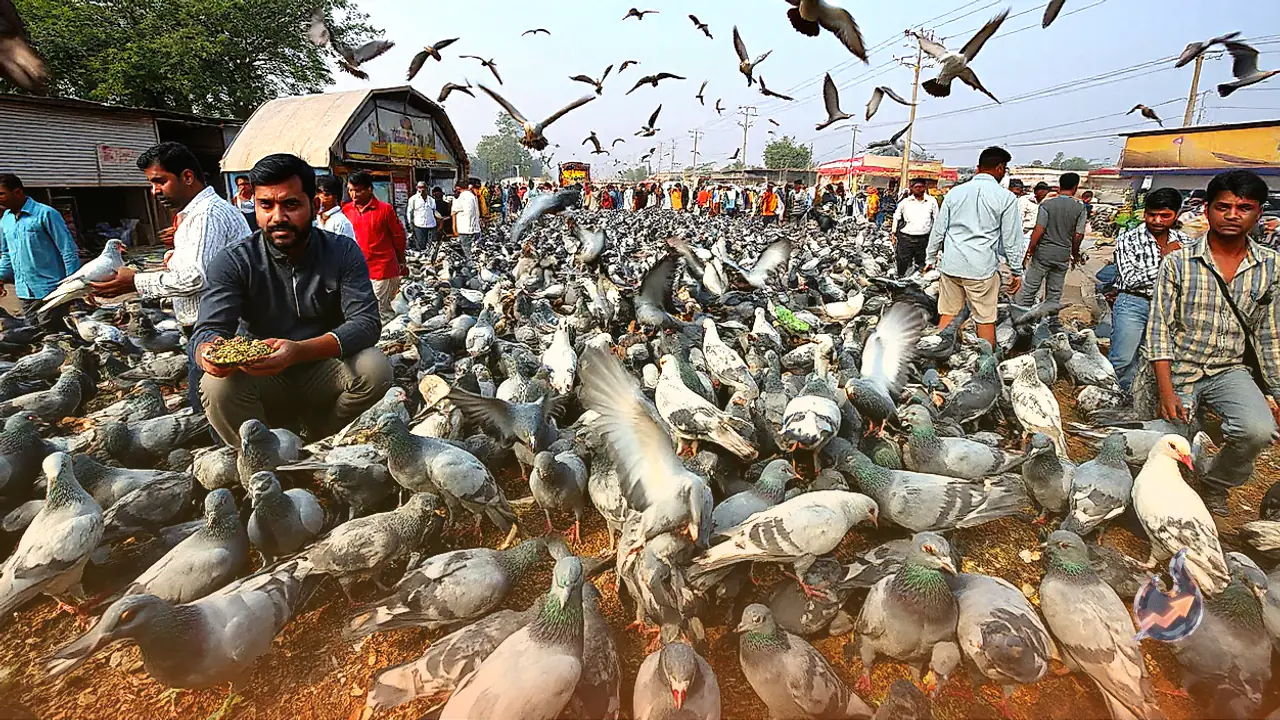

The surging population of pigeons across several neighborhoods in Hyderabad has sparked growing anxiety among citizens and local administrators alike. Residents report that the accumulation of pigeon droppings is not only defacing public spaces but also giving rise to significant health risks. In response, city dwellers are being strongly urged to refrain from feeding pigeons, especially around prominent landmarks such as Hussain Sagar Lake and Mecca Masjid.
Growing Risks to Sanitation and Health
According to locals, the sudden explosion in the pigeon count has led to droppings piling up heavily on buildings, roadways, and pedestrian pathways. This buildup is severely disrupting urban cleanliness while triggering fears of airborne and contact illnesses. Health experts note that exposure to pigeon waste can result in fungal infections, respiratory difficulties, and troublesome allergies. Lingering near accumulated droppings for extended periods further compounds these dangers for anyone nearby.
Measures Taken by Officials and Residents
In reaction to the escalating situation, warning signs instructing people not to feed the birds have been posted in various parts of Hyderabad. These notices cover high-traffic zones like Hussain Sagar and Mecca Masjid, where citizens frequently gather to scatter feed for pigeons. Authorities emphasize that halting this practice is a vital step toward naturally curbing the avian population and mitigating the hazards posed to public well-being.
Expert Insights on Breeding and Pathogens
Veterinary specialists and health officials point out that regularly feeding pigeons artificially boosts their breeding rates, causing their numbers to multiply at an unsustainable pace. Furthermore, droppings from these birds can harbor hazardous fungi such as cryptococcus and histoplasma, which are capable of causing serious illnesses in humans. Officials reiterate that stopping the availability of handouts is essential to keeping these environmental and health pressures under control.