






















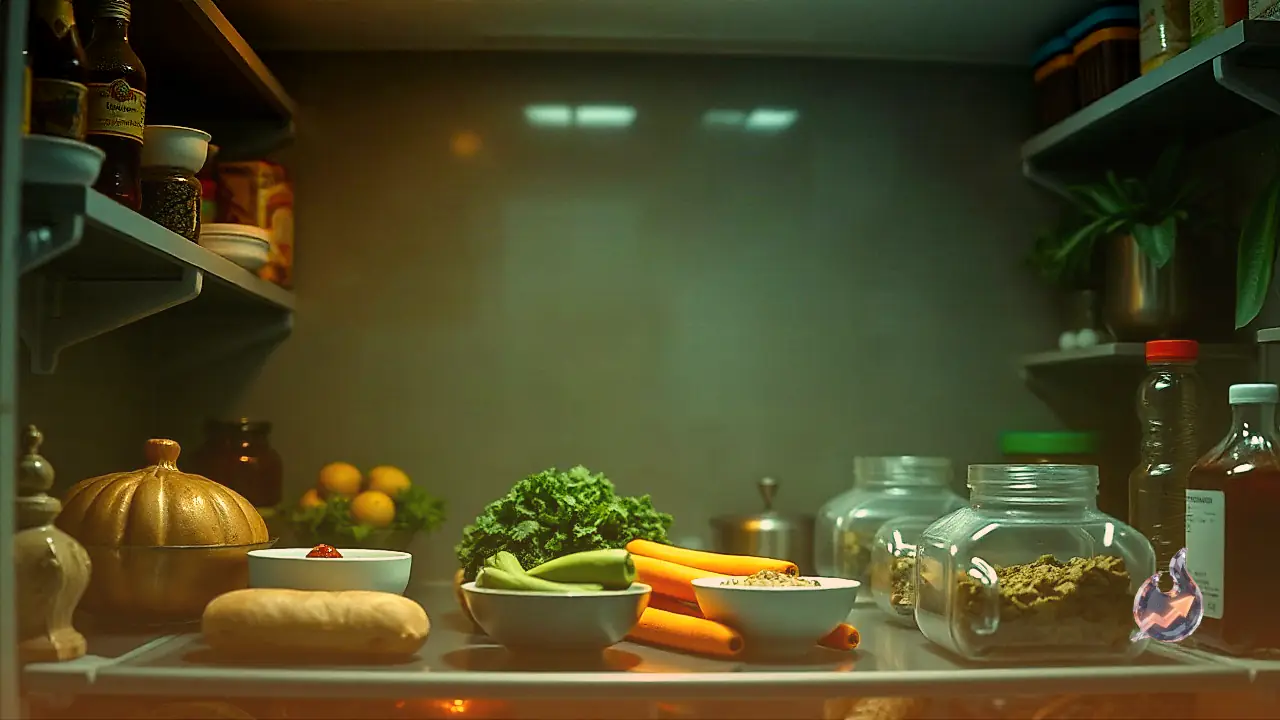

Whenever food is left over after a meal, people routinely place it inside the refrigerator for later use. Beyond simple leftovers, various prepared food items are frequently stored in cold environments to prevent them from spoiling over extended periods. However, storing provisions in a refrigerator does not automatically guarantee that they will remain free from spoilage. Ayurvedic health coach Dimple Jangda has outlined three distinct warning signs that can help individuals identify whether refrigerated food has deteriorated and become unsafe for consumption.
Sticky or Slimy Textures in Dal and Sabzi
One of the primary indicators of food spoilage is a noticeable shift in its physical texture. If chopped vegetables, leafy greens, or cooked dal and sabzi develop a glossy or sticky film on their surface, this symptom should never be ignored. Such a transformation serves as a direct indicator of bacterial activity and microbial proliferation. As microbes multiply within the food, the dish begins to rot. Consuming such heavy and degraded meals can trigger vomiting, severe diarrhea, and abdominal inflammation, while also weakening overall digestive strength. Therefore, whenever the surface texture exhibits these anomalies, discarding the meal is the safest course of action.
Mold Growth and Discoloration
If mold becomes visible on any vegetable, legume dish, or food item, the entire batch must be discarded rather than simply trimming away the visibly affected portion. What appears on the surface represents only a fraction of the contamination. In reality, mold extends root-like threads deep into soft foods, releasing dangerous mycotoxins and aflatoxins that spread far beyond the visible boundaries. These toxins pose serious health risks by damaging vital internal organs such as the liver and kidneys.
Changes in Natural Aroma and Odor
If refrigerated or packaged foods begin emitting a sour, vinegar-like, bitter, or sulfurous egg-like smell, it signifies that bacteria are multiplying rapidly and releasing organic acids. Any noticeable shift in the baseline aroma means the dish should be thrown away immediately. In many cases, human olfaction serves as a far more reliable guide than printed expiration date labels on food packages.
Ayurvedic Guidelines for Fresh Meals and Storage
Ayurveda strongly recommends consuming freshly prepared meals, as they contain the highest concentration of vital energy and are easiest for the human digestive system to process. When cooked food must be stored, it should be cooled down rapidly, kept for no longer than two to three days, and reheated thoroughly prior to consumption to ensure safety.