




















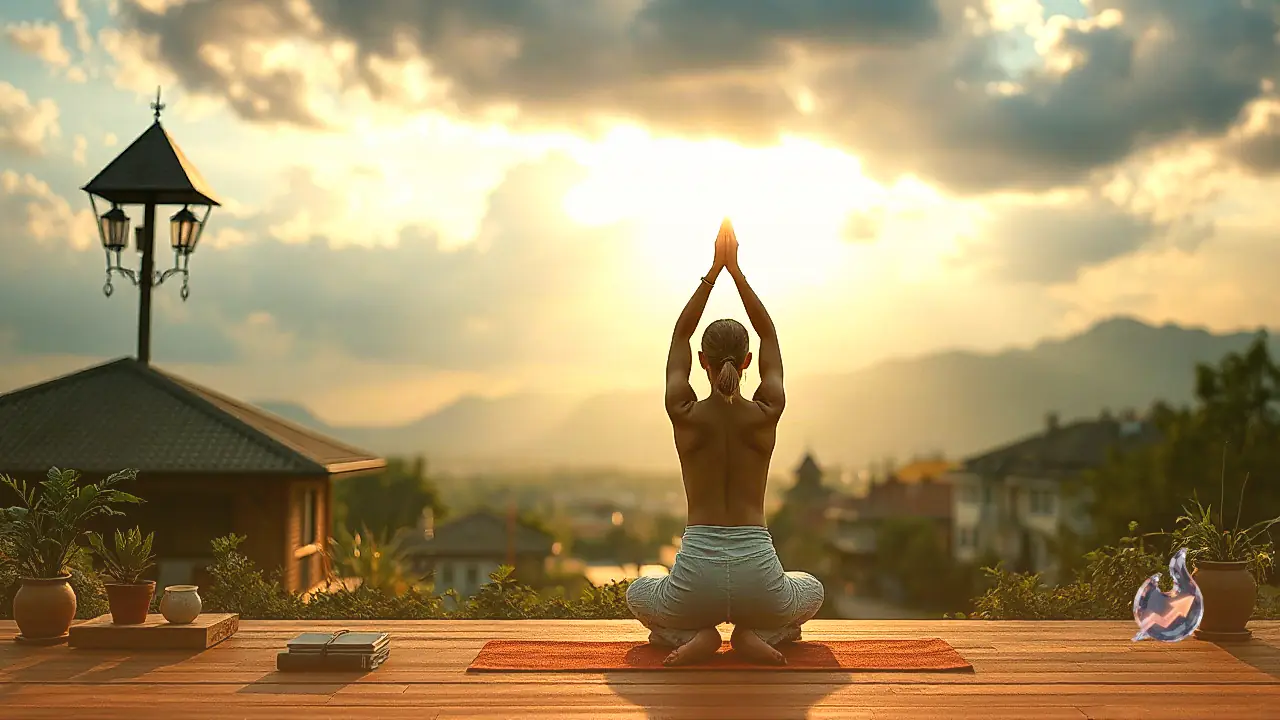

In today's fast-paced world, thyroid-related complications are becoming increasingly common. Factors like chronic emotional stress, irregular daily schedules, and sudden hormonal imbalances play a massive role in triggering these issues. Since the thyroid gland is responsible for regulating the body's metabolism, energy levels, and overall hormonal harmony, any disruption can lead to significant fatigue and health challenges. While medical treatments and professional doctor advice remain paramount, introducing specialized yoga practices and pranayama into your daily routine can offer remarkable complementary support. Yoga teacher Pooja, associated with the Mahadevan Yoga Studio, suggests several beginner-friendly yoga practices designed to balance the physical body and stabilize breathing patterns. According to her, consistent practice of these routines can help relax the nervous system and lower high stress levels.
The Bridge Pose for Gentle Neck Stimulation
The first exercise to integrate into your routine is the Bridge Pose, widely known as Setubandhasana. To begin, lie down flat on your back on a comfortable yoga mat. Gently bend both your knees, keeping your feet firmly planted on the ground, and reach down with your hands to grasp your ankles securely. Once you have a firm grip, slowly lift your hips and chest upwards toward the ceiling. As you arch into this position, you will feel a mild, comforting stretch around your neck and throat area, which directly stimulates the thyroid region. Maintain a deep focus on your breathing and remain in this active posture for about 10 to 20 seconds before gently releasing.
Transitioning Gently into Halasana (Plow Pose)
After completing the Bridge Pose, you can transition into Halasana, commonly referred to as the Plow Pose. From your lying position, carefully raise your legs up and carry them backward over your head, aiming to touch your toes to the floor behind you if your flexibility allows. It is highly important not to rush through this movement or force your body beyond its natural limits. Listen to your physical boundaries and hold the pose according to your comfort level. Yoga instructor Pooja notes that keeping this pose for approximately 20 to 30 seconds can offer a deep stretch to the spine and neck, further aiding the throat region.
Opening the Chest and Throat with Ustrasana (Camel Pose)
The next posture in the sequence is Ustrasana, or the Camel Pose, which is excellent for opening up the chest and neck. Kneel down on your mat with a small gap between your knees. Slowly reach backward with your hands, one after the other, until you can firmly grasp your heels. Gently push your chest upward and tilt your body backward, allowing your head to hang comfortably. Ensure that your breathing remains steady and normal throughout the stretch. Aim to maintain this camel pose for about 20 to 30 seconds to maximize its opening effects on the front of your body.
Centering the Body with Matsyasana (Fish Pose)
Following the deep backbend, Matsyasana or the Fish Pose helps in balancing the stretch. To perform this, lie flat on your back to relax your spine first. Slowly lift your chest upward, arching your upper back, and rest the very top or crown of your head lightly on the mat. You can choose to keep your hands resting comfortably beside your body or raise them up gently. This counter-pose helps open up the lungs and throat area. Yoga experts recommend holding this posture for a steady 20 to 30 seconds while focusing closely on the rhythm of your inhalation and exhalation.
Soothing the Mind with Ujjayi Pranayama
Once you have finished the physical asanas, take a few moments to rest quietly and let your body settle. Afterward, you can begin Ujjayi Pranayama, a powerful breathing technique. To practice this, keep your mouth closed and inhale and exhale deeply through your nose. As you breathe, contract the back of your throat slightly to produce a soft, ocean-like whispering sound, resembling a gentle "h" noise. Direct your complete mental focus toward the sound and sensation of your breath. According to yoga expert Pooja, this regular pranayama practice is highly effective for reducing mental fatigue, soothing the nervous system, and helping individuals regain control over their breathing.