
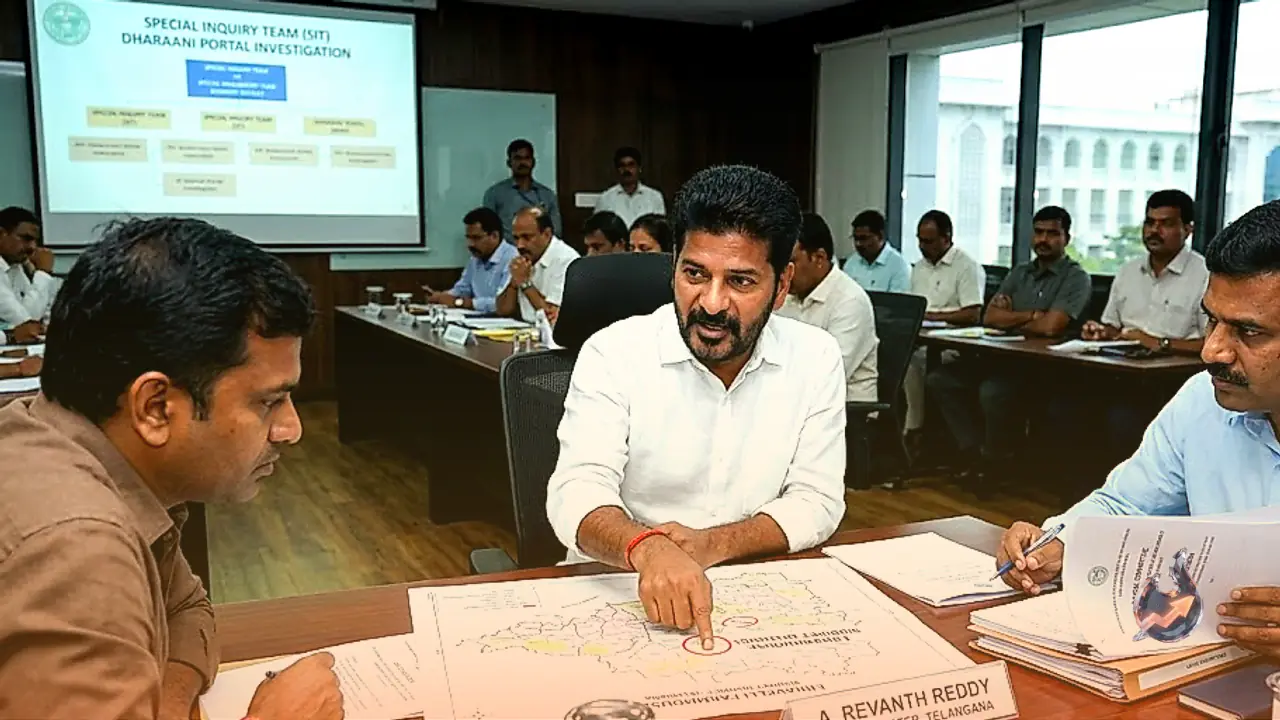



















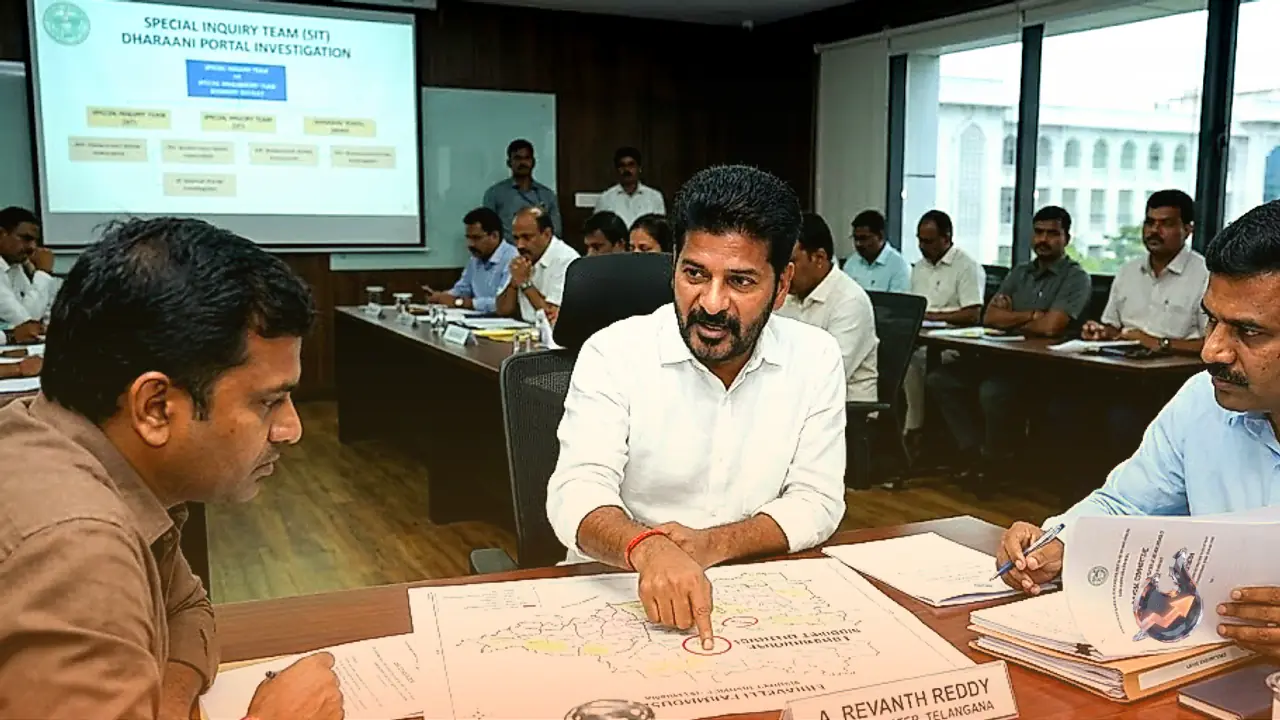

The political landscape of Telangana has witnessed a major upheaval following an announcement by Chief Minister A. Revanth Reddy regarding an investigation into the Erravelli farmhouse owned by former Chief Minister K. Chandrashekar Rao. Initiating an aggressive debate in the state legislative assembly, the Chief Minister announced a thorough, time-bound investigation into the vast property. The local administration has been directed to scrutinize the land records and physical boundaries of the estate to identify any potential encroachments on government land. The administration has been given a strict deadline of just thirty days to submit its comprehensive findings on the matter. According to the statements made in the assembly, the estate spans roughly 700 acres, out of which a massive 388 acres are suspected to be public property that remains completely unaccounted for in official declarations. The Chief Minister made it clear that if any portion of the farmhouse is found to be on public land, the state will immediately reclaim it and distribute it to landless, impoverished citizens.
Thirty-Day Investigation and Ministerial Panel
To ensure the inquiry is transparent and leaves no room for administrative delays, a high-powered committee consisting of three state cabinet ministers has been established to supervise the operations. This team comprises ministers Damodar Rajanarasimha, Vivek Venkataswamy, and Ponguleti Srinivas Reddy. They are tasked with leading the ground-level verification, coordinating with revenue department officials, and overseeing the survey of the area. Chief Minister Revanth Reddy emphasized that the investigation would be completed within the designated thirty-day period, bringing absolute clarity on the ownership of the disputed property to the public domain. The revenue department has been directed to immediately issue legal notices to all parties concerned to ascertain the exact legal status and acreage of the property. The ministerial panel will actively monitor the progress of physical measurements and match them against the historic and current revenue records of the region.
Detailed Landholdings of KCR's Immediate Family
During the assembly session, Chief Minister Revanth Reddy tabled a comprehensive breakdown of the land assets held by KCR's immediate family members. The data presented indicates that the family collectively owns a massive 439 acres of land, which is distributed across nine different districts, twenty-four mandals, and thirty-one villages. The personal holdings of KCR and his immediate household are recorded at approximately 67.5 acres. The disclosure went into granular details, highlighting the holdings of his son, KTR, and his family, which total about 123.19 acres. Within this segment, KTR holds title to 49.5 acres of land, while his wife Shailima owns 17.5 acres. Further, their children are also listed as landholders, with daughter Alekhya holding 9.38 acres and son Himanshu Rao possessing 46.35 acres. The Chief Minister also disclosed the landholdings of Harish Rao's family, which stand at 30.5 acres. This includes 21 acres under Harish Rao's direct name and 8.5 acres owned by his wife Srinitha.
Extended Family and Associates Under Land Ceiling Act Scrutiny
The state government's disclosures extended beyond the immediate family to include other close relatives and political associates. MLC K. Kavitha's family is reported to hold 37.26 acres of land, comprising 14 acres in her name and 23 acres in the name of her husband, D.R. Anil Kumar. Former BRS Member of Parliament Joginipally Santosh Kumar's family is alleged to have proprietary rights over nearly 79 acres of land. Within this portfolio, Ravinder Rao holds 53.16 acres, Santosh Kumar holds 18.21 acres, and Rohini holds 7.23 acres. Additionally, other close associates like Naveen Kumar and Kondal Rao were linked to 52.16 acres and 48.38 acres of land respectively. Addressing these substantial holdings, Chief Minister Revanth Reddy issued a stern warning regarding the strict implementation of the Agricultural Land Ceiling Act. Under this legal framework, a husband, wife, and minor children are treated as a single family unit for the purpose of calculating maximum permissible land ownership. The Chief Minister asserted that if any family's combined holdings exceed the legally prescribed limits, the state government will take decisive action to seize the surplus land.
Allegations of a Dharani Portal Scam and the Special Inquiry Team
A major focal point of the Chief Minister's address was the controversial Dharani portal, a land record management system introduced by the previous BRS administration. Revanth Reddy alleged that the digital portal was weaponized to perpetrate a massive land scam, which he estimated to be worth around Rs 1 lakh crore across the state. To uncover the full extent of this alleged digital and physical manipulation of land records, the current administration has announced the creation of a Special Inquiry Team (SIT). This initiative, termed Dharani Part 2, will systematically review every disputed land transaction made through the system during the previous regime. The government is preparing a comprehensive database of farmhouses and public lands that were allegedly occupied or reassigned to influential BRS leaders. The Chief Minister declared that no individual, regardless of their political stature or influence, would escape accountability if they are found to have manipulated public land records.
Addressing Section 22-A and Historic Land Disputes in Telangana
Responding to criticisms from the opposition that the Congress-led government was using Section 22-A, which governs restricted land registrations, to harass legitimate property owners, Chief Minister Revanth Reddy strongly refuted these allegations. He accused the opposition of spreading misleading information to create panic among the public. The Chief Minister clarified that the government's primary objective is not to cause inconvenience to common citizens, but to rectify systemic errors and uncover institutional corruption. For ordinary citizens whose private lands were mistakenly categorized under the restricted Section 22-A list, the administration is actively working on administrative solutions to provide relief. Revanth Reddy pointed out that land disputes in Telangana are incredibly complex, with legal and historical roots dating back to the Nizam era and the administrative decisions of undivided Andhra Pradesh. Many of these issues are further complicated by ongoing litigation and court rulings, which the government intends to resolve systematically.