























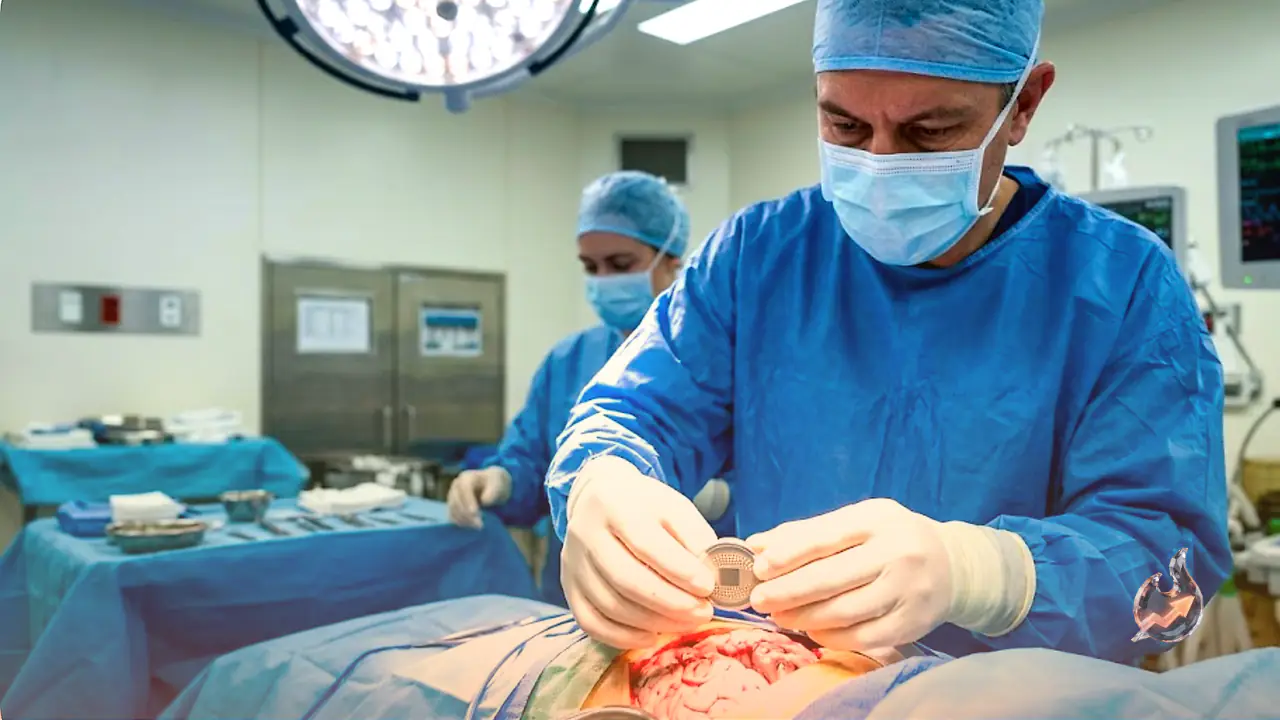

Three people undergoing surgery to have brain tumors removed at the Royal Melbourne Hospital in Australia have become the first humans to receive Coherence Neuro's electronic brain implant. The coin-sized device sat inside each patient's skull for roughly 30 minutes during the procedure before being taken out, giving the startup a critical window to observe how the implant performs in a live surgical setting. All three patients had given their consent before the operations began.
What the Device Is Designed to Do
The Coherence Neuro implant is a brain-computer interface. When permanently placed, it sits inside the skull with 16 thin threads that extend into the surrounding brain tissue. The device is built to do two things simultaneously: detect the distinctive electrical signals that tumor cells produce, and deliver mild electrical stimulation designed to prevent tumor growth. The intent is to install it during a brain tumor resection, the surgery in which a tumor is removed, so patients avoid a separate procedure entirely. Even after a tumor is fully removed, recurrence is common, and the Coherence device is specifically designed to monitor for and guard against that possibility.
The Science of Using Electricity Against Brain Cancer
The reasoning behind electrical stimulation as a cancer treatment draws on decades of research. Tumor tissue differs from healthy brain tissue in measurable electrical ways, and scientists have long believed that property could be turned into a therapeutic lever. Ben Woodington, the chief executive officer and cofounder of Coherence, frames the logic this way: "These are electrical conditions, just like epilepsy, just like depression. This is a network problem in the brain."
A pivotal piece of evidence arrived in 2019, when researchers at Stanford University demonstrated that a class of particularly dangerous brain tumors called high-grade gliomas actively drive their own spread by forming synapses directly with healthy neurons. That same study showed that administering a seizure drug to mice cut off the electrical signals feeding the tumor and slowed its growth. Additional research has separately shown that low-intensity electrical current can disrupt cancer cell division in brain tumors.
An Existing Treatment and Its Real-World Drawbacks
Using electricity against brain tumors already has a commercial history. A wearable device called Optune, developed by Novocure, received its first regulatory approval in 2011 to treat adults with glioblastoma, a type of brain cancer that makes up roughly half of all cancerous brain tumors. Earlier this year, Novocure also received regulatory approval to extend the Optune device to pancreatic cancer, with the device attached either to the scalp or the stomach via adhesive patches depending on which cancer is being treated.
Optune can extend survival by several months, but only when worn for most of the day. To use it, patients must shave their heads and carry a battery pack in a backpack or strapped to a hip belt. Coherence's central argument is that a device tucked permanently inside the skull delivers comparable or superior therapy without any of that daily burden.
The Notable People Backing the Company
Coherence Neuro has drawn in prominent names from neurotechnology. Matthew MacDougall, who serves as head neurosurgeon at Neuralink, is both an adviser and an investor in Coherence. Rory Murphy, a neurosurgeon at the Barrow Neurological Institute in Arizona who serves as an investigator in one of Neuralink's clinical trials, is also expected to participate in future Coherence trials.
Why Glioblastoma, and How Bleak the Outlook Is
Coherence is initially targeting glioblastoma because it carries a higher likelihood of returning after surgery compared to lower-grade tumors. Patients diagnosed with glioblastoma have few treatment options and a grim prognosis. Most survive only 15 to 18 months after diagnosis, and the five-year survival rate sits below 10 percent. The current standard of care calls for an MRI scan every two to three months so clinicians can monitor tumor activity and adjust medications as needed.
Woodington argues that interval is far too long. A tumor can become dramatically more aggressive between scans, and doctors have no visibility into what is happening during those gaps. The Coherence device is built to close that blind spot through continuous monitoring. A companion app lets patients log their symptoms, and that information is transmitted to their care team alongside data on their disease state and the level of stimulation the device is delivering. Physicians can fine-tune the therapy remotely, or allow the implant to self-regulate automatically. The device could also detect a rapid spike in tumor activity and prompt doctors to consider surgical intervention before the next scheduled MRI would ever flag the change.
What Comes Next for Coherence
With the brief in-surgery placement confirmed as safe and technically feasible, Coherence Neuro plans to launch a new trial next year in which glioblastoma patients will receive the implant on a permanent basis. That trial will produce the longer-term safety and efficacy data the company needs before it can seek broader regulatory clearance for the device.