

















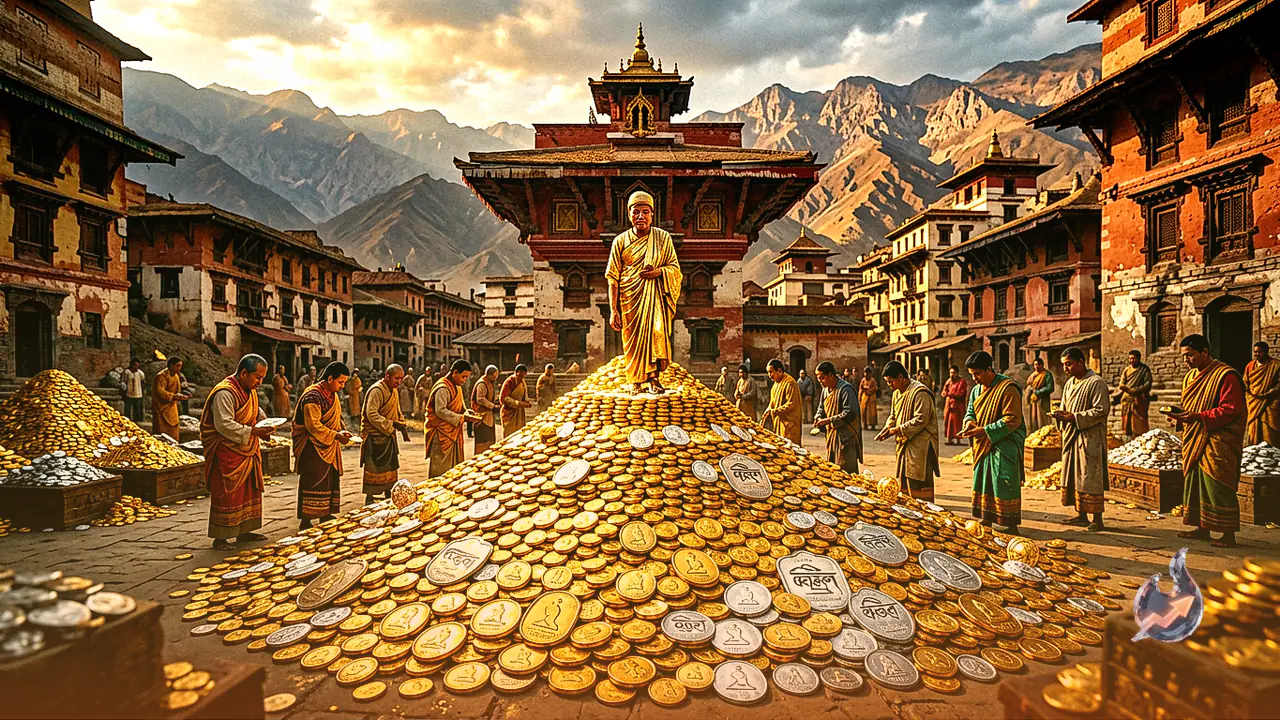

Devotees traveling from across the country and abroad to visit the divine shrines of Himachal Pradesh have contributed immense wealth over the years. Recent official disclosures reveal that major temples in the region now house a staggering collective reserve of precious metals, reflecting the deep faith of millions of pilgrims. Specifically, these institutions hold over 6.25 क्विंटल of gold, which translates to an estimated market value of roughly 958 करोड़ रुपये.
Steady Growth in Precious Metal Reserves
During the single year of 2025, worshippers offered 10.858 kg of gold and more than 9.15 क्विंटल of silver to these divine centers. By December 2025, the total gold stored inside temple vaults climbed to 6 क्विंटल 25 kg and 843 grams. Meanwhile, the total silver repository expanded significantly to reach 254 क्विंटल, 69 kg, and 129 grams, marking a continuous influx of valuable offerings.
Leading Temples in Gold and Silver Holdings
Among the prominent shrines, the Chintpurni temple located in Una leads the state with approximately 2.17 क्विंटल of gold and 82 क्विंटल of silver under its management. Following closely is the Naina Devi temple in Bilaspur, where devotees have dedicated roughly 2.10 क्विंटल of gold and around 89.35 क्विंटल of silver. The Jwalamukhi temple in Kangra holds about 50 kg of gold and over 20 क्विंटल of silver, while the Vajreshwari Devi temple possesses nearly 37 kg of gold and 15.45 क्विंटल of silver. The Baba Balak Nath temple in Hamirpur accounts for roughly 30 kg of gold and 3.82 क्विंटल of silver. Additional significant contributions include 18 kg of gold and 29.71 क्विंटल of silver at the Mata Balasundari temple in Sirmour, and 20 kg of gold alongside 7.82 क्विंटल of silver at the Chamunda Devi temple in Kangra.
Government-Managed Shrines and Cash Contributions
Himachal Pradesh currently has 36 temples that operate directly under state government administration and management. Over a three-year span, pilgrims visiting these government-run sites contributed a combined cash offering exceeding 419.88 करोड़ रुपये. These financial figures came to light during the monsoon session of the Himachal Pradesh Legislative Assembly in response to a formal query raised by Shahpur MLA Kewal Singh Pathania, prompting the government to present written records.
Breakdown of Monetary Donations by Temple
According to the official data covering the years 2024, 2025, and up to August 1 in 2026, the highest monetary contribution went to the Baba Balak Nath temple in Deotashid, Hamirpur, accumulating 99.19 करोड़ रुपये. The Naina Devi temple in Bilaspur secured the second position with 86.94 करोड़ रुपये in cash offerings. Other notable collections included 36.57 करोड़ रुपये for the Jwalamukhi temple, 26.99 करोड़ रुपये for the Mahamaya Bala Sundari temple, 13.76 करोड़ रुपये for the Vajreshwari Devi temple, 11.68 करोड़ रुपये for the Chamunda Nandikeshwar temple and Adi Himani group, and 8.82 करोड़ रुपये for the Jakhoo Hanuman temple in Shimla. Annual figures show total collections of 153.32 करोड़ रुपये in 2024, 157.51 करोड़ रुपये in 2025, and 109.04 करोड़ रुपये up to August 1, 2026.
Utilization of Temple Funds
The revenue generated across these shrines is allocated in accordance with the provisions outlined under the Himachal Pradesh Hindu Public Religious Institutions and Charitable Endowments Act, 1984. These funds are channeled toward the development and expansion of basic infrastructure for pilgrims, employee salaries, drinking water supply, electricity, safety arrangements, general maintenance, and beautification projects. Furthermore, portions of the income support sanitation management, public restrooms, parking facilities, street lighting, community kitchens, educational institutions, cow shelters, and the organization of religious festivals and fairs.