





















Residents of Himachal Pradesh are set to witness a major shift in their daily kitchens as cooking gas cylinders are on course to be replaced by Piped Natural Gas. The transition aims to eliminate the traditional reliance on heavy LPG cylinders by supplying clean and uninterrupted fuel directly through underground pipelines.
Expansion Beyond Una
While this modern utility was previously restricted exclusively to Una district, the administration has now initiated concrete steps to roll out the infrastructure across multiple other districts in the region. The expansion plan covers Mandi, Kangra, Hamirpur, and Sirmaur. Specifically in Mandi, administrative efforts have picked up pace to establish the groundwork for the pipeline network.
Land Identification in Mandi and Nerchowk
The preliminary groundwork involves securing suitable land parcels for distribution infrastructure. Two specific locations within Mandi town have already been successfully finalized. In addition, land identification has been completed near the Nerchowk Medical College, paving the way for subsequent administrative procedures.
District Controller of Food, Civil Supplies and Consumer Affairs Brijendra Singh stated that Gasoneet Company has been officially entrusted with the responsibility of handling the entire PNG supply framework across the district. During the initial phase, land has been secured in the Tarna and Chadhyara localities of Mandi town, and related procedures are being actively executed. Following the land finalization near the Nerchowk Medical College, further actions are being processed methodically. Once the necessary approvals are formally granted, the physical implementation phase will commence immediately.
Advantages of Piped Natural Gas
Piped Natural Gas is primarily composed of methane, which is extracted from underground reservoirs, thoroughly purified, and distributed directly to consumers via a sealed pipeline network. It is widely regarded as a safer and more economical alternative to conventional liquefied petroleum gas. Large metropolitan areas have relied on this system extensively for years. Notably, during previous periods of LPG supply tightening, PNG users experienced zero disruptions, prompting authorities to prioritize pipeline distribution models.
Key Features and Safety Benefits
The transition to underground piped gas offers several distinct advantages over standard movable cylinders
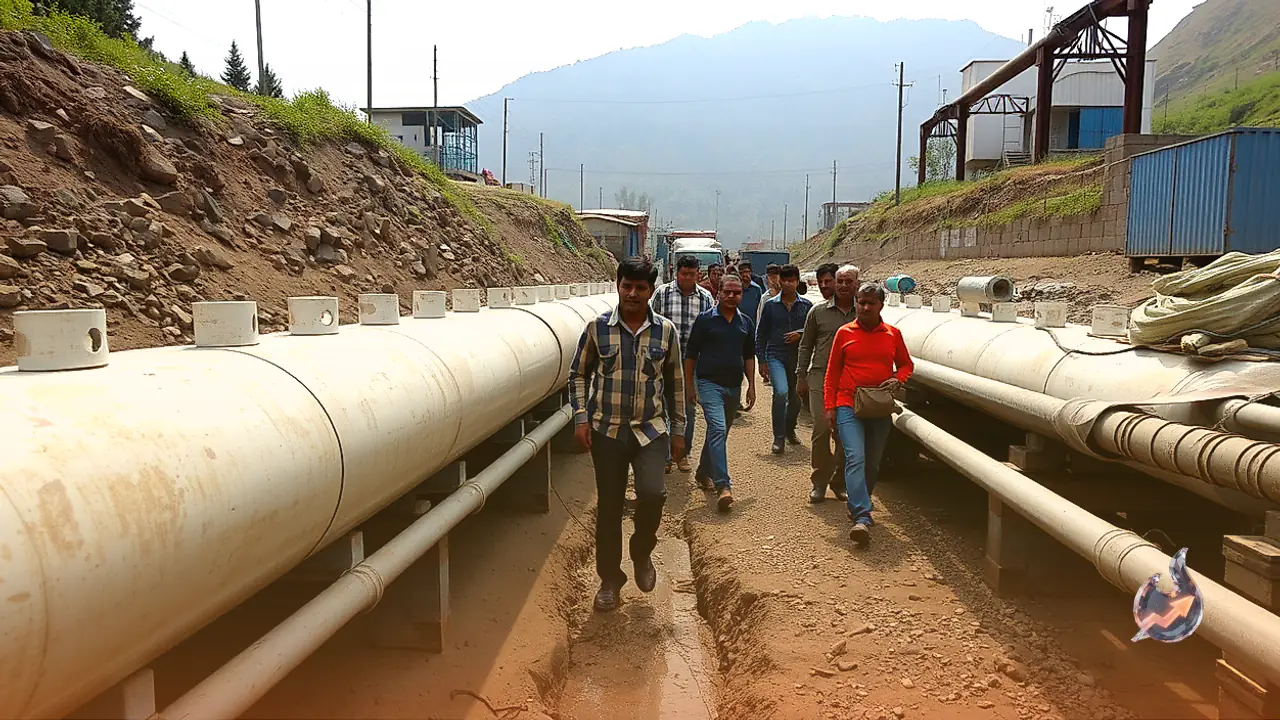
- Direct Pipeline Network: Instead of transporting heavy metal cylinders, the gas is delivered directly to residential kitchens, commercial hotels, and industrial units through underground pipelines.
- Uninterrupted Supply: Households no longer need to worry about running out of fuel mid-meal, as consumption is measured through a utility meter and billed based on actual usage.
- Enhanced Safety: Because PNG is lighter than air, any accidental leakage causes it to dissipate upward into the atmosphere instantly, making it significantly safer than LPG, which tends to settle near the ground.
- Lower Emissions: The favorable ratio of carbon to hydrogen ensures that the gas burns cleanly with minimal pollution output.
District Controller Brijendra Singh emphasized that PNG provides a highly secure and cost-effective energy solution that will permanently free citizens from the hassles associated with booking, waiting for, and replacing heavy cylinders. It is worth noting that Una district in the state has already successfully implemented residential gas distribution via pipelines, setting a precedent that is now being replicated in Mandi and neighboring areas.