





















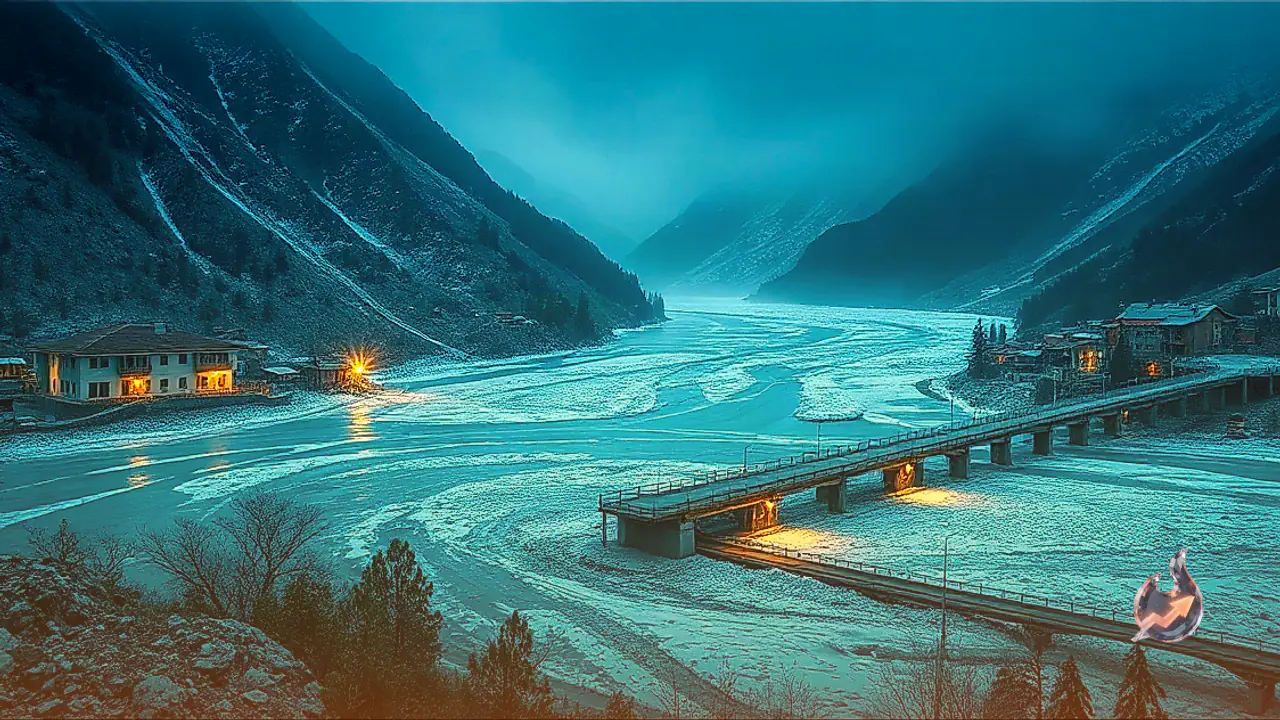

Amidst ongoing global climate shifts, nine glacier lakes situated in the hilly terrain of Himachal Pradesh are melting at an unusually rapid pace, sounding alarm bells for the region. The expanding dimensions of these water bodies located within the Himalayan region have turned into a matter of grave concern for the future. Over the past decade, these lakes have not only grown significantly in size but have also registered a 30 percent increase in their overall count, posing a continuous threat.
Alarming Findings From IIT Mandi Researchers
Researchers at IIT Mandi conducted a comprehensive study based on data collected through satellites and various other technological mediums. The researchers cautioned that adverse conditions triggered by both natural and man-made disasters could lead to sudden water drainage from these lakes, potentially causing massive devastation in downstream areas. The combination of shifting weather patterns and environmental stress is accelerating the instability of these high-altitude water bodies.
Nine Lakes Identified As Potential Water Bombs
IIT Mandi researcher Professor Dr. Dericks P. Shukla explained that amid ongoing climate change, the number of lakes in the Himalayan region is continuously rising, approaching nearly 2,000. Among these, a total of nine specific lakes located on the border of Chamba and Lahaul namely Kalikund, Chandertal, Vasuki, Surai, Kya Tso, Yoche, Samudra Tapu, Kasanga, and Gepang Gath could potentially turn into water bombs at any given time. The zone of potential danger generated by these lakes encompasses more than 15 bridges, several populated villages, and vital educational and healthcare institutions.
Detailed Breakdown Of Expansion And Vulnerability
Shukla pointed out that the melting of glaciers in Gepang Gath has expanded its area by 2.44 lakh square meters. Meanwhile, an expansion of 1.5 lakh square meters has been recorded in Kasang lake and 1.20 lakh square meters in Kalikund. However, due to its much steeper slope, Kalikund lake remains the most sensitive among them. Professor Shukla added that according to government bodies like the Central Water Commission and the National Disaster Management Authority, currently only four lakes in Himachal are classified in the sensitive zone, three of which are also included in the IIT Mandi study data.
Influx Of Tourists Accelerating Glacier Melt
Having researched changes in glacier lakes for several years using satellite imagery and geology, Professor Dr. Dericks P. Shukla stated that both natural and anthropogenic disasters are driving the rapid melting of these glaciers. Natural disruptions include earthquakes and landslides, whereas human-induced factors involve the continuously rising influx of tourists into the hilly regions. According to Dr. Shukla, increased tourist activity in the mountains leads to higher accumulation of dust, which acts as a primary catalyst for the accelerated melting of glaciers. Today, advanced technology makes it quite easy to monitor these environmental shifts, but concrete fieldwork to preserve and protect them is still pending, requiring urgent government intervention.