























A fresh engineering challenge has emerged along the Pathankot-Mandi National Highway project in Himachal Pradesh following recent seasonal rainfall. While the 19-kilometre stretch connecting Mandi and Padhar has reached near completion, water springs have unexpectedly burst through the ground across an 8-kilometre green field segment. An on-site evaluation conducted by the National Highways Authority of India (NHAI) revealed that these subterranean water streams could compromise the structural integrity and foundation of the freshly laid highway if left unmanaged.
Channelisation Underway to Direct Water into Culverts
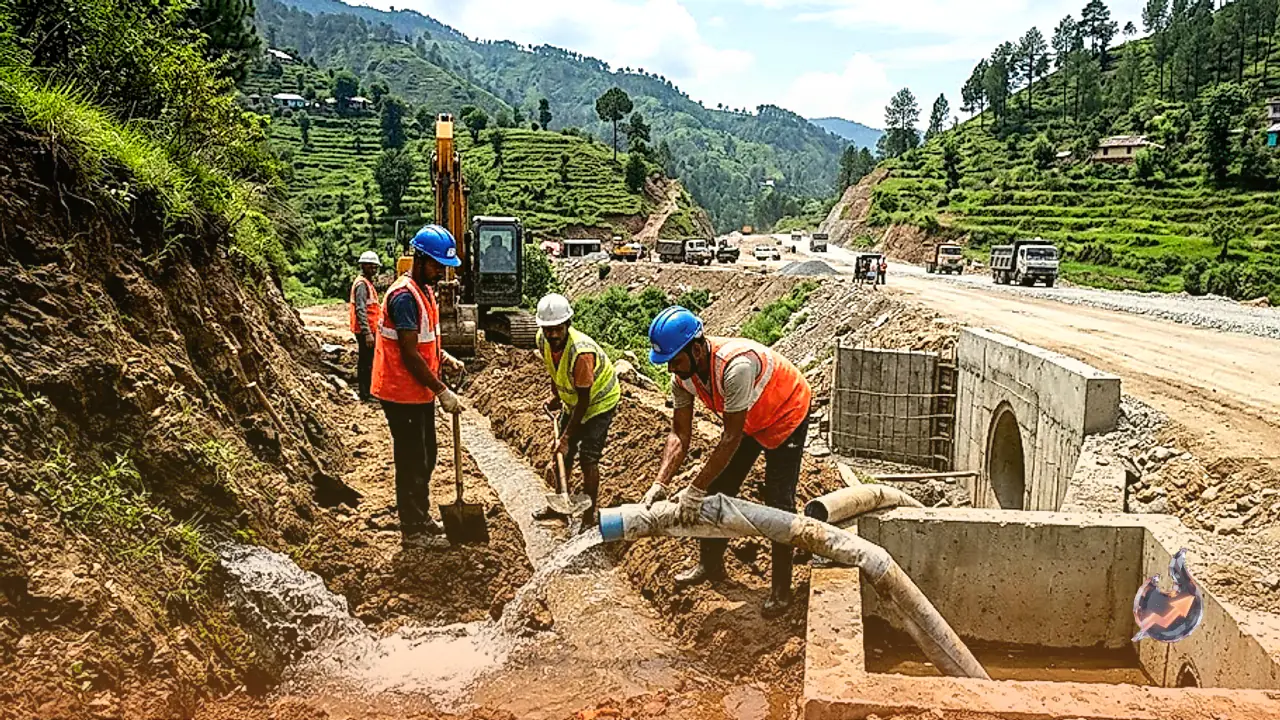
Detailing the protective measures being deployed on the ground, NHAI Project Director Varun Chari stated that the downpour caused new underground streams to emerge at roughly 5 to 6 specific locations. To safeguard the roadway, technical teams have initiated immediate channelisation work to redirect the uncontrolled flow. Every active water source is being systematically routed into adjoining culverts, ensuring that the natural run-off drains safely through existing drainage structures without eroding the embankment or damaging the road surface in the future.
Gawar Construction Targets 15-Day Completion Window
Executing agency Gawar Construction Limited has mobilised machinery and manpower on the site following orders from the highway authority. Vikas Nagar, General Manager of Gawar Construction Limited, explained that channelisation operations began with immediate effect wherever emerging water outlets were identified. He affirmed that the technical stabilisation and diversion work across all affected points will be fully wrapped up within the next 15 days to eliminate any structural risks.
Full Traffic Movement Expected by Month-End
The newly constructed 19-kilometre highway between Mandi and Padhar is virtually ready for formal commissioning. Current operations on the stretch remain focused on repairing monsoon-induced damage and finishing the drainage links. NHAI aims to resolve all repairs and open the corridor completely for seamless traffic movement by the end of this month. Although vehicular movement is already active across most sections of the road, diversions remain in place near the active repair zones to ensure motorist safety while machines operate.