























Birds now roost quietly among dislodged ceiling tiles in the abandoned communal dining hall of Kibbutz Nir Oz, once the vibrant epicentre of a close-knit agricultural settlement of 400 people. On 7 October 2023, that community was shattered by the cross-border assault led by Hamas. Dalit Ram Aharon, walking through the desolate complex alongside her husband Achi, reflects on how residents once gathered there daily to share meals, celebrate holidays, and organise community life. Today, the glass entrance doors remain pockmarked with bullet holes, serving as a bleak threshold to a landscape defined by loss.
Postal Boxes Marked by Ruin and Abduction
Just past the entrance, the household mailboxes display an unsettling accounting system instituted after the onslaught three years ago. Red stickers mark residents who were killed, while black stickers indicate those dragged into Gaza as hostages. As Dalit observes, one out of every four people from the kibbutz was either murdered or abducted, a toll that spared neither infants nor young children. Situated barely a mile (1.6 kilometres) from the Gaza perimeter fence, Nir Oz endured one of the most concentrated waves of destruction during the attack.
The Final Hours of the Siman Tov Household
Nearby, the incinerated skeleton of the Siman Tov residence remains suspended in tragedy, a wind chime still swaying near the charred entryway. A photograph shows Tamar and Yonatan alongside their five-year-old twin daughters, Shahar and Arbel, and their two-year-old son, Omer. The parents were fatally shot directly through the door of their residential bomb shelter, a structure engineered specifically to withstand rocket fire from Gaza rather than point-blank infantry weapons.
Dalit, who survived alongside Achi and their three children by barricading themselves inside their own shelter for nearly 12 hours, recalls Tamar's frantic messages in the communal women's chat group that morning. Tamar initially inquired if everyone was safe, subsequently reported that armed assailants were shooting at them, and eventually sent a heavily mistyped message stating they were severely wounded. Assailants later set fire to the structure, causing the children to succumb to smoke inhalation and wiping out the entire household.
Anatomy of the Assault and Military Collapse
An estimated 500 Palestinians entered the unprepared kibbutz, spearheading the attack with elite Nukhba fighters alongside civilian looters and youths. Forty-one residents and foreign labourers from Nir Oz lost their lives, in addition to six people who had fled to the settlement seeking refuge from an adjacent outdoor party.
Seventy-six individuals from the kibbutz were abducted into Gaza, including nine corpses. Fourteen captives taken alive were subsequently killed while in detention. The final surviving hostages from Nir Oz returned to Israel on 13 October 2025, while the remains of the final deceased captive, Amiram Cooper, were repatriated two weeks later.
Subsequent findings from an Israeli Defense Forces inquiry revealed that the military fell into severe disarray as simultaneous assaults overwhelmed more than 20 communities and multiple military outposts. The armed forces failed completely to mount a timely rescue at Nir Oz. The first soldiers reached the settlement approximately 40 minutes after the final attackers had already departed. Almost every single household suffered murder, physical violence including sexual assaults and rape, widespread looting, or kidnapping.
Remembering Shiri Bibas and the Lost Pioneers
Amid overgrown vegetation, Dalit pauses before a mature tree planted decades earlier by her parents, who were among the original founders of the settlement, known for its dedication to agriculture and peace activism. Though her parents survived the violence of 7 October without physical injuries, both passed away mere months later.
Adjacent to her family plot stands the modest home of Shiri Bibas, whose abduction alongside her two red-haired sons, four-year-old Ariel and nine-month-old Kfir, emerged as an international symbol of the Gaza hostage ordeal. Dalit describes Shiri as an intimate friend who felt like a sister. The two women experienced pregnancy simultaneously, raising Ariel and Dalit's daughter as inseparable childhood companions who playfully talked of marrying one another when they grew up. Shiri lived an unassuming life as a devoted, cheerful mother who harboured no ill will toward anyone.
While Shiri's husband, Yarden Bibas, was freed alive under a February 2025 ceasefire agreement in Gaza, Shiri and their young sons were killed while detained by a separate militant faction. Militants attributed their deaths to an early wartime air raid, but Israeli forensic specialists who inspected the repatriated bodies later that February concluded they were murdered by their captors and subjected to mutilation.
The Dilemma of Rebuilding from Ash
Many grieving survivors, including Yarden Bibas, have permanently relocated away from Nir Oz. Nevertheless, following the repair or complete reconstruction of 20 houses, a handful of returned hostages have settled back into the kibbutz. Among them are Gadi Moses, a co-founder and the oldest living male hostage liberated during the hostilities, and Yair Horn, who navigates the quiet pathways in a golf cart. Dalit and Achi remain resolute in their desire to return as well.
Dalit explains that their determination to resettle stems from honouring Shiri's memory, remembering the victims denied a chance to return, upholding the legacy of her parents, and providing continuity for her children on ancestral ground. However, the family remains displaced in an apartment further north, facing a projected two-year timeline before Nir Oz can reopen fully.
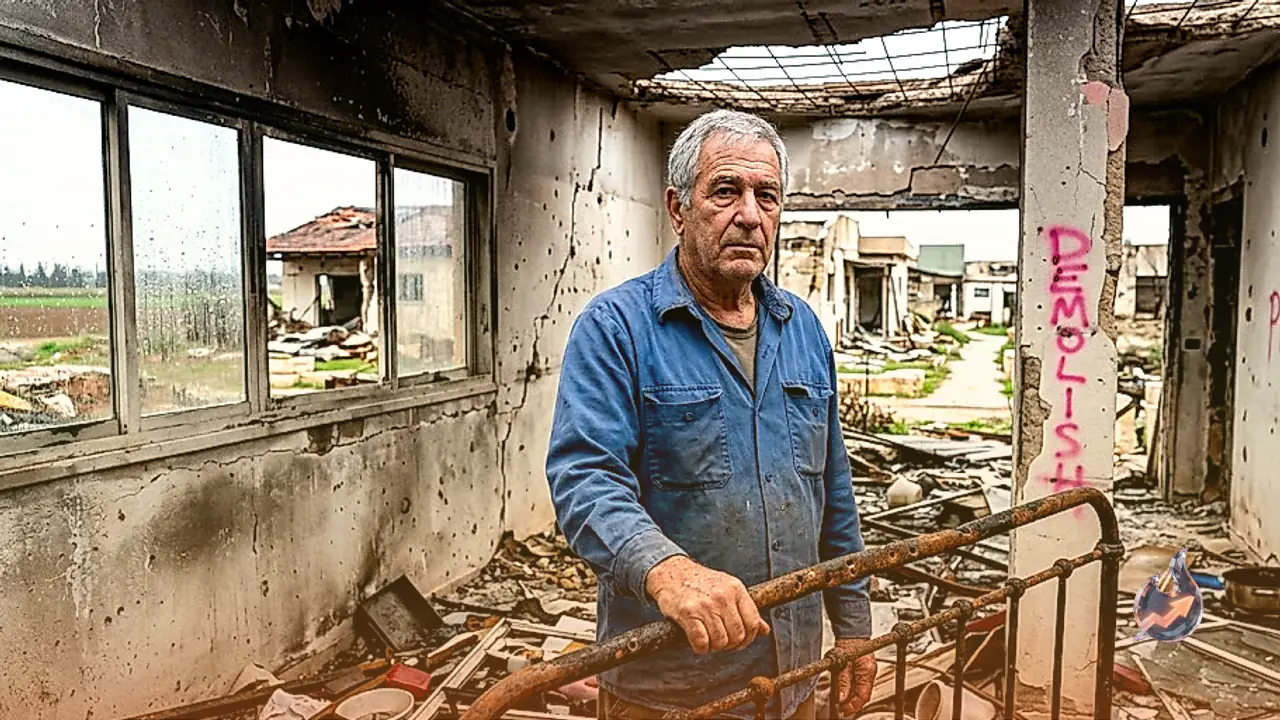
Emi Palmor, director of the Reconstruction and Rehabilitation Project at Nir Oz, notes that attackers breached 97 percent of the residences and torched nearly half of the buildings. Consequently, Nir Oz represents the sole community in Israel requiring comprehensive demolition and a total redesign from the ground up.
Architectural Debates: Memorialise or Restore Peace?
The redesign process has triggered intense debates among surviving community members regarding the aesthetic and emotional balance of the reconstructed kibbutz. As Emi Palmor explains, some returning residents yearn for an entirely pristine, serene environment free of structural reminders, arguing that their personal memories of lost loved ones are already indelible. Conversely, others insist that razing every damaged structure risks encouraging public denial of the atrocities, arguing that preserving physical wreckage is essential for historical proof.
Achi and Dalit strongly support preserving selected ruined homes to demonstrate the visceral hatred and destruction inflicted on the site. They point to the location where kindergarten teacher Maya Goren was killed, as well as informal shrines honouring three of the seven kibbutz security team members who fell while attempting to repel gunmen. Today, dozens of damaged single-storey houses have already been cleared, leaving exposed rows of reinforced concrete safe rooms that ultimately failed to protect their occupants.
The Broader Conflict Three Years On
The initial cross-border incursion on 7 October 2023 saw approximately 6,000 Palestinians breach southern Israel, resulting in roughly 1,200 deaths and the capture of 251 hostages. The ensuing war has claimed more than 74,200 lives in Gaza, according to figures released by the Hamas-run health ministry, which the United Nations assesses as broadly accurate.
Despite the American-brokered diplomatic agreement that facilitated the return of the final hostages a year ago, military action has persisted, marked by recurring Israeli strikes across Gaza. Nearly the entirety of Gaza's 2.1 million residents remains displaced amid widespread urban devastation, while the regional peace framework proposed by US President Donald Trump remains stalled at an impasse.
Within Israel, public scrutiny persists regarding institutional responsibility and military failures to anticipate the disaster. Nir Oz residents continue to demand a formal, comprehensive state commission of inquiry while grappling with acute security apprehensions. Many survivors experience severe post-traumatic stress. Dalit recounts that her eldest son, Uri, turned nine on the day of the attack while barricaded inside their safe room, pleading through tears that he did not want to die on his birthday. For Dalit, broader society often overlooks how deeply survivors remain trapped in that horrific day. The current anniversary marks the first without any hostages held in Gaza, bringing profound relief and allowing families like the Aharons to finally redirect their focus toward long-term personal recovery.