



















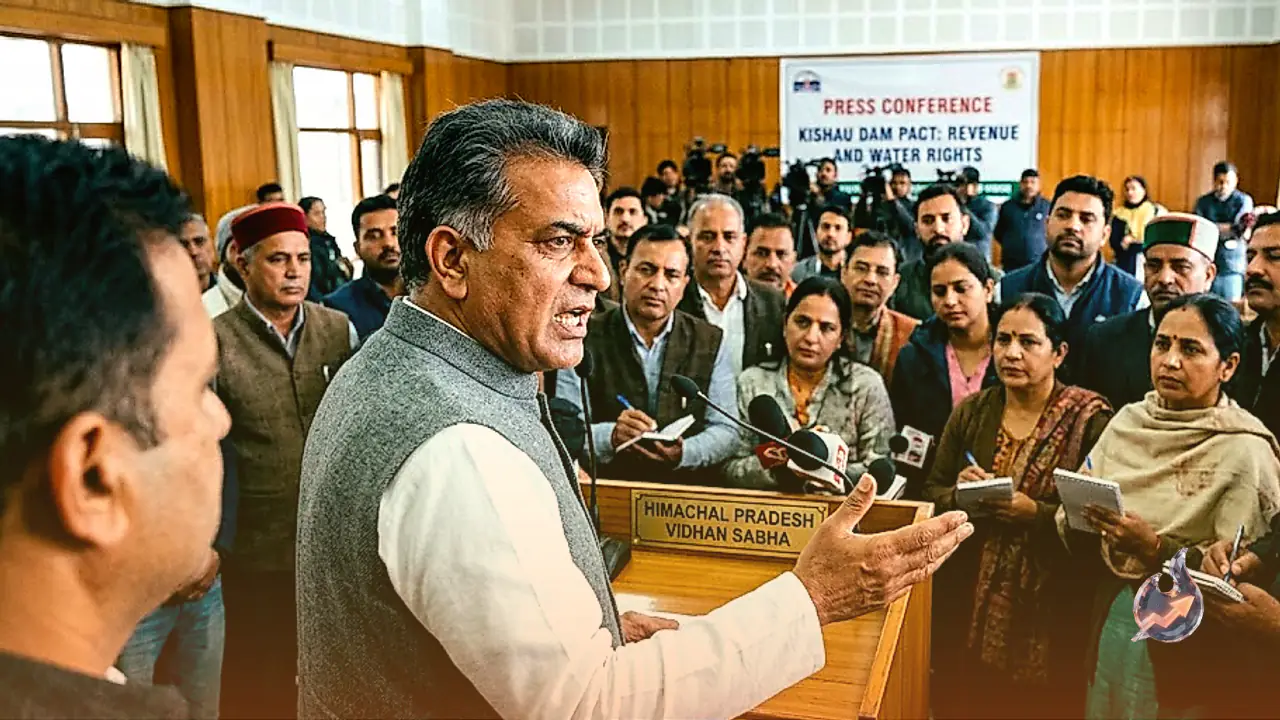

A major political conflict has erupted across Himachal Pradesh following the formal agreement signed for the execution of the Kishau multipurpose project. State BJP President Dr. Rajiv Bindal has launched a direct critique against Chief Minister Sukhvinder Singh Sukhu, alleging that the ruling government is misleading the public with distorted figures while rushing to take unwarranted credit for an interstate breakthrough. While affirming that the opposition fully welcomes the realization of the long-delayed dam and the consensus reached among six northern states, Bindal emphasized that the state government must provide complete transparency regarding how Himachal Pradesh's sovereign water claims, power generation entitlements, and future economic stakes were defended during the discussions.
The Interstate Framework and Central Cost Allocation
The formal foundation for the joint undertaking was cemented on September 15, 2026, when Himachal Pradesh, Uttarakhand, Uttar Pradesh, Haryana, Rajasthan, and Delhi entered into a comprehensive interstate agreement. Under the financial formula detailed in the central government's official framework, the Union Government has pledged to shoulder approximately 90 percent of the project's massive water component expenditure. The remaining 10 percent of that water infrastructure cost will be divided among the six participating states. In exchange for critical funding concessions on the power front, Himachal Pradesh's designated share of stored water has been agreed to be allocated to Delhi and Rajasthan.
Dissecting the 15,624 Crore Outlay and Capital Commitments
Outlining the capital dimensions of the reservoir venture, Bindal noted that the total estimated financial outlay for the Kishau project stands at 15,624 crore rupees. This massive expenditure is divided into two distinct parts: a water component worth 12,096 crore rupees and an electricity generation component valued at 3,528 crore rupees. Citing earlier operational arrangements, Bindal noted that Himachal Pradesh and Uttarakhand were originally slated to shoulder the electricity component equally on a 50-50 basis, requiring Himachal Pradesh to contribute roughly 1,764 crore rupees in capital funding.
Building on the project's construction schedule and necessary yearly outlay, Bindal questioned whether the state surrendered its enduring water security simply to evade an annual fiscal contribution of roughly 135.69 crore rupees. He queried why the administration declined to directly fund its designated share in the energy component if the dam is indeed projected to yield substantial economic returns for the state in the decades ahead.
Central Intervention and Resolution of Longstanding Stalls
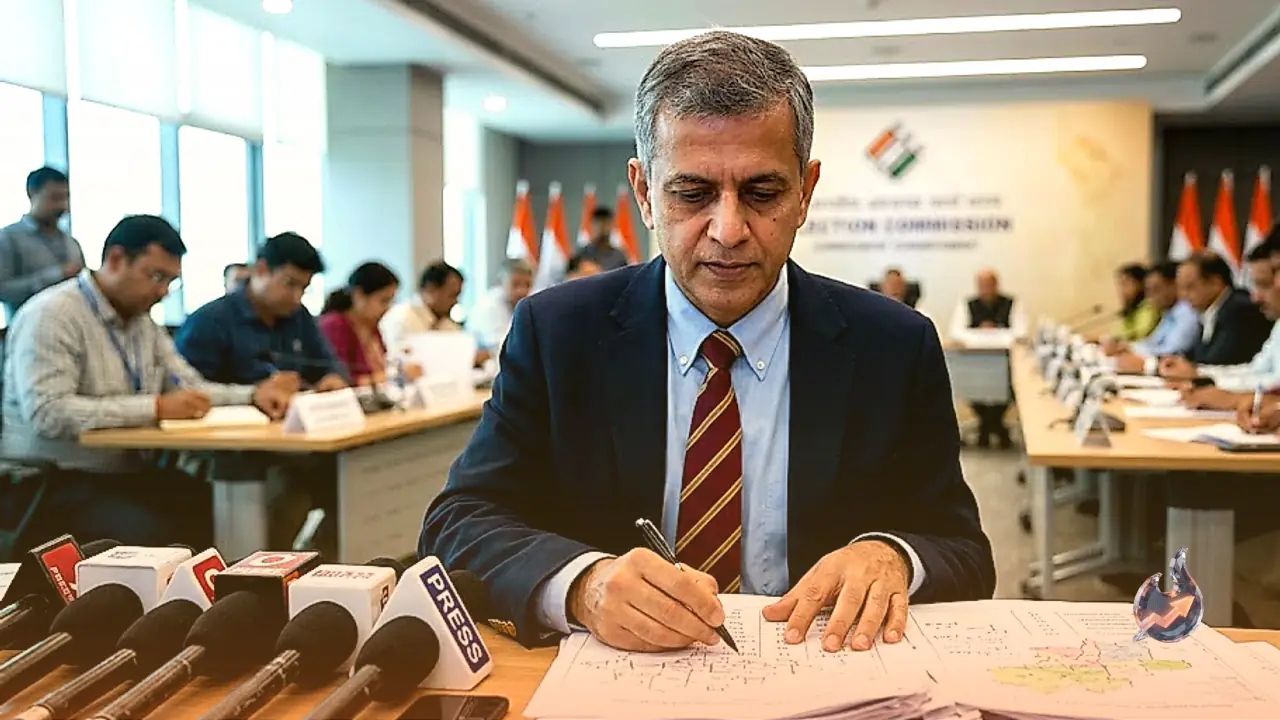
Drawing attention to the extended history of administrative paralysis surrounding the Tons river development, the opposition attributed the final consensus to the decisive initiative taken by Prime Minister Narendra Modi and Union Home Minister Amit Shah. Official administrative records demonstrate that a decisive breakthrough emerged during a high-level conclave convened under the chairmanship of Union Home Minister Amit Shah on June 16, 2026. That crucial coordination meeting paved the way for ironing out regional differences across all six participating state administrations, which ultimately led to the formal execution of the multilateral pact on September 15, 2026.
Scrutiny Over the 1,200 Crore Annual Income Projection
The opposition also placed heavy scrutiny on the fiscal projections publicized by Chief Minister Sukhvinder Singh Sukhu, who stated after the signing that Himachal Pradesh stands to gain nearly 1,200 crore rupees every year alongside an assured power allocation of 211 megawatts. Bindal called upon the state government to make public the exact actuarial and tariff assumptions supporting this calculation. He questioned the definitive methodology underpinning the 1,200 crore rupees yearly income figure and demanded clarification on what the actual net revenue would be after operational overheads and debt servicing are accounted for.
Impact on Tons River Rights and Sirmour Agriculture
Categorizing the Kishau installation as an asset fundamentally tied to Himachal Pradesh's river resources rather than merely a power station, the opposition pressed the state leadership to explain whether the surrender of river volume to Delhi and Rajasthan is an irrevocable permanent concession or time-bound. Particular emphasis was laid on the agricultural future of the Sirmour belt through which the Tons river flows. Bindal demanded the publication of an exhaustive project report clarifying how many hectares of farmland across Sirmour will secure perennial irrigation, what network of canals is slated for construction, and how significantly regional farm productivity and farmer revenues are projected to increase.
Demands for Mandatory Employment and a Detailed White Paper
Given the scale of capital expenditure and construction work, Bindal stressed that the Kishau infrastructure should guarantee technological training, direct jobs, and self-employment avenues for local youth. He asked whether the newly minted multilateral accord contains legally binding clauses reserving jobs for Himachal residents. The administration was asked to present concrete projections covering both direct and indirect employment across the construction and operational cycles, including the explicit percentage reserved for local workers.
To ensure total transparency, the opposition has formally petitioned the Sukhu administration to table an exhaustive white paper detailing every aspect of the Kishau project. Bindal maintained that such a document must delineate the financial burdens of the center and partner states, legal stipulations regarding river rights, exact power shares, projected fiscal returns, agricultural canals, rehabilitation blueprints for displaced populations, and every contractual clause. He reiterated that the opposition is not obstructing the construction of the dam but remains committed to safeguarding the long-term economic and environmental interests of Himachal Pradesh.