























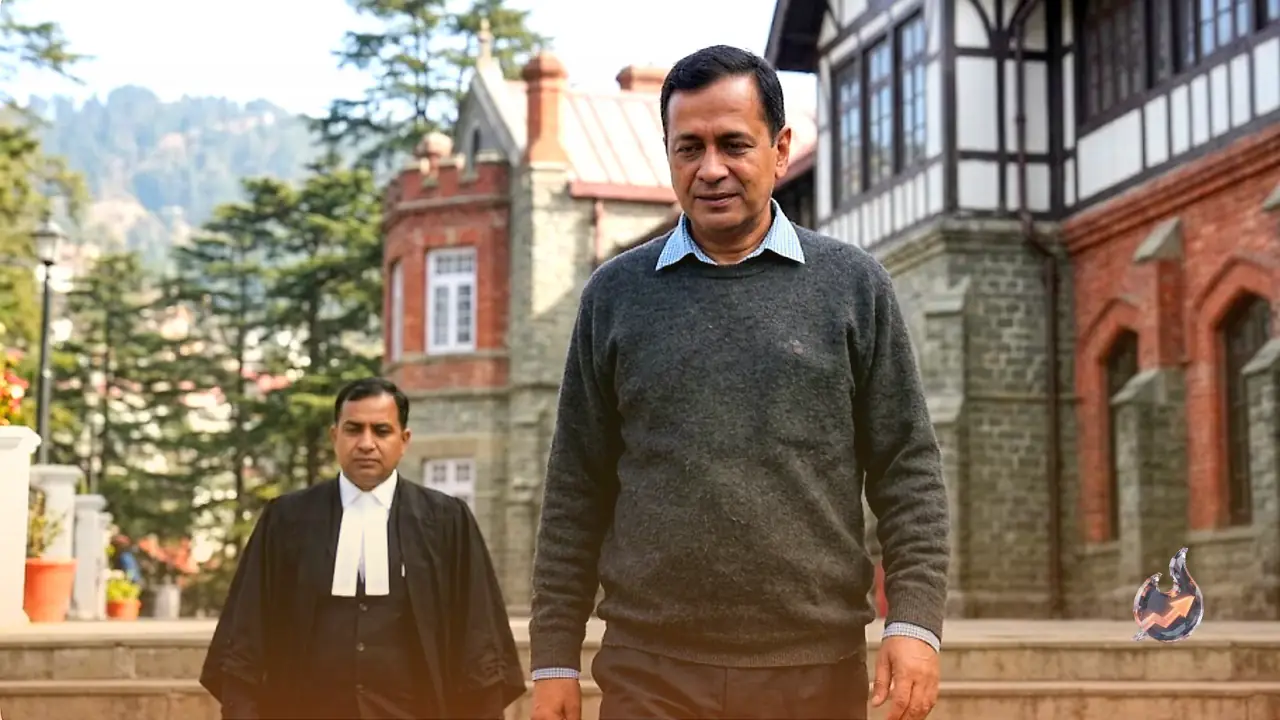

The Himachal Pradesh High Court has granted bail to a co-accused in a high-profile murder case, with the bench of Justice Sandeep Sharma observing that no one is born a criminal, circumstances push a person toward that path. The court made clear that even the most serious allegations cannot override an undertrial prisoner's constitutional right to liberty.
How the case unfolded
The sequence of events dates back to September 2025. The main accused, who is the petitioner's nephew, had secretly married the 24 year old victim without informing his family. When the woman's family eventually learned of the marriage and her pregnancy, they accepted the relationship and decided to send her off with proper rituals on 24 September 2025.
Murder a day before the send off, half burnt body found in a forest
But just a day before that send off, on 23 September, the woman went missing under mysterious circumstances. Soon after, a forest guard alerted the police, leading a police team to recover her half burnt body from a forest near Baria in Una district. The victim's mother accused both her son in law and his uncle of murder. As the investigation progressed, it emerged that the husband had brutally killed his wife over a dispute involving money and her pregnancy.
Uncle not charged with murder, but with helping him escape
Notably, the petitioner, the main accused's uncle, who approached the High Court for bail, has not been directly charged with murder. According to the police, after learning about the murder, instead of informing the police, the uncle dropped his nephew off at Pathankot so that he could go back to his Army Unit in Jammu from there. It was on this charge that the uncle had been in police custody since 25 September 2025. After the chargesheet was filed in the case, he sought bail from the court.
Justice Sandeep Sharma's key observation
Hearing the matter on 2 July, Justice Sandeep Sharma delivered a significant message. The court said criminals are not born, they are made by circumstances. Every human being carries the potential for good within them, so no offender should be considered beyond the scope of reform. The bench noted that this humanitarian view is often forgotten while dealing with juvenile or adult offenders alike. In reality, the court observed, every saint has a past and every sinner has a future.
Article 21 and the right to a speedy trial
The court placed particular emphasis on the right to liberty and a speedy trial under Article 21 of the Constitution. The bench said that whenever a crime occurs, it is often the result of several factors, social and economic conditions, parental neglect, or stress. The court also questioned the pace of the police investigation, noting that the prosecution has listed 53 witnesses, yet not a single one has been examined so far. Given this, the trial is bound to take a long time to conclude. The bench said keeping the accused in jail indefinitely under these circumstances would effectively amount to a conviction before the trial itself. The court stated clearly that no matter how serious a crime is, it cannot take away a person's right to a speedy trial.