

















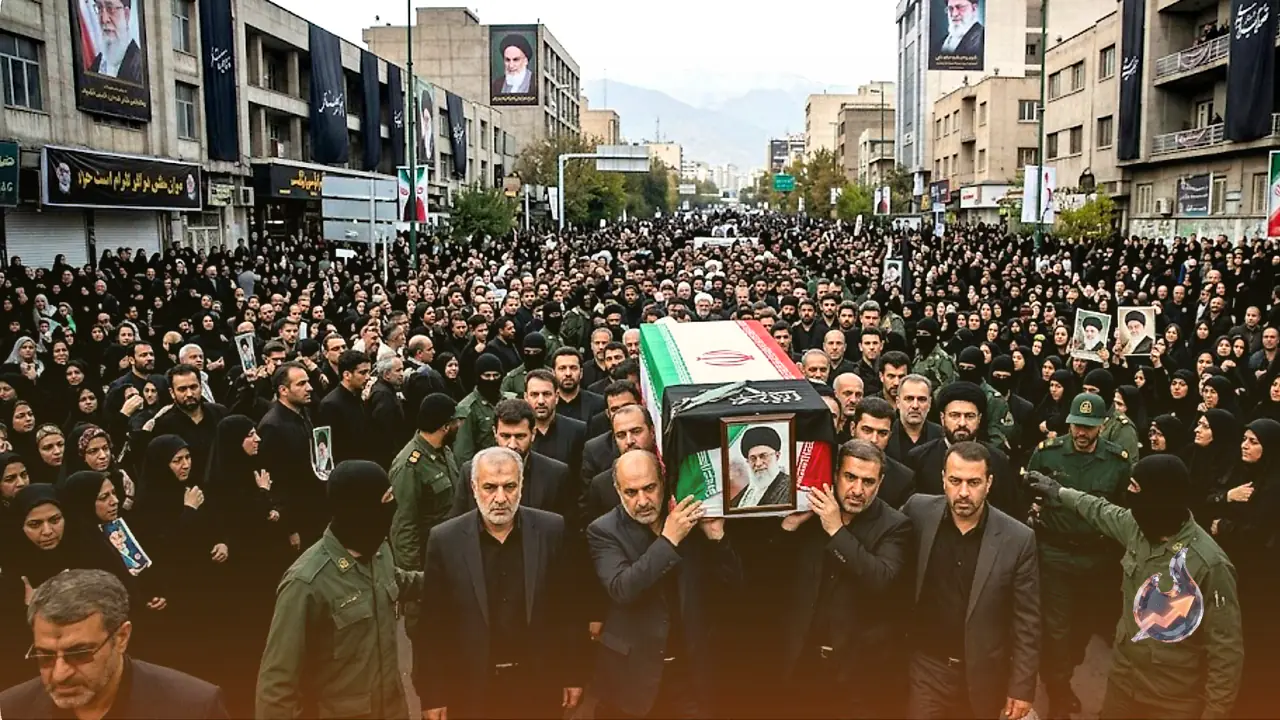

Final funeral rituals for Iran's former Supreme Leader Ali Khamenei began on 4 July, kicking off a five day journey that will carry his body through some of Shia Islam's most significant cities before he is laid to rest. Leaders from more than 100 countries and upwards of 2 crore mourners are expected to turn out to bid farewell to the man widely called the Leader of the Shias.
A Route Through Iran's Holiest Cities And Into Iraq
The procession is set to move from Tehran to Qom, then across the border into Iraq for stops at Najaf and Karbala, before finally reaching Mashhad on 9 July. Mashhad is where the burial will take place, marking the end of the five day mourning journey.
Crowds In The Millions Line The Streets
Massive crowds have gathered along the funeral route as the procession makes its way through the region. Tehran in particular has seen an outpouring of grief, with residents describing scenes of intense, emotional farewell as the procession passed through the capital. The scale of the turnout has drawn comparisons to other major Middle Eastern funerals that have pulled in huge crowds and global attention over the decades.
Why Karbala's Martyrdom Is Being Invoked
Questions are being raised over why Khamenei's assassination is being linked to the martyrdom of Karbala, a defining event in Shia Islam's history. For Shia Muslims, mourning carries deep religious weight, and the language of martyrdom is central to how loss and sacrifice are understood and commemorated within the faith. That is part of why the funeral has taken on such enormous scale, with the procession itself passing through Karbala on its way to Mashhad.
The Ghost Of 1989: When Khomeini's Funeral Descended Into Chaos
The scale of Khamenei's funeral inevitably invites comparison with the burial of Iran's earlier Supreme Leader, Ayatollah Khomeini, in 1989. At that funeral, grieving crowds surged toward the coffin in a frenzy, mourners grabbed at the shroud wrapped around Khomeini's body, and at one point the body fell to the ground amid the chaotic scenes. That funeral remains one of the most chaotic mass mourning events in the region's modern history.
What Happens Next
With the procession still making its way through Iraq, the final ceremony and burial are scheduled for 9 July in Mashhad. Until then, leaders from over 100 countries are expected to continue arriving to pay their respects alongside the more than 2 crore mourners lining the route.