






















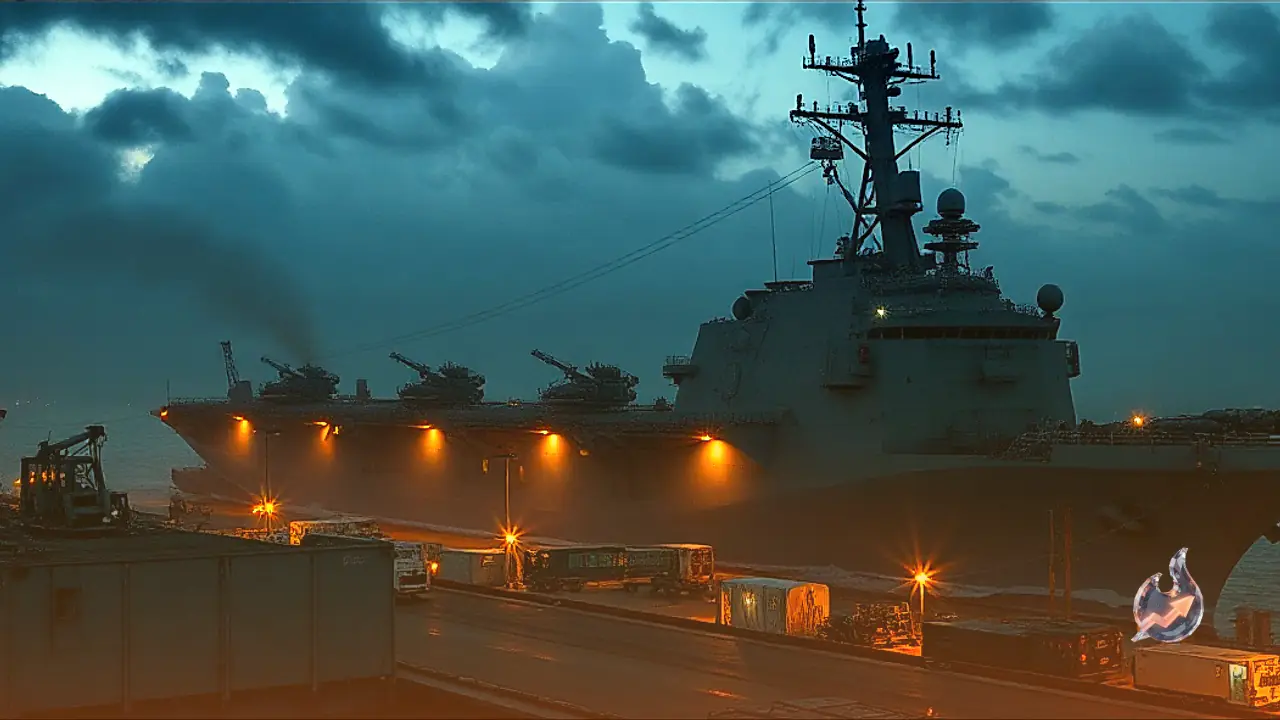

A severe mental and physical health crisis has emerged aboard the nuclear-powered aircraft carrier USS Abraham Lincoln, which has been patrolling near the coast of Iran in the Middle East for nearly nine months. Over 5,000 Marines and crew members deployed on the vessel have not set foot on land for over 200 consecutive days, leading to extreme workload exhaustion, severe burnout, and reported suicide attempts. In response to the worsening situation, the US Navy has dispatched the aircraft carrier USS George Washington to the region to relieve the stressed battle group.
Family Testimonies and Escalating Mental Distress
Reports detailing the grim conditions aboard the warship surfaced through accounts shared by military families. Annabelle Loma, the wife of a sailor deployed on the USS Abraham Lincoln, disclosed that her husband attempted to jump into the sea from the carrier. Although he was rescued and subsequently placed on medical leave, contacting him remains difficult. Loma explained that her husband feels terrified and fears he will be dishonourably discharged after 13 years of naval service simply because he collapsed from utter physical and mental exhaustion.
Maria Rodriguez, another naval officer's wife, recounted that her husband had to physically intervene on deck to stop a fellow crew member who was preparing to leap overboard. Her husband managed to grab the soldier by the arm and drag him back to safety. During a meeting on August 6 between family members and Acting Secretary of the US Navy Hung Cao alongside senior officials, one wife tearfully shared a text message from her husband stating he hoped he would not wake up the following morning. A father expressed anguish, stating his son reported that crew members constantly contemplate jumping off the ship while families at home remain unaware of the psychological toll endured at sea.
Nine Months at Sea and Deteriorating Onboard Conditions
The USS Abraham Lincoln departed San Diego on November 21, 2025, for a deployment to the Pacific Ocean before reaching Guam on December 11. It was subsequently redirected to the Arabian Sea near Iran in January. According to US Central Command, carrier-based fighter jets conducted approximately 10,000 flight operations during American strikes against targets in the region. Although the carrier was slated to return home in May, its mission was repeatedly extended without prior public announcement.
In early July, the Lincoln made a brief logistical stop at a port in Oman to procure fresh fruits and vegetables. While select personnel were permitted to disembark, they were strictly restricted to a secured facility within the port perimeter. Because the carrier has been actively enforcing a naval blockade against Iranian ports, it has been unable to dock at friendly regional harbors for crew rest or routine resupply operations.
The prolonged deployment has severely degraded the ship's infrastructure. Mechanical components are wearing out, requiring makeshift repairs while underway. Arresting cables used for jet landings are fraying, and saltwater intrusion has affected interior compartments. Basic living standards have plummeted: plumbing failures have led to toilet blockages, fungal growth in showers, and sewage overflows. Democratic Congressman Mike Levin highlighted on X that laundry services had been suspended for weeks, meals were reduced to minimal rations like half a cup of rice and two flatbreads, and basic hygiene items like soap, deodorant, and toothpaste were entirely sold out at the ship's store.
Navy Deployment Standards and Operational Overreach
Under the US Navy's standard Optimised Fleet Response Plan (OFRP), aircraft carrier strike group cycles span 32 to 36 months, with active deployments targeted at seven months, or roughly 210 days. Nuclear propulsion allows carriers like the Lincoln to operate continuously without port refueling, relying on Underway Replenishment (UNREP) ships and helicopters to supply food, ordnance, and essential gear. However, routine operations typically incorporate periodic port visits for crew rest.
According to Admiral Daryl Caudle, most US carrier strike groups strictly adhered to the 210-day limit between 2018 and 2022. However, following the October 2023 conflict involving Hamas and Israel, deployment lengths across the Navy's fleet of 11 aircraft carriers were repeatedly extended. As of August 13, the Lincoln has exceeded its original May return date by more than 53 days and has operated for over 200 consecutive days without docking at a port.
The Lincoln previously completed a 220-day deployment in the Indo-Pacific after departing San Diego on January 3, 2022, followed by a 162-day mission from July 11, 2024, to December 20, 2024. Meanwhile, the USS Gerald Ford logged 326 days at sea before returning in May 2026 after operations in Venezuela and the Middle East, marking the longest carrier deployment since the Vietnam War. Observers estimate the Lincoln could exceed that record before returning to its homeport in California.
Physiological and Psychological Effects of Extended Patrols
Remaining at sea for extended periods without shore leave creates compounding mental and physical health hazards for military personnel
- Lack of Privacy: Living in overcrowded, confined quarters causes friction and psychological strain.
- Burnout: Unpredictable deployment extensions erase timeline certainty, destroying morale.
- Depression: Limited internet and phone connectivity isolates sailors from family life, fueling feelings of helplessness and guilt.
- Insomnia and Circadian Disruption: Working on lower decks without sunlight leads to Vitamin D deficiencies and disrupted sleep cycles.
- Chronic Fatigue: Work shifts lasting 12 to 16 hours combined with flight deck noise and constant operational readiness leave crew members physically spent.
- Nutritional Deficits: The depletion of fresh produce leaves crews reliant on processed rations, causing digestive issues.
- Sanitary Hazards: Broken plumbing and sewage backup create severe hygiene and disease risks onboard.
Official Stance and Carrier Replacement Operations
US Defence Secretary Pete Hegseth initially dismissed claims regarding deteriorating conditions on the USS Lincoln. On August 14, President Donald Trump rejected assertions that the deployment length or health of the personnel was a cause for concern, stating the reports were inaccurate. However, Acting Navy Secretary Hung Cao acknowledged that the Lincoln spent over 200 days in combat conditions during its 266-day operational deployment, noting that while psychological support was provided to crew members, no major fatal incidents had occurred.
Official military statements confirmed that the USS Abraham Lincoln is preparing to return to the United States and will be relieved by the USS George Washington. The George Washington departed Yokosuka, Japan, in May for Pacific duties before being redirected toward the Middle East. Ship tracking analysis indicates that the George Washington was near Malaysia on August 13 and is expected to arrive near Oman or the Arabian Sea by August 22. Upon its arrival, three US aircraft carriers will be stationed in the Middle East region, leaving no active US carrier presence in the Pacific Ocean.