























Most people are well aware of how many smartphones they currently own and use on a daily basis. Far fewer individuals, however, actually know the exact count of mobile numbers that are officially registered under their personal identity.
Telecom companies have begun strictly enforcing the government regulation regarding the maximum cap on mobile connections a single person is permitted to hold. Cyber law and artificial intelligence expert Advocate Pawan Duggal explains that people frequently treat SIM cards almost like disposable items, acquiring new ones and discarding the old ones without a second thought. Under the updated framework, anyone applying for a new mobile connection will have their existing count verified by the cellular operator before issuance.
Regional Limits and Security Frameworks
According to Department of Telecommunications guidelines, an individual is allowed to possess up to nine mobile connections or SIM cards across the majority of regions in India. However, the permitted limit is capped at six connections per person in Jammu and Kashmir, Assam, and the North-East region. This restriction applies across all telecommunications service providers and operational circles.
There are distinct security-driven reasons for maintaining a lower limit of six connections in these specific areas. These regions have historically been classified as sensitive circles within the licensing and KYC frameworks. Cross-border security risks, insurgency concerns, and the potential misuse of active SIM connections for extortion or triggering explosive devices necessitate stricter oversight. Proportionality principles dictate that higher security risks justify tighter, transparent restrictions coupled with accessible grievance mechanisms.
Uncovering Unknown SIMs Linked to Your Identity
It is entirely possible for a mobile connection to be registered under your name without your active knowledge or explicit consent. You might have simply forgotten about an old cellular number purchased years ago and left disconnected. In more concerning scenarios, bad actors may have obtained a connection using stolen or forged identity documents without the victim ever realizing it.
The core danger lies not merely in possessing multiple phones, but in lacking awareness regarding which numbers remain active under your official records. This makes regular audits of your registered telecom connections essential for personal digital safety.
Checking Registered Connections via Sanchar Saathi
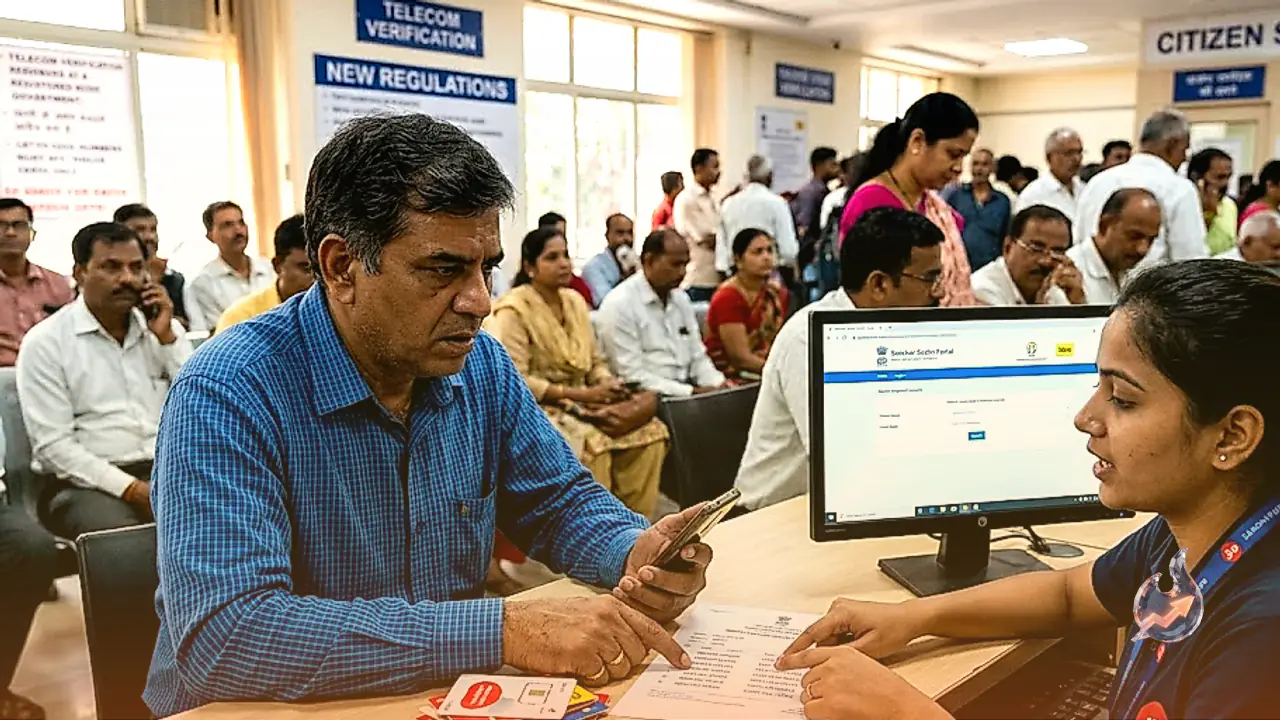
Citizens do not need to rely solely on their own memory to recall every historical mobile number they ever owned. The government provides a dedicated facility on the Sanchar Saathi portal titled Know Mobile Connections in Your Name. This digital service allows users to review every mobile connection issued against their verified identity documents.
If an individual identifies a listed number that they do not recognize or own, the portal provides a straightforward reporting mechanism to flag and address the unauthorized connection.
Distinguishing Individuals with Identical Names
To accurately differentiate between multiple citizens sharing identical names, the verification system relies on distinct KYC parameters rather than nominal data alone. Facial recognition tools help flag discrepancies when different identity documents share facial features. Furthermore, mandatory self-declaration forms require applicants to list all pre-existing mobile connections they currently hold.
Recommended Steps for Unrecognized Numbers
When discovering an unfamiliar number during an audit, users should first verify whether it belongs to a family member, an overlooked old account, or a forgotten secondary device. If the number remains completely unrecognized, it should be promptly reported through the Sanchar Saathi platform for verification and subsequent disconnection. Securing your identity prevents bad actors from exploiting your paperwork for financial fraud, phishing scams, or other unlawful digital activities.
Rationale Behind the Government Crackdown
Fraudsters frequently exploit unauthorized mobile connections to execute phishing campaigns, impersonation frauds, fake investment scams, and various cybercrimes. Utilizing multiple connections under forged identities helps criminal networks evade law enforcement tracking. Official government data highlights that authorities have already disconnected over 2.67 crore fraudulent mobile connections linked to cybercrime activities, alongside disabling approximately 12 lakh associated WhatsApp accounts.
Technical Verification by Telecom Operators
Cellular service providers verify existing connection counts by integrating with the government Digital Intelligence Platform. Enhanced photo-based identification mechanisms add an extra layer of security. Furthermore, customers must explicitly declare all currently active numbers across different operators and service circles within their Customer Application Form.
Penalties for Exceeding the Connection Limit
Attempting to acquire new connections beyond the legally permitted threshold results in immediate regulatory intervention. The enforcement rollout proceeds in scheduled stages, with operators gradually upgrading their technical infrastructures. The Department of Telecommunications mandates that any newly activated connection breaching the prescribed limit can face immediate suspension for a 24-hour period until the discrepancy is successfully resolved.