























Across the forest fringes of Jharkhand, local communities continue to draw their daily subsistence directly from surrounding woodlands. Even as rapid urban expansion pulls workforce away from traditional hamlets toward major industrial towns, numerous families around Jamshedpur remain anchored to forest-based livelihoods. Lacking access to salaried employment or commercial enterprises, these residents rely on rigorous manual labor. Before dawn breaks, individuals set out on pedal bicycles into the interiors of dense woodlands, searching for naturally fallen dry timber that can be gathered, processed, and transported to nearby market stalls for domestic fuel buyers.
The challenging pre-dawn routine begins at 5 am
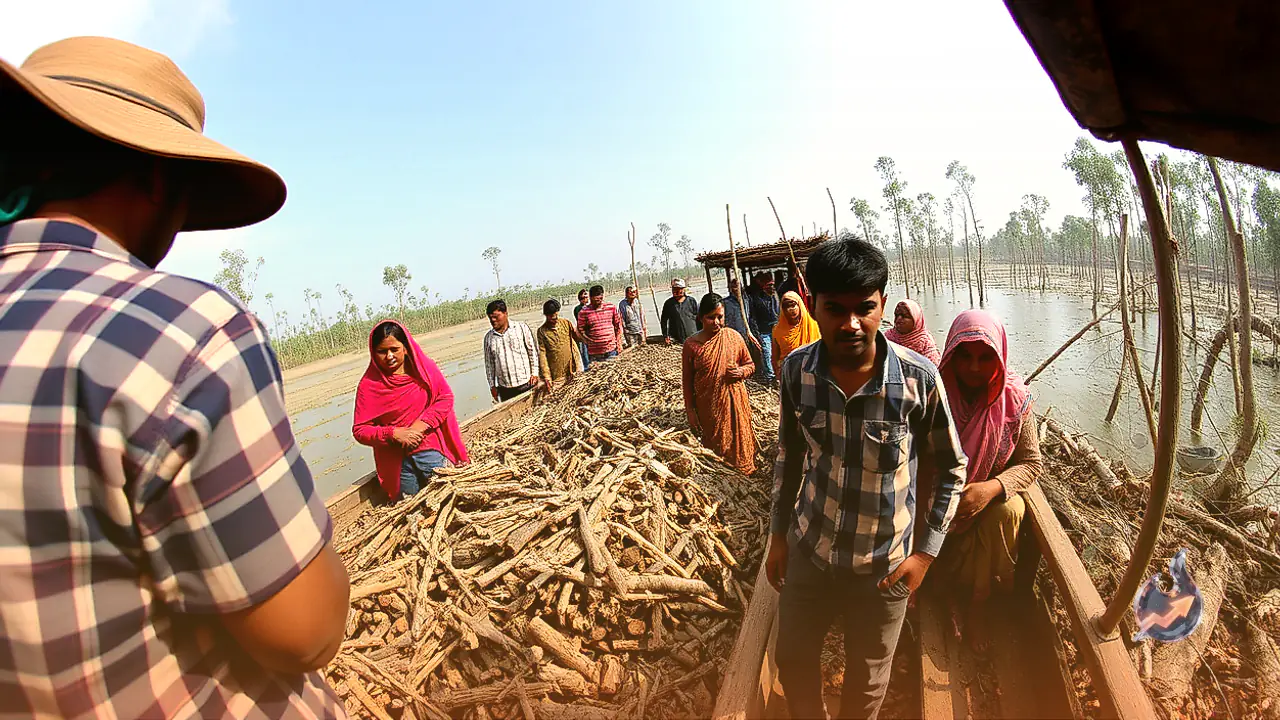
The daily reality of this subsistence livelihood is exemplified by Dilshan, a resident of Kalyankocha village situated within the Kowali administrative block of the region. Dilshan begins his work schedule at approximately 5 am each morning, leaving his home while surroundings are still dark. Navigating unpaved trails on an ordinary bicycle, he journeys deep into forest tracts where fallen timber is plentiful. Moving far inside the forest is physically demanding and fraught with difficulty, as finding suitable dry wood requires combing through rough terrain and hauling heavy branches back to where the cycle is parked.
Three hours of forest collection and systematic two-foot sizing
Dilshan explains that gathering sufficient dry branches and securing them onto his cycle carrier requires two to three hours of continuous exertion every morning. He exclusively gathers deadwood that has naturally dried on the ground. Once a sufficient quantity is assembled, the timber is chopped into uniform logs measuring roughly two feet in length. This sizing is deliberate and utilitarian. In nearby towns and peri-urban neighborhoods, households continue to rely on traditional earthen stoves for daily cooking and domestic heating. Two-foot pieces fit neatly into conventional hearth openings, making them convenient for local buyers without requiring extra cutting at home.
A full day of intense toil yielding 350 to 400 rupees
Balancing dozens of kilograms of chopped firewood across the frame and carrier of a single bicycle, Dilshan pedals long distances to reach local trading spots. He notes that liquidating an entire bicycle load of prepared dry timber yields between 350 and 400 rupees. When measured against the sheer physical demands of walking through dense woodland, chopping timber, loading the cargo, and balancing it over uneven village roads, the financial return remains modest. Nevertheless, this income serves as the vital lifeline that pays for daily rations and essential household expenses for his dependent family members.
Resilience and reliance on nature amid rural constraints
Despite the stark imbalance between heavy physical toil and modest earnings, Dilshan views forest gathering as a necessary and dignified livelihood for communities residing near forest tracts. Rural living often demands minimal overhead costs, allowing households to adapt to humble daily earnings. Dilshan's working life mirrors the quiet resilience of countless rural laborers across eastern India, who rise at daybreak without modern machinery or social security, finding their daily bread through hard work and close harmony with the natural environment.