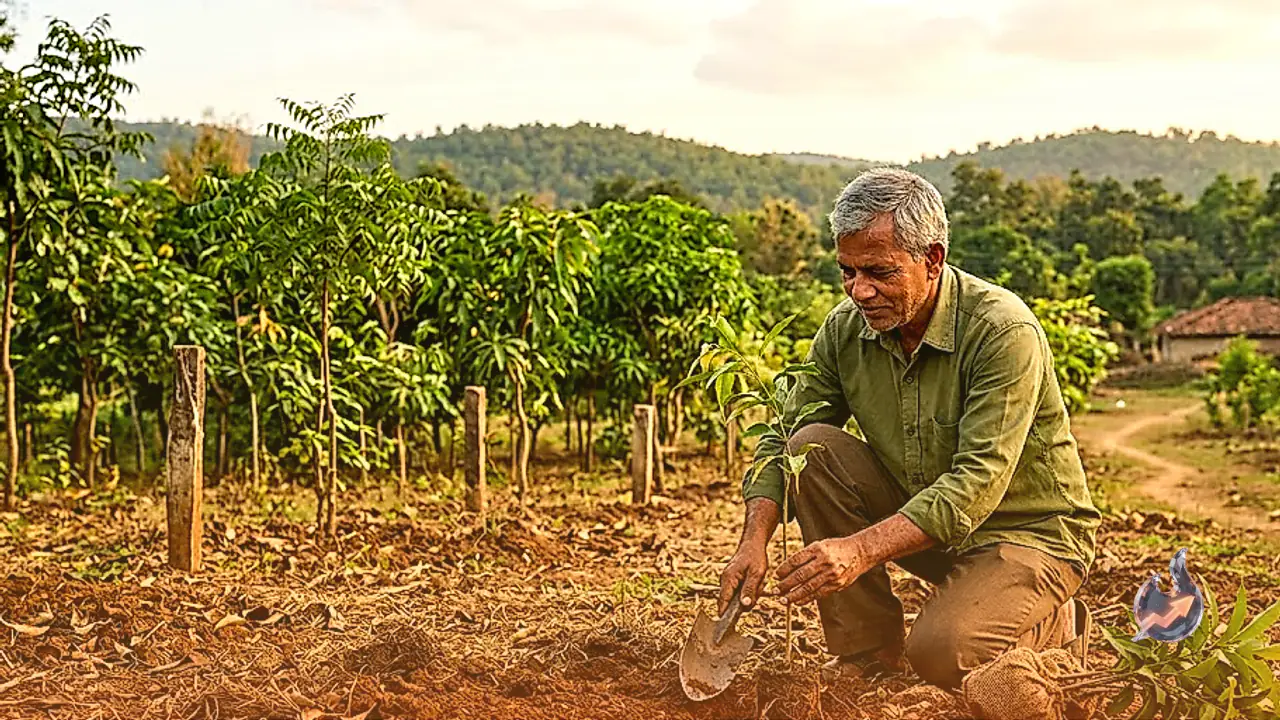























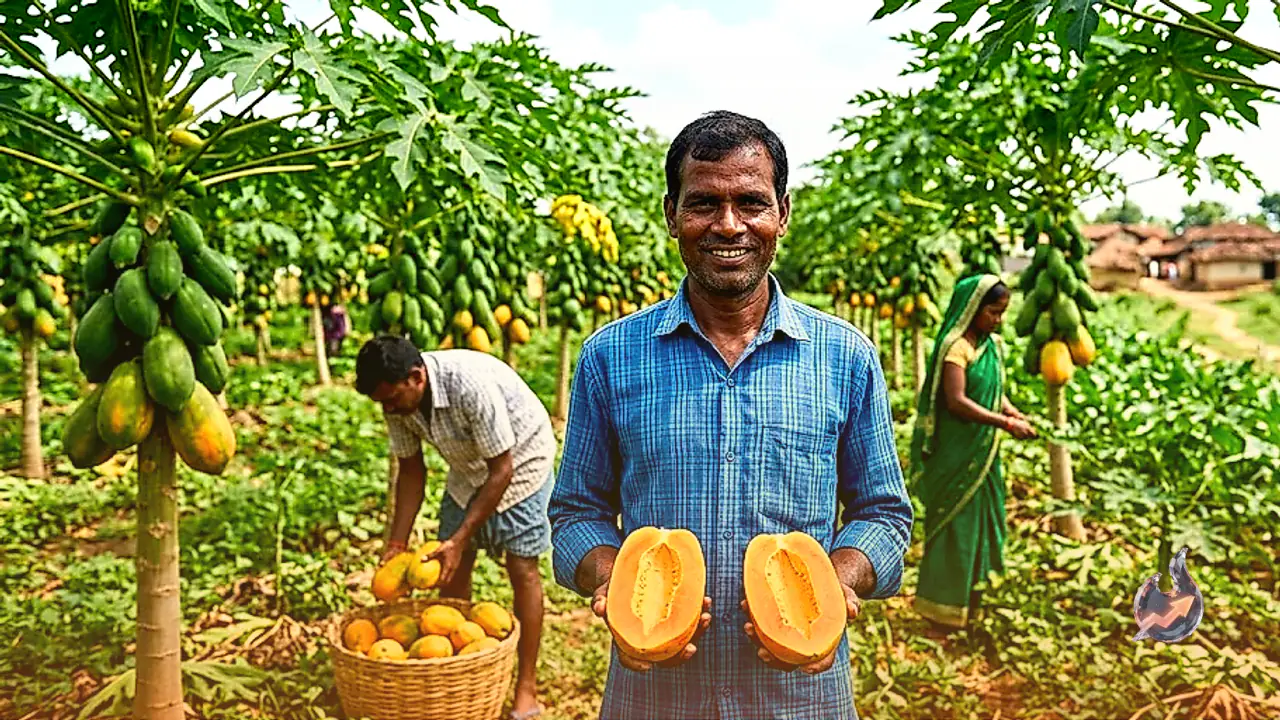

Agricultural practices in Deoghar are undergoing a massive transformation over time. Farmers are no longer content with relying solely on conventional crops like paddy, wheat, and other traditional grains. Instead, cultivators are enthusiastically embracing horticulture and intercropping methods. The primary advantage of this modern approach is that it opens up lucrative opportunities to generate substantial revenue through diverse crop yields from the exact same agricultural land. Agricultural expert Vakil Yadav from Deoghar has highlighted that numerous local farmers are successfully combining horticulture alongside their traditional farming routines, while others have completely transitioned toward dedicated horticulture practices. Among these emerging trends, papaya cultivation is widely regarded as an exceptional option for local cultivators. With proper farm management and strategic planning, papaya farming harbors the immense potential of delivering superior financial returns despite requiring relatively lower input costs.
Choosing The Right Variety Is Crucial For Success
According to agricultural experts, the single most critical step in successful papaya cultivation is making an informed decision regarding the selection of the correct crop variety. If farmers initiate their agricultural activities without possessing adequate knowledge about specific plant types, their overall crop production can suffer severely. Considering the specific soil composition and weather patterns characteristic of the Deoghar region, improved varieties such as Pusa Nanha and Red Lady Taiwan are widely recommended as the most superior choices. The Pusa Nanha variety, in particular, enjoys considerable popularity among the farming community. However, this specific variant also comes with a unique challenge that cultivators must navigate carefully. In the case of Pusa Nanha, it often becomes quite difficult for many farmers to accurately distinguish between male and female plants during the initial growth stages. Since male plants do not bear any fruit at all, an uncontrolled increase in the population of male plants within a field can heavily compromise the overall harvest volume. Therefore, before embarking on cultivation, gaining comprehensive knowledge about plant identification and variety characteristics remains an absolute necessity.
The Rising Popularity Of Red Lady Taiwan Hybrid Variety
Simultaneously, the Red Lady Taiwan variety is also experiencing a rapid surge in popularity among progressive growers. According to agricultural specialists, this is a specialized hybrid variety that boasts a reliably high proportion of fruit-bearing plants in the field. This exact characteristic is the primary reason why farmers consider it a remarkably viable option for commercial papaya production. If cultivators prepare their fields with utmost precision and carefully handpick healthy saplings, they can easily secure an abundant harvest. To achieve this, providing timely applications of fertilizers and adequate water supply at regular intervals is fundamentally necessary. Furthermore, farmers must maintain regular vigilance over their crops so that any emerging plant diseases or pest infestations can be controlled swiftly before causing extensive damage. An additional economic benefit associated with papaya farming is that growers do not have to endure excessively long waiting periods before harvesting the fruit. When managed under optimal conditions, the plants begin to bear fruit relatively early, enabling farmers to secure financial returns much faster than what is typically possible through standard traditional cropping cycles.
Maximizing Profits Through Strategic Variety Management
Agricultural expert Vakil Yadav suggests that if farmers wish to maximize their outcomes, they can smartly cultivate multiple distinct varieties within the same agricultural plot. Varieties such as Pusa Nanha and Red Lady Taiwan can be thoughtfully evaluated and utilized together as viable options. Nevertheless, farmers must also keep in mind that merely planting two different varieties does not automatically double one's profits without additional effort. Cultivars need to pay close attention to the specific condition and fertility of their soil. Maintaining appropriate spacing between individual plants is equally critical for optimal growth. Proper management of irrigation schedules, appropriate fertilizer application, and rigorous pest control measures remain indispensable components of successful farming. Additionally, prevailing market prices for papayas exert a direct influence on the farmer's ultimate net income. Consequently, seeking professional guidance from local agricultural experts or the nearest Krishi Vigyan Kendra before launching a horticulture venture is strongly advised. Choosing the correct plant variety coupled with superior field management can effectively transform papaya cultivation into an excellent secondary source of steady income for farmers.