





















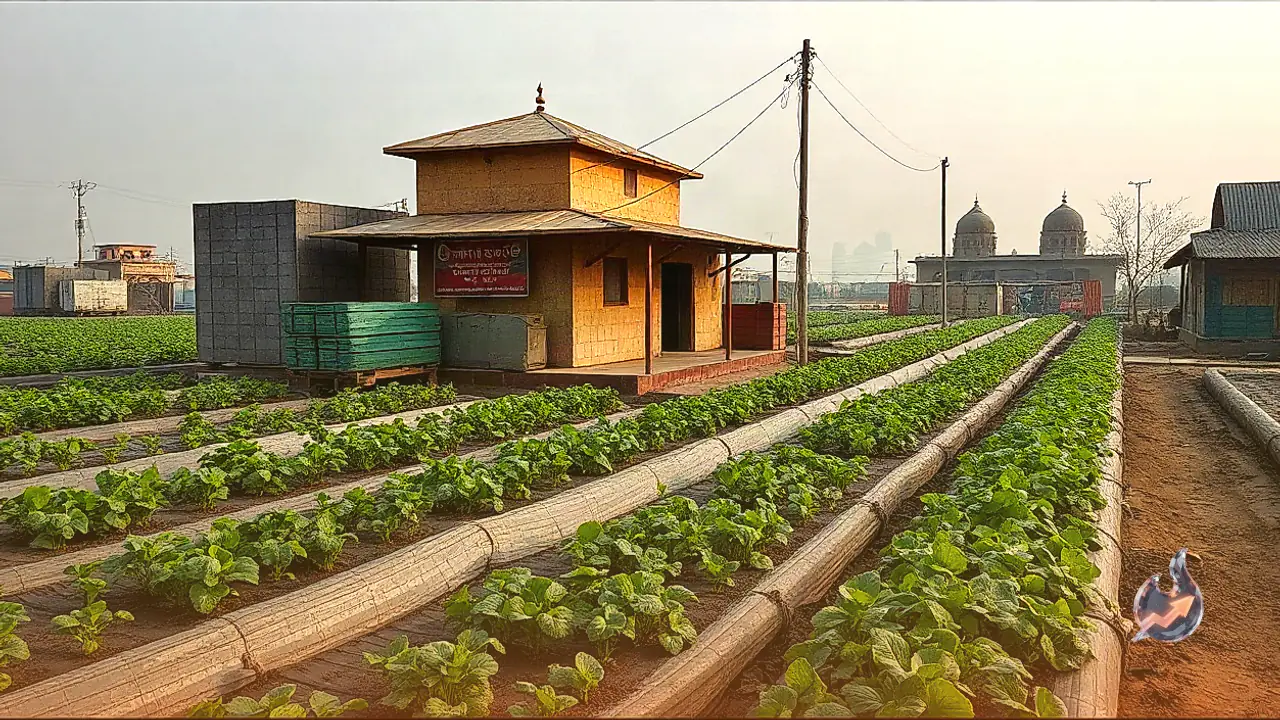

In Jharkhand's Deoghar district, farmers have already started preparing for the winter vegetable season. Temperatures are set to drop within weeks, and demand for tomatoes, cauliflower, cabbage and chillies will climb sharply in the markets. Only farmers who build a strong nursery at the right time end up with better yields and higher profits through the cold months, which is why September is considered the most critical window for raising vegetable saplings before they are moved to the field.
Why plants fail even after buying costly hybrid seeds
Many farmers in Deoghar are currently occupied with nursery preparation, but one common slip often undoes both their effort and their money. They buy expensive, good quality hybrid seeds from the market, yet overlook the correct method of raising the nursery itself. The result is that several seeds never germinate at all, while some saplings rot and die at a very early stage. This leaves farmers with a double loss, the money spent on seed goes to waste, and the eventual crop output also takes a hit. In many cases farmers do not even realise that the real cause of the loss lies in how the nursery was raised, not in the seed itself.
Expert says fix the nursery first
Agriculture expert Vakil Yadav from Deoghar says the entire arithmetic of earning well from vegetable farming rests on the quality of the nursery. Only a healthy, sturdy sapling can eventually deliver a good crop and higher output. According to him, farmers often focus only on the price and variety of the seed while treating the nursery-raising process casually, and it is this small oversight that turns into a major loss later. He explains that the healthier the saplings raised in the nursery, the faster and stronger their growth once they are transplanted into the field. That is why, alongside buying seed, farmers also need to understand exactly how a nursery should be built.
Raised beds and pro-trays, the two ways to build a nursery
Vakil Yadav explains that vegetable nurseries are mainly prepared using two methods. The first and traditional one involves sowing seed in a raised bed built directly in the field. The second, relatively newer method is raising the nursery in pro-trays, which he calls more beneficial for farmers. The biggest advantage of a pro-tray is that it is portable, meaning it can easily be shifted from one spot to another whenever needed. If heavy, continuous rain threatens to damage the young plants, farmers can quickly move the pro-tray to a sheltered or safe spot, protecting the delicate saplings from rain damage and other harm. A raised bed offers no such flexibility, since once seed is sown directly into the soil, protecting the entire bed from bad weather becomes far harder.
Less root damage means faster growth after transplanting
One problem with raised-bed nurseries is that saplings risk root damage at the time of transplanting. When plants are pulled out of the bed, the roots can snap, or the sapling can go into shock after being separated from the soil, which directly affects its health and future growth. Saplings raised in pro-trays, by contrast, can be lifted out along with the soil clump around their roots, so the roots largely stay intact. That is why such saplings settle in quickly right after being transplanted into the field, take root faster in the new soil, and show noticeably better growth compared to raised-bed saplings. This also raises the chances of the crop maturing sooner.
Key advice for farmers
According to the agriculture expert, farmers who want good earnings from winter vegetables need to get the nursery stage right from the very start. Strong roots and a healthy sapling form the foundation of a good harvest later on. The advice, therefore, is to avoid rushing or being careless while preparing nurseries in September, and to adopt the pro-tray method wherever possible. A little extra care and the right technique can save farmers from losses caused by weak saplings, while also opening the door to better vegetable yields and solid profits through the winter season. Buying expensive seed alone is not enough, the real difference comes from how carefully the nursery is raised and which technique is chosen.