





















The monsoon season brings a refreshing change, not just for the weather but also for your home garden. As the humidity levels rise and the environment becomes naturally moist, it creates the perfect breeding ground for various household plants to thrive. If you are looking to add a touch of lush greenery to your living space, the rainy season is the ideal time to start planting. During this period, certain plants experience accelerated growth, rapidly transforming your balcony or courtyard into a vibrant green haven. Here are five such low-maintenance plants that flourish beautifully when exposed to monsoon showers, enhancing both the aesthetic appeal and the practical utility of your home.
Tulsi: The Sacred and Medicinal Basil
In almost every Indian household, the Tulsi plant holds a place of profound significance, both spiritually and medicinally. During the monsoon, the increased moisture in the air acts as a natural catalyst for this plant, causing it to grow exceptionally fast while its leaves develop fully and healthily. One of the best aspects of growing Tulsi is its adaptability; it can be easily cultivated in a standard flower pot and requires very little physical space. Beyond its religious importance, the mature leaves are highly beneficial and widely used in brewing daily tea, preparing medicinal decoctions, and formulating various traditional home remedies. However, gardeners must exercise caution during heavy downpours. It is crucial to ensure that excess water does not accumulate inside the pot, as stagnant water can quickly cause the plant's roots to rot and decay.
Giloy: The Fast-Growing Ayurvedic Creeper
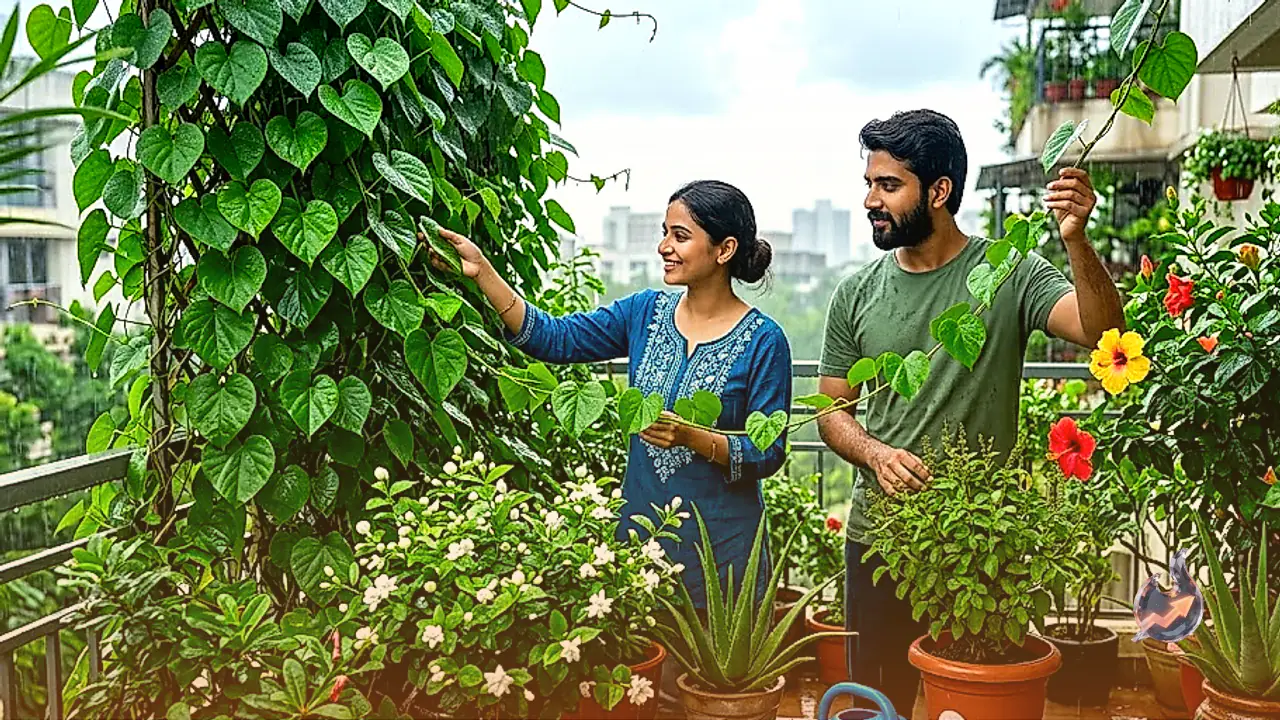
Giloy is a resilient creeping vine renowned for its explosive growth rate during the rainy months. Because it is a climber, it flourishes best when provided with some form of structural support, such as a garden trellis, an exterior wall, or a nearby tree trunk. The constant moisture brought on by the rains allows its vines to spread outward rapidly, covering significant areas in a short amount of time. Remarkably, Giloy demands very little daily maintenance or special care from the gardener. In the realm of Ayurveda, this medicinal creeper is highly valued for its health-boosting properties. Planting Giloy at home not only envelops your space in a blanket of rich greenery but also provides a continuous supply of useful medicinal leaves.
Mogra: A Fragrant Addition to Your Balcony
If you wish to introduce a delightful fragrance to your home, the Mogra plant stands out as a superior choice for monsoon gardening. The continuous rainfall ensures that the soil retains consistent moisture, which goes a long way in strengthening the plant's root system and promoting robust overall growth. Once established, the Mogra plant begins to bloom, yielding beautiful, pure white flowers that carry an intensely sweet and soothing aroma. Whether you choose to plant it directly in the soil of your courtyard or keep it in a compact pot on your balcony, the natural fragrance of these blossoms will effortlessly perfume the entire atmosphere of your home.
Hibiscus: Vibrant Blooms for Beauty and Worship
The Hibiscus, locally known as Gudhal, is another stunning plant that responds enthusiastically to monsoon conditions. When planted during the rainy season, the plant rapidly sprouts new, healthy branches. With just the right amount of attention and proper care, it will reward you with a continuous and generous display of large, vibrant flowers. Available in eye-catching shades like red and pink, this flowering plant dramatically elevates the visual beauty of any garden space. Additionally, its fresh blooms are frequently harvested for use in daily worship rituals. To achieve the best flowering results, it is important to position the Hibiscus plant in an area where it can receive adequate, gentle sunlight between the rain showers.
Aloe Vera: The Low-Maintenance Skincare Plant
Rounding out the list is Aloe Vera, a globally popular succulent famous for requiring minimal upkeep. While it can certainly be planted during the monsoon, gardeners must be highly vigilant about its drainage. Like Tulsi, Aloe Vera is extremely sensitive to waterlogging; its roots should never be left sitting in stagnant water for extended periods, or they will perish. The plant's iconic thick, fleshy leaves are packed with a cooling, nutrient-rich gel that is highly sought after for natural skin care routines and hair nourishment. Given its hardy nature, Aloe Vera can be effortlessly grown in a small pot placed on a sunny balcony, making it an incredibly practical and beautiful addition to your monsoon gardening lineup.