






















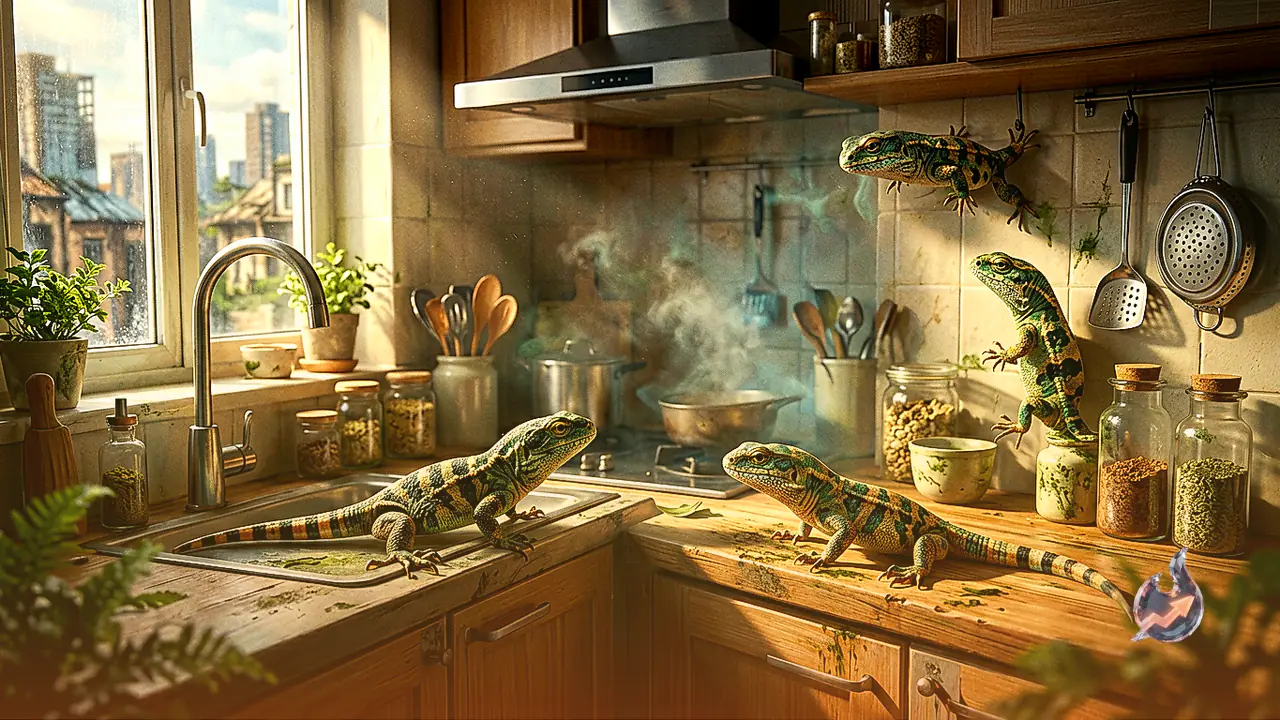

With the onset of the monsoon season and summer months, households across many regions frequently witness a sudden surge in the presence of house lizards. The sight of these reptiles darting across kitchen walls, scaling window frames, or hiding in dark room corners can be an uncomfortable, alarming, and deeply unsettling experience for many residents. While common domestic house lizards do not pose a direct physical threat or venomous danger to humans—and in fact play a helpful ecological role by preying on mosquitoes, flies, moths, and other nuisance insects—most people strongly prefer to keep their indoor living areas entirely free of them.
Many homeowners are reluctant to kill lizards or spray toxic chemical insecticides indoors. Harsh chemical repellents can severely compromise indoor air quality, leave chemical residues on surfaces, and pose potential health risks to young children and domestic pets. As a result, safe, natural, and non-toxic home remedies have gained widespread popularity as gentle alternatives. However, urban pest management experts emphasize that natural remedies should never be viewed as 100 percent guaranteed or permanent fixes. The most reliable long term solution involves systematically reducing the indoor insect population that serves as their food source and physically sealing entry points around the house.
Five Simple and Natural Home Remedies for Repelling Lizards
For those seeking to maintain a chemical-free home while deterring unwanted lizards, several accessible remedies using common kitchen and household items can be employed
- Using Clean Eggshells: Placing dry and clean eggshells in strategic spots is a traditional household method long believed to scare away lizards. The underlying theory suggests that lizards mistake eggshells for the presence of a larger predator bird or are repelled by the faint trace of sulfur compounds. Although there is no conclusive scientific evidence establishing that eggshells act as a definitive lizard repellent, many people routinely place them along window sills, door frames, and room corners. If trying this method, it is essential to ensure that the shells are thoroughly washed and completely dried beforehand. Position them safely away from small children and pets to prevent accidental ingestion. Furthermore, if high humidity causes the eggshells to emit an unpleasant odor or collect dirt, they should be discarded and replaced immediately.
- Garlic and Onion Infusion Spray: The intense, pungent sulfur aroma released by garlic and onions acts as an effective natural sensory deterrent for lizards. To prepare this natural spray, finely chop several garlic cloves and onion slices, then submerge them in water for a few hours to extract their pungent compounds. Strain the liquid thoroughly to remove solid particles and transfer it into a clean spray bottle. Spray the solution around window perimeters, door thresholds, and wall sections where lizards frequently gather. Always take proper safety precautions during application to protect your eyes and skin. Avoid spraying the mixture directly onto cookware, eating utensils, or food storage areas in the kitchen.
- Black Pepper Spray Solution: The sharp, pungent smell and irritation caused by black pepper can effectively discourage lizards from frequenting specific areas. Mix ground black pepper into warm water, let it steep briefly, strain it carefully, and pour the liquid into a spray bottle. Lightly mist the mixture along wall edges, behind appliances, and around entryways. While some individuals experiment with adding red chili powder or extra spicy seasonings, extreme caution must be exercised. Spicy chili sprays can easily trigger severe respiratory irritation, coughing, and intense burning sensations in the eyes and skin. Ensure children and pets are kept far away from any freshly treated zones.
- Peppermint and Eucalyptus Essential Oils: Strong fragrant aromas derived from plants like peppermint and eucalyptus create an uninviting environment for lizards. Placing small potted peppermint plants near window grills serves as a convenient, natural, and visually pleasing barrier. If using commercial essential oils, never apply concentrated oil directly onto skin or household surfaces. Always dilute the oil properly with water before spraying. Additionally, exercise heightened caution in homes with domestic pets, as certain essential oils—particularly tea tree and peppermint—can be toxic and harmful to cats and dogs when inhaled or ingested.
- The Traditional Peacock Feather Method: Displaying peacock feathers near windows, doorways, or problem walls is a widely recognized traditional belief in many Asian households. Proponents argue that since peacocks are natural predators of small reptiles, the sight or presence of their feathers strikes fear into lizards. However, from a scientific standpoint, there is no empirical evidence validating this claim, making it more of a cultural myth than a proven biological repellent. Homeowners should not rely solely on peacock feathers to address a lizard problem, but should instead combine any traditional methods with rigorous cleanliness and active insect control.
Eliminating Food Sources and Sealing Entry Points
When house lizards become a recurring nuisance, focusing exclusively on repellent sprays is insufficient. It is vital to investigate and address the underlying reasons attracting them into the home in the first place. Lizards enter residential structures primarily in pursuit of prey. Any home with a steady supply of mosquitoes, fruit flies, houseflies, spiders, and light-seeking moths will naturally attract opportunistic reptiles. Keeping bright white outdoor lights illuminated unnecessarily throughout the night draws swarms of insects toward window screens and doors, creating an effortless feeding ground for lizards.
Achieving a lasting solution requires maintaining strict hygiene, particularly in the kitchen. Never leave unwashed dishes, leftover food crumbs, or exposed food items sitting out overnight. Ensure trash cans are tightly fitted with lids and fix any leaking pipes or standing water around sinks, as moisture and food scraps invite insect breeding. Installing durable wire mesh screens on windows and ventilation shafts forms a formidable physical barrier. Additionally, inspect exterior walls, door frames, and window sills to seal small cracks, gaps, and cable holes using sealant or silicone, effectively blocking entry for both lizards and insect pests.
Safety Guidelines and When to Seek Professional Assistance
If a lizard is spotted indoors, residents should refrain from attempting to catch or trap it with bare hands. Although common house lizards are non-poisonous, handling them can provoke defensive bites or risk bacterial transmission from their skin. When making and spraying homemade spicy or aromatic sprays, always safeguard your face, eyes, food supplies, and children. In situations where a home experiences an abnormally high lizard infestation that cannot be managed through home remedies, seeking assistance from a licensed, eco-friendly, and non-harmful pest control service is the safest and most effective solution.