





















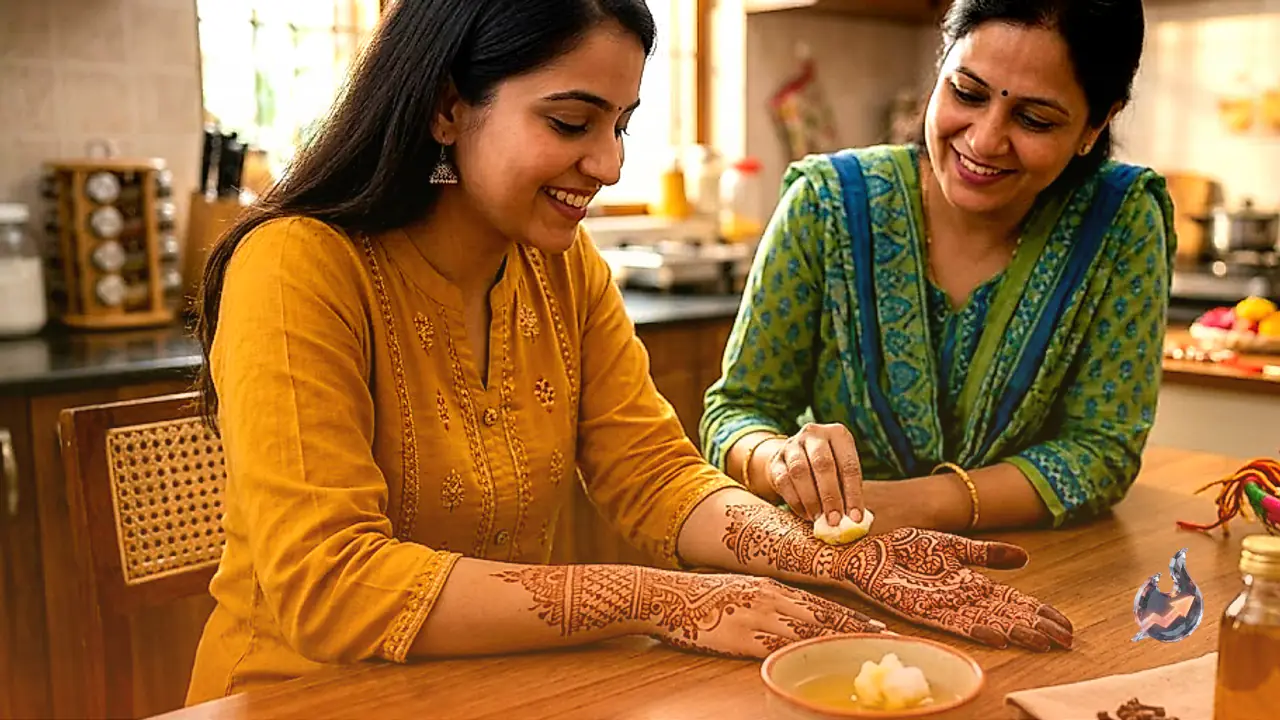

During festive celebrations like Rakshabandhan, applying intricate henna designs on hands is a cherished tradition that completes the celebratory look. While beautiful patterns bring immense joy, getting a faint or pale stain after hours of waiting can be disappointing. Although market stores offer various instant chemical darkeners, these synthetic formulations often carry a risk of allergic reactions and skin irritation. Opting for simple, time-tested natural kitchen remedies allows you to achieve a rich, long-lasting dark hue safely without damaging your skin.
Natural Heat Seal with Mustard Oil
After the henna paste dries completely on your palms, scrape it off gently using your fingers or a butter knife instead of washing it away. Once the dried flakes are cleared, massage a few drops of pure mustard oil onto your hands with light pressure. Mustard oil possesses natural warming properties that help deepen the pigment over several hours. It is equally essential to keep your hands completely away from water immediately after scraping off the paste, as moisture stops the color oxidation process prematurely.
Warming Palms with Clove Fumes
Infusing warmth through clove smoke is another traditional technique widely used to darken henna stains. To try this method, place a few whole cloves on a small frying pan or tawa over low flame until they start emitting fragrant smoke. Gently hold your palms over the rising fumes at a safe, elevated height to let the heat penetrate the stain. You must exercise extreme caution during this process, ensuring your hands stay at a sufficient distance from the hot stove surface to prevent accidental burns or skin scalds.
Moisture Lock with Lemon and Sugar Mixture
Maintaining moisture while henna remains on the skin allows the natural dye molecules to transfer deeply into the epidermis. Prepare a simple syrup by dissolving sugar in fresh lemon juice in a small bowl. Dabs of this liquid can be gently applied onto the drying henna paste using a soft cotton ball. Avoid rubbing the cotton roughly, which could smudge the delicate design lines. Since citric acid in lemon juice can cause stinging on sensitive skin, performing a small patch test beforehand is highly recommended.
Pre-Mixing Henna with Dark Tea or Coffee Brew
Enhancing the stain begins right at the preparation stage when mixing the henna powder. Replacing ordinary tap water with a thick, concentrated brew of dark black tea or boiled coffee powder naturally deepens the dye base. The natural tannins present in tea and coffee leaves interact with the henna compounds, giving the finished stain a richer, reddish-brown undertone even before it touches your hands.
Applying Pickle Oil with Essential Precautions
Another traditional advice involves spreading a thin layer of oil extracted from homemade Indian pickles onto the hands after removing dry henna. The blend of mustard oil and natural spices in pickle liquid generates gentle skin warmth that promotes darker color absorption. However, because pickle oil contains salt and pungent spices, individuals with delicate or sensitive skin might experience irritation. Testing a tiny droplet on your wrist first ensures your skin tolerates it safely.