






















Harvesting fresh carrots straight from a home garden offers a sweetness, crispness, and aroma that commercially purchased produce simply cannot replicate. Pulling an earthy root from the ground, rinsing it clean, and consuming it raw is a rewarding gardening experience. Carrots are naturally rich in beta-carotene and wholesome natural sugars, making them an excellent dietary addition for overall wellness. Cultivating this root vegetable requires no advanced horticultural background. By observing a few fundamental principles, anyone can successfully grow sweet and crunchy carrots on a patio or backyard plot.
Conditioning Loose Soil for Unrestricted Root Growth
Because carrots develop entirely beneath the surface, preparing the growing medium is the single most critical factor determining harvest quality. The soil must be light, loose, and exceptionally well-draining, allowing the taproot to push downward without encountering physical barriers. Compacted soil invariably causes roots to fork, twist, or stunt. Begin by thoroughly clearing the plot of all stones, pebbles, and hard clay clods. Work and aerate the bed to a depth of 10 to 12 inches to ensure a soft root zone.
Incorporate well-rotted organic matter or cured compost to provide balanced nutrition. Avoid applying fresh animal manure immediately before seeding. Fresh manure contains excessive nitrogen and active elements that stimulate aggressive top foliage growth at the expense of root thickening, often resulting in hairy, misshapen roots.
Sowing Seeds at the Correct Depth and Row Spacing
Carrot seeds are minute and fragile, requiring precise handling during planting. Create shallow furrows in the prepared soil between 1/4 and 1/2 inch deep. Scatter the seeds along the rows while keeping adjacent rows spaced 6 to 12 inches apart. Lightly cover the furrows with a dusting of sifted compost or fine garden soil.
Germination in carrots is relatively slow, typically requiring between 1 and 3 weeks depending on ambient conditions. Maintaining continuous moisture across the topsoil layer during this phase is imperative. Instead of using a strong water stream that can displace delicate seeds, mist the soil surface gently each day with a fine spray.
Thinning Seedlings to Encourage Thick Taproots
Once young seedlings reach a height of approximately 2 inches, thinning becomes an essential chore. Dense seed distribution leads to crowded sprouts that compete aggressively for light and subsurface nutrients. Carefully pluck out weaker, crowded, or leggy seedlings to relieve pressure on the bed.
Aim for a final spacing of 2 to 3 inches between the remaining vigorous plants. This breathing room ensures that each developing root receives unrestricted access to sunlight, moisture, and ground nutrients, allowing the central taproot to expand into a stout, uniform vegetable. Neglecting this step inevitably leads to spindly, stunted roots.
Moisture Regulation and Irrigation Practices
Carrots demand a consistent supply of hydration throughout their vegetative cycle. Providing roughly 1 inch of water per week generally meets the plant's moisture requirements. The crucial objective is avoiding extreme swings between parched earth and waterlogged mud.
Erratic moisture cycles severely compromise root texture and taste. When parched soil suddenly receives excessive water, the rapidly swelling roots often split open. Irregular watering can also make the carrot's interior tough, woody, and noticeably bitter. Spreading a light blanket of clean dry grass, straw, or fine compost around the base of the foliage helps stabilize soil moisture and cools the root zone.
Timing the Harvest and Lifting Roots Safely
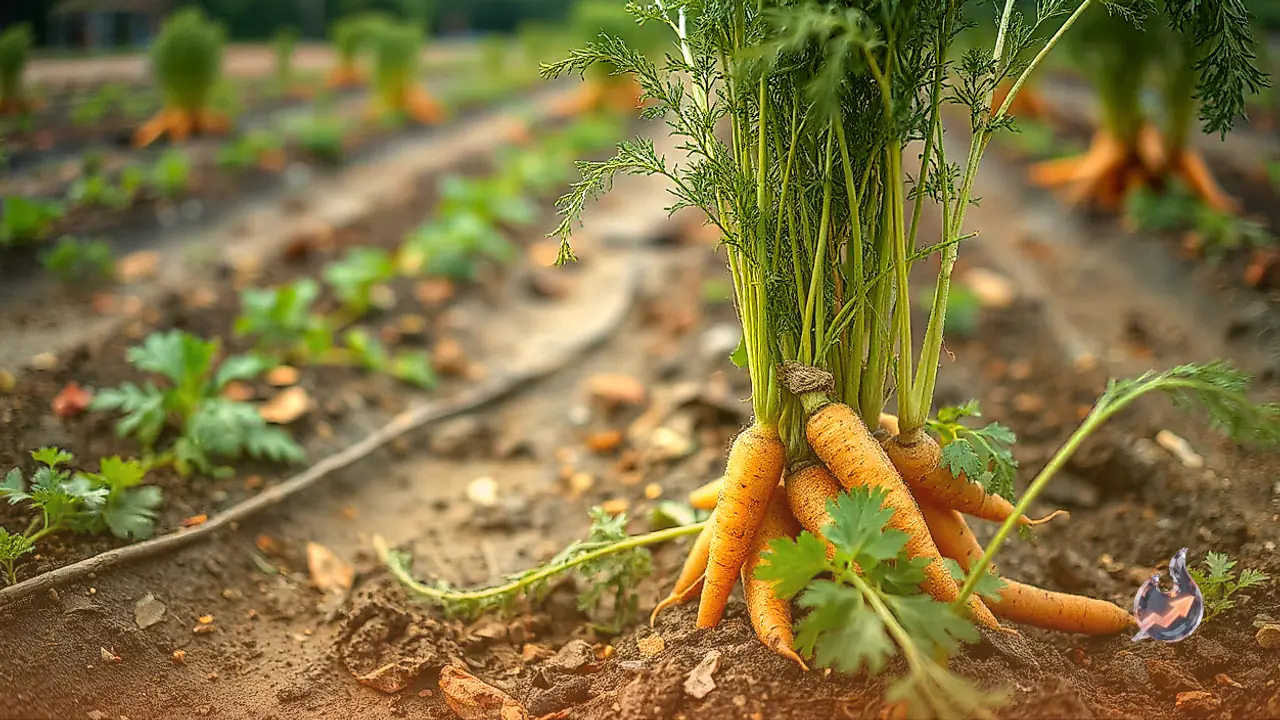
Under optimal growing conditions, carrots generally mature between 65 and 80 days after sowing, though exact maturity depends on the specific cultivar planted. When the shoulders of the roots emerge slightly at the soil line and reach their mature diameter, the crop is ready for collection.
To prevent snapping the roots during harvest, ease a hand trowel or garden fork into the ground alongside the row to gently loosen the surrounding earth. Grasp the foliage firmly near the base of the crown and pull straight upward with a steady motion. Loosening the soil first ensures roots slide out intact, rewarding your effort with a vibrant, flavorful, and crunchy harvest.