






















Winter offers the ideal seasonal window for growing fresh vegetables right at home in limited domestic spaces. During these colder months, home gardeners routinely cultivate cauliflower, fenugreek, and spinach, but sweet green peas remain one of the most rewarding additions to any small setup. You do not need an extensive plot of farmland or a sprawling backyard to harvest your own pods. Even a compact balcony, terrace, or sunlit window corner can easily accommodate a container loaded with thriving pea vines.
Pea plants grow rapidly and yield pods packed with tender, sweet green seeds. These freshly picked peas can enhance a wide array of homemade winter dishes, ranging from classic matar paneer and fragrant vegetable pulao to warm stuffed flatbreads and comforting curries. Harvesting sweet pods directly from a domestic planter delivers exceptional freshness and flavor. Achieving a plentiful harvest simply requires understanding regional sowing calendars, choosing the right pot dimensions, and maintaining balanced moisture.
Regional Sowing Timelines
Because green peas thrive primarily in cool climate conditions, planting times vary across the subcontinent based on local weather patterns. Gardeners located in North India can sow pea seeds from October all the way through February. Across southern and western regions of India, the optimal planting window spans between November and January. In East India, the recommended period for planting begins in October and runs through January. The exact pace of germination and growth is shaped by surrounding winter temperatures as well as the specific pea variety selected for the pot.
Container Selection and Soil Mix Preparation
Setting up an effective growing container requires a few straightforward supplies. Select a sturdy pot measuring 25 to 30 centimeters in depth and 30 to 40 centimeters in width, ensuring that its base features open drainage holes to let excess water escape freely. Prepare a loose, aerated potting substrate by combining common garden soil, coco peat, and organic compost such as vermicompost or thoroughly decomposed cattle manure. In addition, keep several slender wooden sticks and garden twine ready to build a reliable climbing frame for the ascending vines.
Step-by-Step Seed Sowing Technique
Before sowing the seeds into the soil, immerse them in clean water overnight. Soaking helps soften the tough outer seed coat, which significantly promotes faster and more reliable germination. Fill the container with the lightweight blend of garden soil, coco peat, and organic compost, checking that the drainage holes remain completely clear of obstructions.
Distribute roughly 6 to 8 seeds evenly inside the container. Space each individual seed about 8 to 10 centimeters apart from the next, pressing them into the potting mix to a uniform depth of 2.5 to 3 centimeters. Once the seeds are covered, apply a gentle spray of water to settle the soil without dislodging the seeds.
Sunlight, Staking, and Plant Care
Because peas develop tendrils and grow in a climbing vining habit, you must erect a supportive trellis using wooden sticks tied with twine early in their development. Position the container in a spot that receives around 6 to 8 hours of uninterrupted sunlight each day.
Keep the substrate consistently moist while strictly avoiding overwatering, as saturated soil can trigger root decay. Around two weeks after initial growth begins, lightly spread a top-dressing of rich vermicompost across the surface soil. To guard the foliage against common garden pests, mist the plants with a neem oil solution prepared in strict accordance with the bottle label instructions.
Harvesting and Preserving the Yield
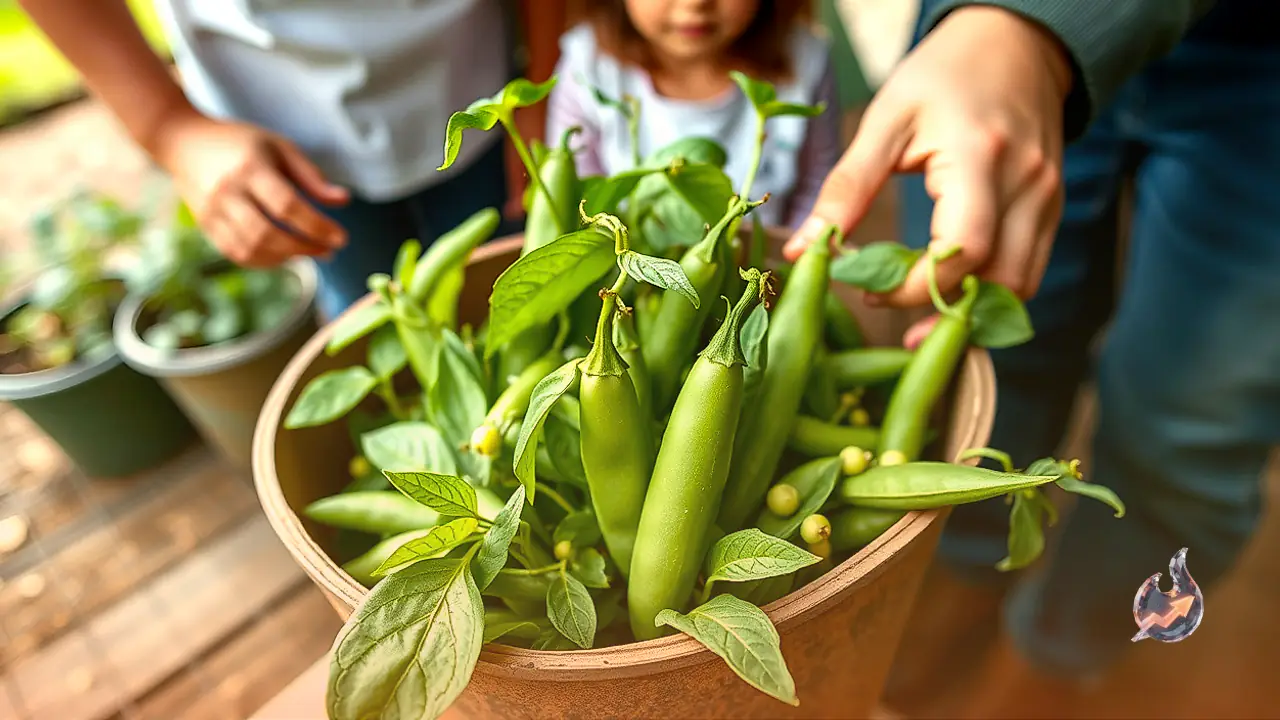
Pea pods typically reach peak maturity approximately 60 to 70 days following the sowing date. Harvest the pods as soon as they appear vibrant green, plump, and fully packed with swollen seeds. Carefully snap or snip the pods from the vine rather than yanking them, as sudden tugging can easily snap fragile stems.
Unwashed harvested pods can be kept in an airtight container or a zippered storage bag inside the refrigerator, where whole pods remain crisp for roughly one week. For longer preservation, shell the green peas from their pods and store the raw seeds inside the freezer for future cooking.