























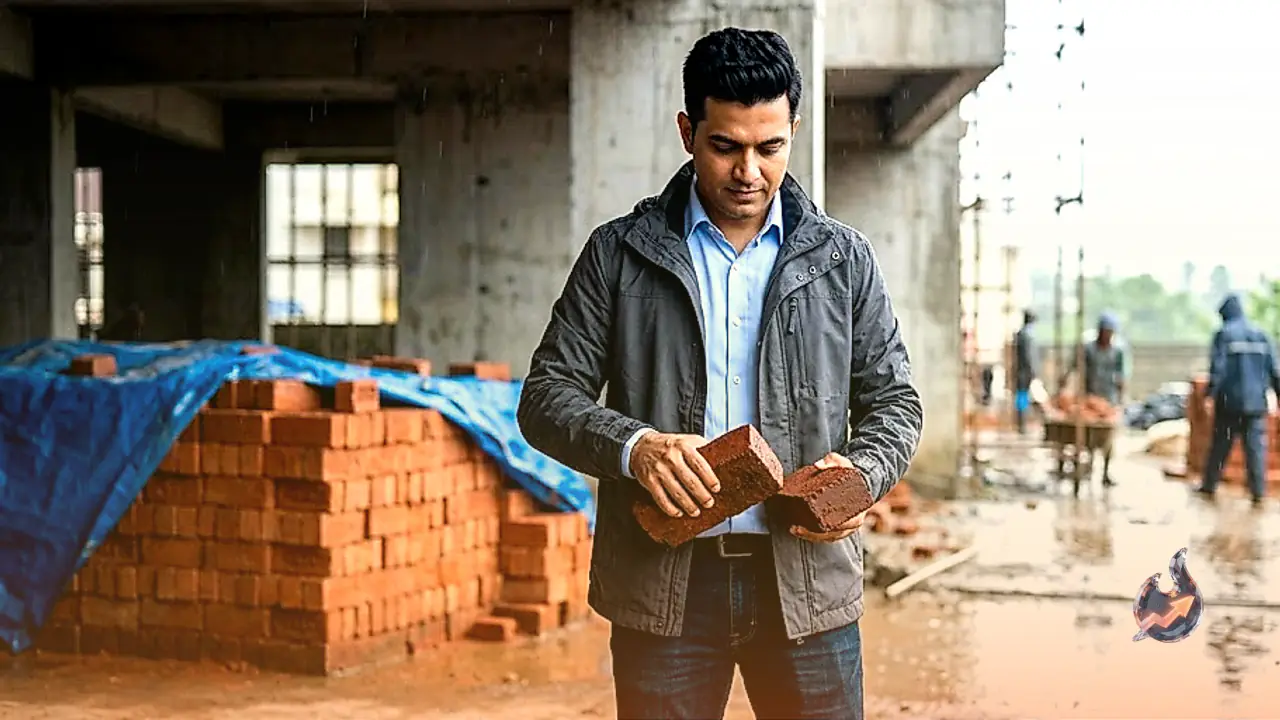

If you are planning to build your dream home during the monsoon season, selecting construction materials with utmost care is essential. The structural strength of a building does not depend solely on cement and steel, as the quality of bricks used in the walls plays an equally critical role. Walls built with poor-quality bricks are prone to developing cracks over time, increased moisture retention, and compromised overall durability.
Therefore, inspecting brick quality at the time of purchase is vital. According to experts, several straightforward methods can be adopted to identify high-grade bricks. Checking strength and quality becomes even more crucial when purchasing construction supplies during the rainy season.
An Easy Method to Test Brick Strength
According to construction expert Surender Srivastava, a simple way to test a brick's strength is by striking two bricks together. If striking them produces a clear, metallic ringing sound, it is generally considered a sign of a well-fired brick. Additionally, holding the brick in hand allows for a visual inspection of its texture. The brick should not be excessively crumbly, its edges should be relatively clean, and its shape uniform. It is best to avoid purchasing bricks that show large cracks or unusual breakage.
Do Not Rely Solely on Sound
While listening to the sound produced by striking bricks together is a convenient primary test, quality should not be determined solely on this basis. To accurately gauge a brick's durability, one must also examine its dimensions, color, firing condition, and water absorption capacity. People often attempt to test quality by immersing or soaking bricks in water. However, no single domestic method can fully verify a brick's overall quality. For large-scale construction projects, getting brick quality tested through experts or standard testing procedures is far more reliable.
Key Factors to Remember While Purchasing Bricks
When buying bricks, try to ensure that all pieces are nearly uniform in size and shape. Highly warped bricks can cause difficulties during masonry work and increase the consumption of cement mortar. Pay close attention to the color of the brick as well. Generally, a properly baked brick displays a uniform color throughout. Extremely dark, under-baked, or over-burned bricks should be avoided. Large clay lumps, deep cracks, and excessive friability also raise serious questions about its quality.
Why Extra Caution Is Needed When Buying Bricks in the Monsoon
The upkeep of construction materials requires special attention during the rainy season. Bricks should be stored in locations where water does not continuously accumulate. Construction materials submerged in water for extended periods or stored improperly can suffer from degraded quality. If you are constructing a home during the monsoon, check the quality of cement, sand, steel, and other materials alongside the bricks. Having an experienced mason or engineer inspect the materials before starting construction can prevent future troubles and extra expenses.