



















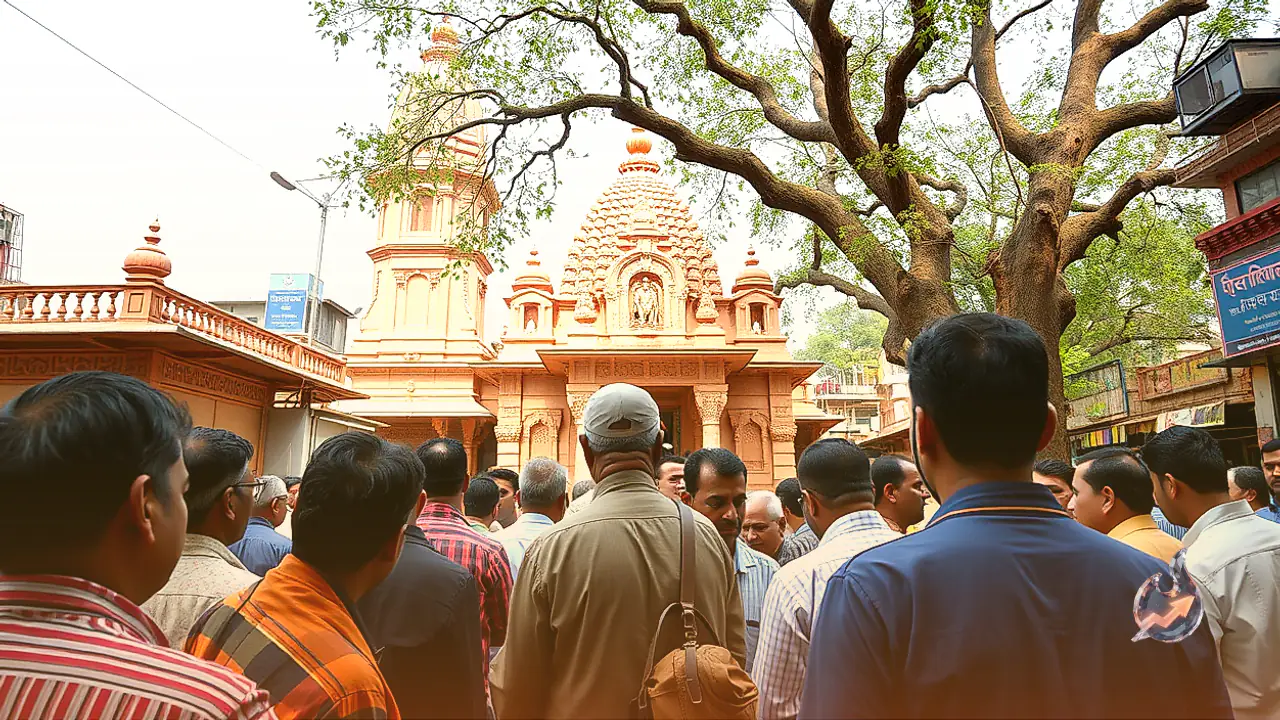

Sitting beneath the shade of a tree outside the historic Hanuman Mandir in Delhi's central hub of Connaught Place, an elderly astrologer presents an unassuming appearance. An ordinary passerby might easily assume that his daily earnings barely reach Rs 100, yet the economic reality of his practice tells an entirely different story. This traditionally dressed practitioner generates between Rs 8 lakh and Rs 10 lakh annually. Such an earning level matches the compensation packages typically associated with corporate officers and experienced corporate professionals. Through decades of consistent earnings from his astrological consultations, he has built and owns a personal home situated within an upscale residential neighbourhood in Delhi.
Five Decades of Practice Following Classical Education in Rajasthan
The practitioner, identified as 75-year-old Pandit Vishambhar Dayal Sharma, originally hails from Rajasthan. During his early years in his home state, he pursued formal education focused on Sanskrit and Hindi literature before undertaking rigorous training in traditional astrology. Armed with this classical background, he relocated to Delhi and established his consultation space. For the past 50 years, Pandit Sharma has operated from a modest stall near the ancient Hanuman Mandir in Connaught Place, providing guidance to multiple generations of visitors seeking answers to their life dilemmas.
Palmistry, Birth Charts, and Complex Relationship Disputes
Pandit Vishambhar Dayal Sharma focuses primarily on examining horoscopes and evaluating palm lines to outline an individual's past, present, and future trajectory. Visitors present a wide spectrum of personal crises. Among the frequent cases are couples entangled in marital distress or facing impending divorce. When partners wish to preserve their union, Pandit Sharma suggests specific remedies intended to resolve differences and halt separation proceedings. Conversely, individuals seeking a legal divorce who find themselves trapped in prolonged deadlocks also consult him for remedial measures to expedite the resolution.
From Solemnising Marriages to UPSC Aspirants and Career Advice
Beyond one-on-one astrological readings, Pandit Sharma actively conducts traditional wedding ceremonies, which yield substantial ceremonial honorariums throughout the year. Married individuals dealing with persistent domestic friction frequently approach his stall for peace-oriented advice. In addition, competitive exam candidates regularly seek his counsel. Aspirants struggling to clear the demanding civil services examination conducted by the UPSC visit him to obtain corrective astrological remedies aimed at breaking their exam obstacles. Salaried employees troubled by workplace stagnation also turn to him to assess promotion prospects and determine constructive steps to advance their careers.
The Popularity of the Turmeric Knot Ritual
Among the various remedial measures administered by Pandit Vishambhar Dayal Sharma, a specific ceremony known as the turmeric knot ritual holds significant prominence. According to Pandit Sharma, this practice is in heavy demand due to its diverse applications. It is recommended primarily for individuals who face repeated obstacles or unexplained delays in getting married. Furthermore, individuals troubled by antagonistic adversaries or rivals undertake the ritual to eliminate hostility. In marital cases where spouses on the brink of divorce desire reconciliation, the turmeric knot ceremony is conducted specifically to mend emotional bonds and foster mutual affection between the partners.
A Accessible Fee Structure Generating Corporate-Level Revenue
Despite his substantial client volume and reputation, Pandit Vishambhar Dayal Sharma maintains an accessible pricing model, charging an appointment fee of exactly Rs 200 per consultation. Anyone seeking his insight can secure an evaluation by paying this base amount. However, the steady stream of daily visitors combined with seasonal wedding fees culminates in an aggregate annual income ranging from Rs 800,000 to Rs 1,000,000. In modern economic terms, this puts an unassuming traditional practitioner operating under a tree on par with well-credentialed engineers and mid-to-senior executives in the corporate world.