
















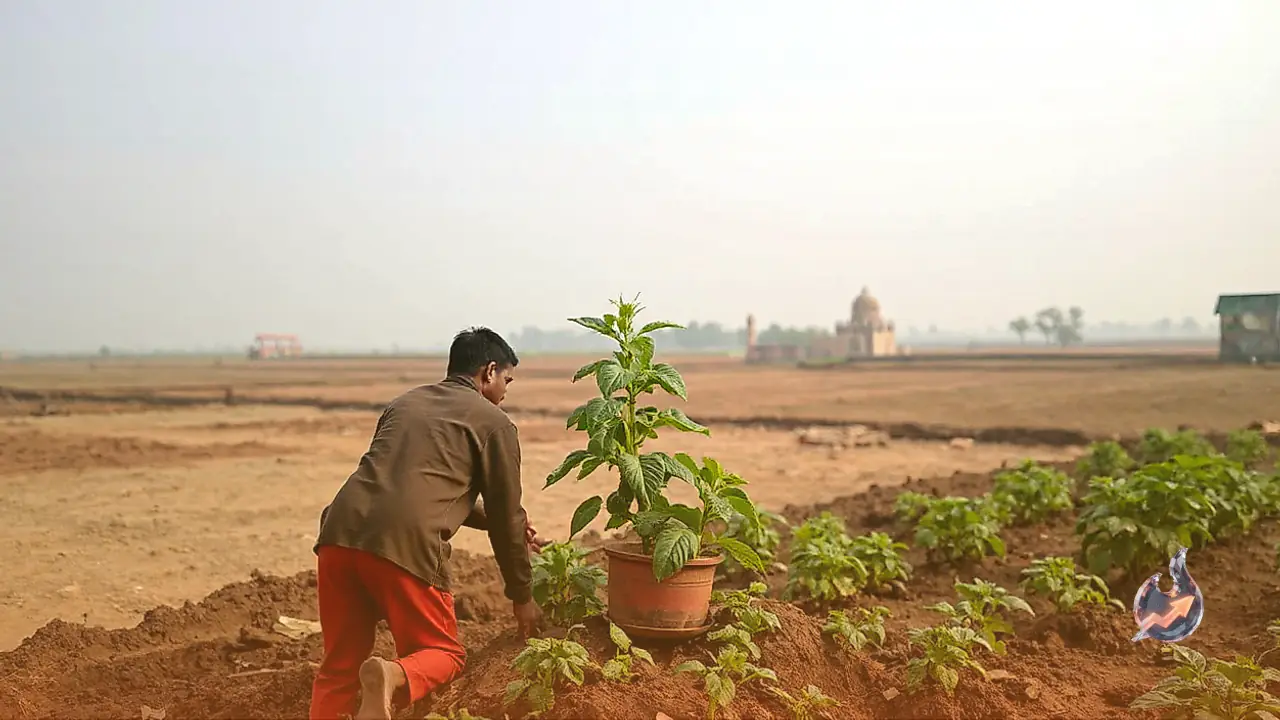

Growing basil at home is quite common, but maintaining its lush green appearance throughout the year, especially during winter, can be a major challenge. Cold temperatures, heavy fog, excessive watering, and hard soil in the pots often damage the plant. If your basil frequently dries up, understanding the root cause is essential. According to Prem Kishore, a gardener at the Government Fort Horticulture Department in Rampur, following a few simple steps can keep the plant vibrant for a long time.
Soil Texture and Proper Drainage
Prem Kishore explains that loose and porous soil is vital for the healthy growth of a basil plant. Excessively clayey or rigid soil can trap water, which ultimately harms the plant roots. Therefore, basil should be planted in well-draining soil that allows air to reach the roots easily while preventing water stagnation.
Watering Practices and Soil Aeration
Many people water their basil plants daily, but this habit can prove counterproductive. Water logging causes the roots to rot, leading the plant to wither gradually. According to Prem Kishore, one must check the soil moisture before watering the pot, and the container must have adequate drainage holes. If the topsoil has hardened, gently loosening the soil surface helps keep it porous and allows air circulation. This gentle aeration also helps water reach deeper layers effectively.
Winter demands specialized care for basil, as severe cold, fog, and frost can ruin the foliage. The pot should be kept in a spot that receives ample sunlight while remaining shielded from direct chilly winds and frost. Maintaining cleanliness around the plant is equally important. Prem Kishore notes that Rama and Shyama basil are the primary varieties, with Shyama basil being widely popular among households. Proper winter care, balanced watering, and an ideal location help keep the plant thriving.
Replacing Soil and Pest Management
When a basil plant begins to dry out, simply pouring water from above is not enough; one must identify the real issue. According to Prem Kishore, the plant can be temporarily removed from its pot to inspect the soil condition if necessary. If the soil has become old, degraded, or overly compacted, replacing it entirely helps revive the plant.
The leaves and stems should be inspected periodically for any signs of infestation. Prem Kishore suggests using neem oil to protect the plant from pests when necessary. Always check the product label for correct usage instructions and accurate measurements before applying anything to the foliage.