

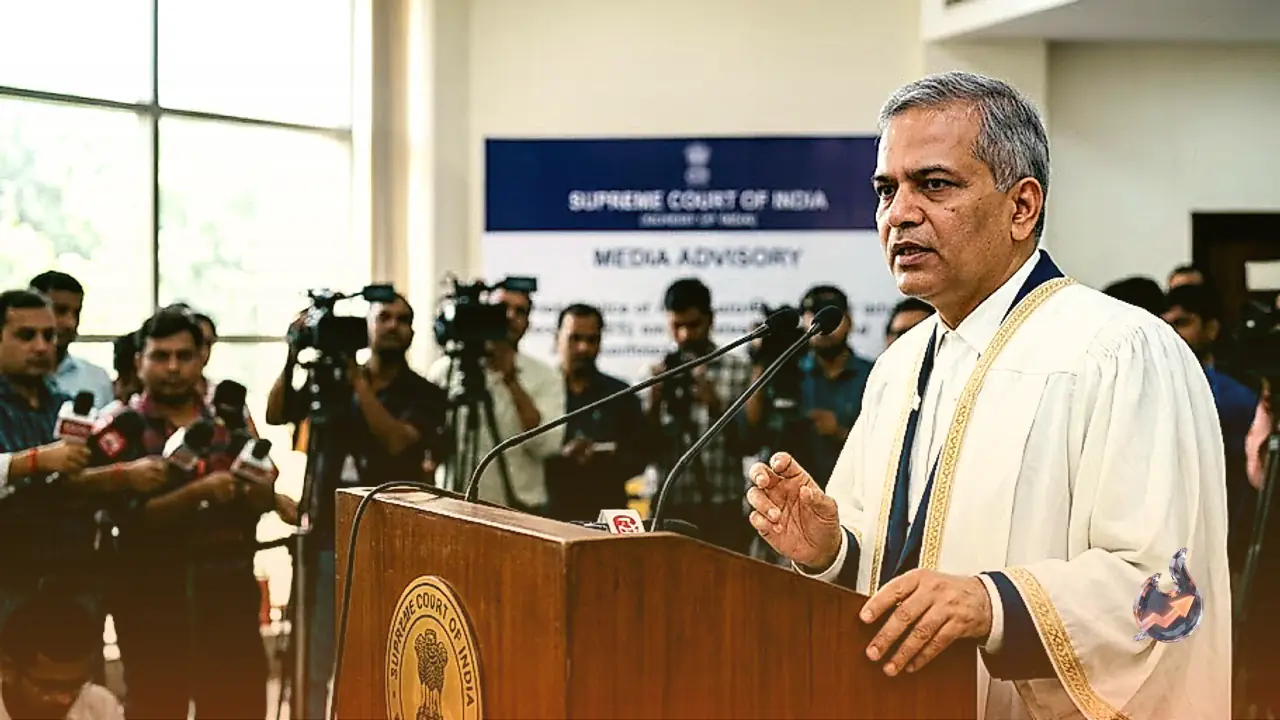



















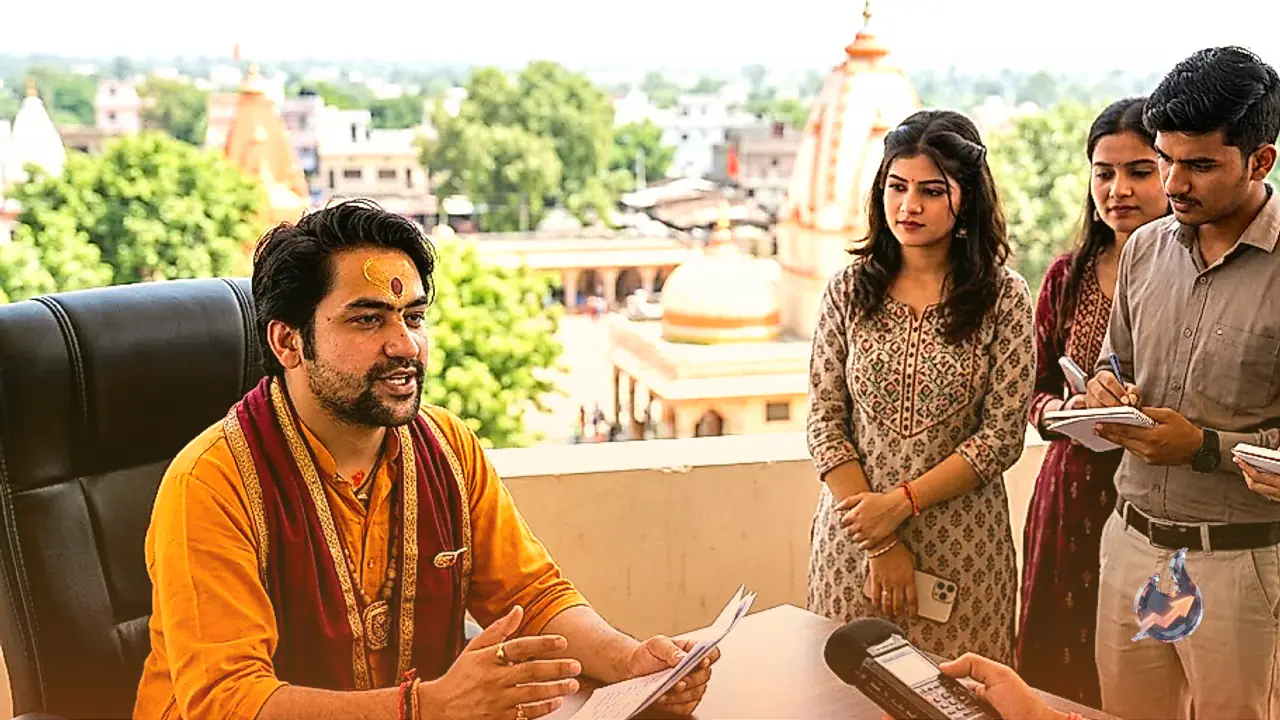

Amid ongoing national debates regarding the behavior, aspirations, and digital habits of Generation Z, Bageshwar Dham head Acharya Dhirendra Krishna Shastri has shared a comprehensive set of guidance aimed at empowering today's youth. Speaking during a detailed interaction, Shastri characterized Gen Z as an exceptionally sharp, articulate, and self-aware generation capable of claiming its rights. However, he emphasized that despite their global connectedness through digital platforms, young individuals are increasingly suffering from an inner disconnect, distancing themselves from their core values, families, and emotional well-being.
Digital Exposure and the Inner Disconnect of Gen Z
Dhirendra Krishna Shastri advised the younger generation to maintain progressive, modern thoughts while remaining deeply rooted in strong traditional values. To address the mental health challenges faced by youth and guide them toward self-awareness, he detailed a specialized initiative titled 'Mindset Life Set'. Designed as a 3-day offline program, the initiative features morning meditation and mindfulness sessions aimed at helping participants understand their subconscious mind and build healthy boundaries with social media platforms.
He noted that the influence of short-form video content and social media reels has grown so pervasive that young people spend hours endlessly scrolling without realizing the passage of time. While social media contains valuable information, it also hosts a vast amount of digital and mental clutter. Consequently, learning emotional self-regulation and exercising conscious control over technology usage has become essential for young individuals.
Five Core Guidelines for the Younger Generation
During the interaction, Shastri outlined five fundamental principles to help youth navigate modern challenges effectively
- Exercise Digital Discipline: Avoid spending unproductive hours on social media feeds, and develop active control over mobile device usage and emotional reactions.
- Maintain Roots and Relationships: Stay actively engaged with family life, ethical values, and cultural heritage alongside global digital participation.
- Channel Energy Toward Specific Goals: Shift focus from the passive consumption of random information to setting clear life objectives and acquiring relevant skills.
- Verify Information Before Believing: Refrain from drawing conclusions based on partial video clips or unverified viral online reports, ensuring thorough fact-checking first.
- Prioritize Dialogue Over Hostility: Express dissent and opinions clearly and respectfully while avoiding foul language, recognizing that meaningful conversation resolves conflicts far better than street agitation.
Perspectives on Manusmriti and the Respect for Women
Addressing public discussions surrounding Manusmriti following comments by Rahul Gandhi, Dhirendra Shastri clarified that while he refrains from answering political figures directly, he remains open to discussing scriptural concepts. Rejecting assertions that Manusmriti is inherently anti-women, he cited the traditional Sanskrit maxim 'Yatra Naryastu Pujyante, Ramante Tatra Devata', which accords divine status to places where women are respected.
He highlighted that Indian cultural tradition consistently places women's names first in sacred pairings, such as Sita-Ram, Radha-Krishna, and Parvati-Shiv. Shastri stated that condemning an entire ancient text based on isolated lines taken out of context is inappropriate. Furthermore, he emphasized that spiritual leaders bear the responsibility of interpreting traditional texts within their proper context and initiating thoughtful re-examinations or reforms whenever necessary.
Political Neutrality, Protests, and Views on Governance
Regarding student demonstrations and youth protests, Shastri acknowledged that the genuine grievances of young people deserve a fair hearing. However, he stressed that public agitations should not be viewed as the default solution to every problem, advocating peaceful dialogue as a far superior alternative. He cautioned students against allowing themselves to be utilized as political tools by party interests.
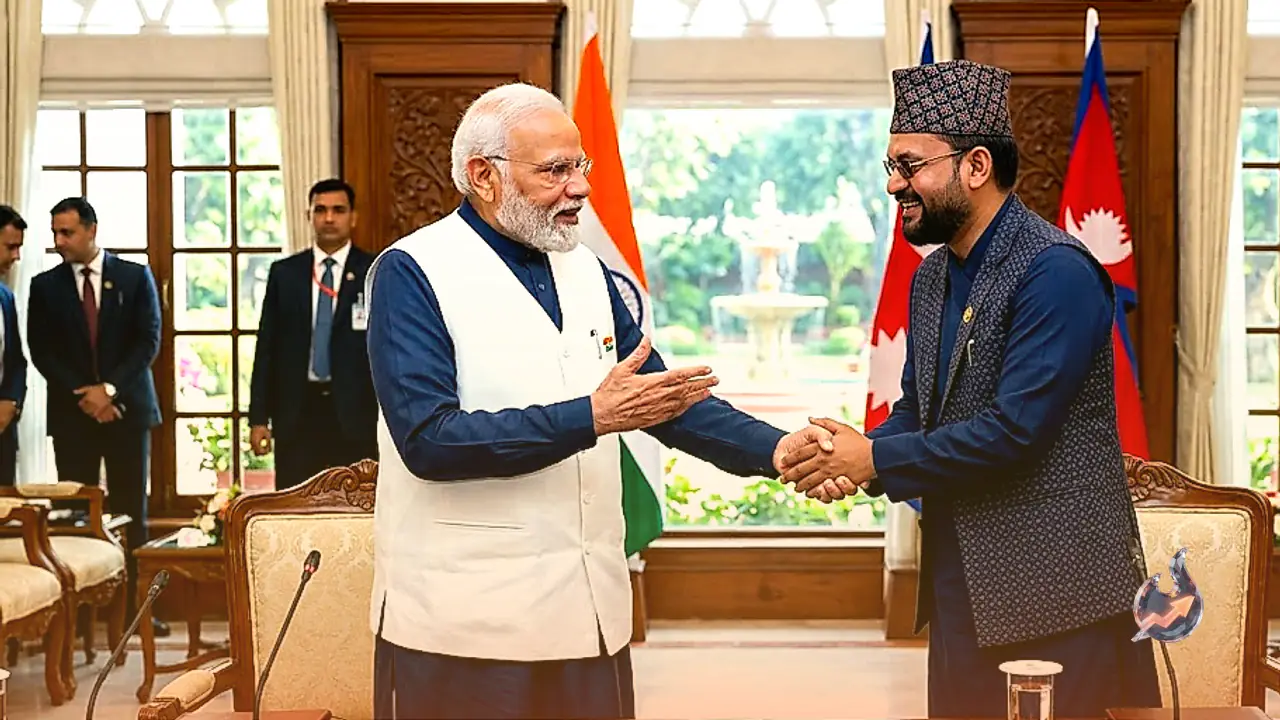
While attributing abusive language during demonstrations to a decline in moral grounding, he affirmed that constructive dissent and voicing grievances remain legitimate rights. Sharing personal observations about Prime Minister Narendra Modi, Shastri described his leadership as extraordinary, noting that Modi places national priorities above partisan considerations. Maintaining a strictly neutral stance toward political parties, Shastri stated that governance should rest with whichever entity actively works for the nation's progress, healthcare, education, and youth empowerment.
Social Harmony, Economic Support, and Inspiration
On the topic of affirmative action and reservation, Shastri stated that he does not oppose reservation policies, agreeing that needy sections of society must receive institutional support. Additionally, he suggested that policymakers should consider economic benchmarks, helping individuals based on financial necessity regardless of background.
Stressing the urgent need to eliminate caste-based discrimination, he remarked that caste pride and notions of superiority weaken national unity. While eliminating caste identities entirely may not be practical, eradicating the ego of hierarchy and inequality is vital. He encouraged young people to draw inspiration from historic role models such as Swami Vivekananda, Albert Einstein, APJ Abdul Kalam, and Rani Lakshmibai. Commenting on youth groups taking on unconventional titles like the 'Cockroach Janata Party', he remarked that individuals are free to choose names, but youth must evaluate ideas through logic and reason before aligning with them.
Global Engagements: Japan Earthquake and Sri Lanka Mission
Reflecting on his recent visit to Japan, Shastri shared that he delivered spiritual discourses as an Indian religious leader, attended by thousands of non-resident Indians as well as Japanese citizens. During the trip, he experienced a magnitude 5.9 earthquake while inside a high-rise building, feeling the structure sway for approximately 18 seconds.
He commended Japan's advanced bullet train network, modern infrastructure, and civil discipline. Prior to his visit to Japan, Shastri had also traveled to Sri Lanka, where he promoted messages of yoga, global peace, and universal brotherhood encapsulated in the philosophy of 'Vasudhaiva Kutumbakam'.
Career Focus, Demographic Challenges, and Solitary Penance
Addressing questions on personal relationships and career building, Shastri advised young adults to keep their primary focus on personal and professional goals. He remarked that even if one faces betrayal, one should never compromise integrity or betray others, emphasizing the importance of evaluating long-term commitment before placing trust in someone.
Explaining his earlier public appeal encouraging families to have four children, Shastri linked it to long-term demographic concerns, including declining fertility rates and a growing elderly population ratio. He voiced support for a Uniform Population Control Law, acknowledging that while inflation and unemployment are immediate challenges, a shrinking youthful workforce presents a serious long-term demographic crisis for the nation. He concluded by noting that the current generation requires actionable goals and execution capability rather than endless information. Shastri also mentioned that he recently returned from Narayan Parvat after completing 21 days of solitary spiritual meditation dedicated to Narayan and Hanuman.