






















In the rural pockets of Mithilanchal, a curious sight often catches the eye of travelers: clay pots hanging from the branches of massive jackfruit trees. While outsiders might wonder about the scientific logic behind this practice, local residents consider it a highly dependable traditional remedy. They believe this age-old custom has the power to make barren trees bear abundant fruit and rejuvenate their growth cycles.
The Clay Pot Ritual for Jackfruit Trees
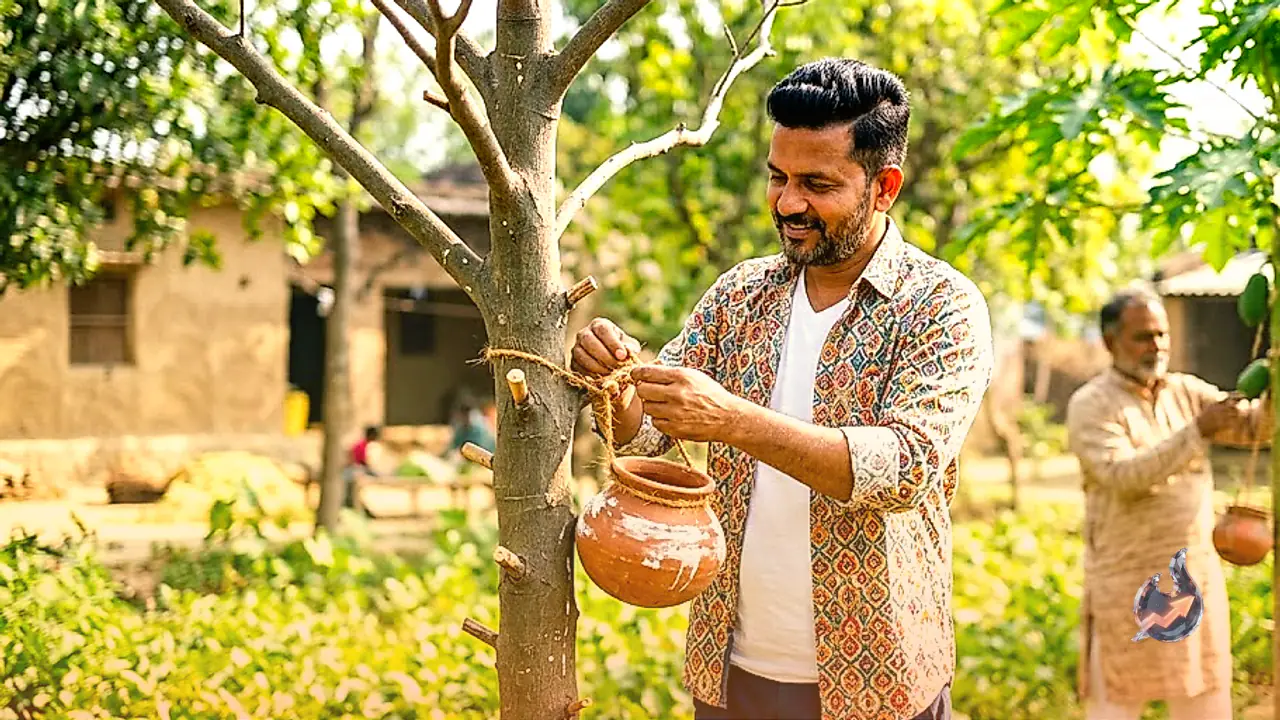
This traditional gardening hack is widely practiced in villages by those who find that their jackfruit trees have grown tall and healthy but fail to produce any fruit. Instead of cutting down the barren tree, villagers apply a unique method. According to a local resident named Veena Devi, this traditional remedy has a specific procedure. One must take a small clay pot, locally known as a ghaila, apply markings of lime and kohl (kajal) onto it, and tie it securely to the tree trunk or a major branch.
Timing and the Evil Eye Belief
The ritual cannot be performed on just any day of the week. To ensure its success, the clay pot must be prepared and hung specifically on a Sunday or a Tuesday. Local folklore suggests that the combination of lime and kohl on the pot acts as a protective shield against the evil eye, which villagers believe is the primary reason why a healthy tree stops producing fruit. Adherents of this practice claim that within a single year of hanging the pot, the tree begins to bear massive jackfruits that match the size of the clay pot itself.
The Wooden Stick Trick for Papaya Trees
Jackfruit is not the only plant subject to these traditional horticultural remedies. A similar popular hack exists for papaya trees in the region. Often, a papaya tree grows remarkably tall but produces only blossoms instead of actual fruit when the fruiting season arrives. To remedy this issue, villagers drive a thin, sharp wooden stick directly into the middle of the papaya tree trunk. Local gardeners believe this physical intervention stimulates the tree, forcing it to transition from flowering to fruiting.
Cultural Beliefs vs Scientific Validation
From a modern botanical perspective, these traditional practices lack scientific evidence or empirical validation. Biologists generally attribute fruiting issues to nutritional deficiencies, lack of pollination, or gender issues in the case of papaya trees, which can be male, female, or hermaphrodite. Nevertheless, these agricultural hacks remain deeply woven into the cultural fabric of Mithilanchal. For home gardeners experiencing persistent issues with non-yielding trees, trying these harmless local methods offers an interesting blend of cultural exploration and traditional experimentation.