























The long-term durability of any house depends heavily on the structural integrity of the bricks used in its walls and foundation. In the construction market, red clay bricks and fly ash bricks remain the two primary choices. Home builders often make the mistake of selecting bricks based solely on smooth surfaces or cheaper rates, only to face severe issues later such as dampness, flaking plaster, and salt efflorescence on interior walls. According to Shubham Tripathi, a civil engineer based in Satna, property owners can perform several straightforward quality tests directly on the construction site without requiring specialized laboratory equipment.
Standard Dimensions and Composition Checks
Residential structures predominantly rely on red clay bricks and fly ash units. A conventional red clay brick typically measures approximately 9 inches by 4.25 inches by 3 inches, corresponding to 228 mm by 107 mm by 75 mm in standard metric measurements. Purchasing decisions should never hinge entirely on pricing. Assessing the degree of kiln firing, structural density, uniformity of dimensions, and moisture resistance is essential before clearing a delivery truck at the site.
The Acoustic Impact Test for Firing Quality
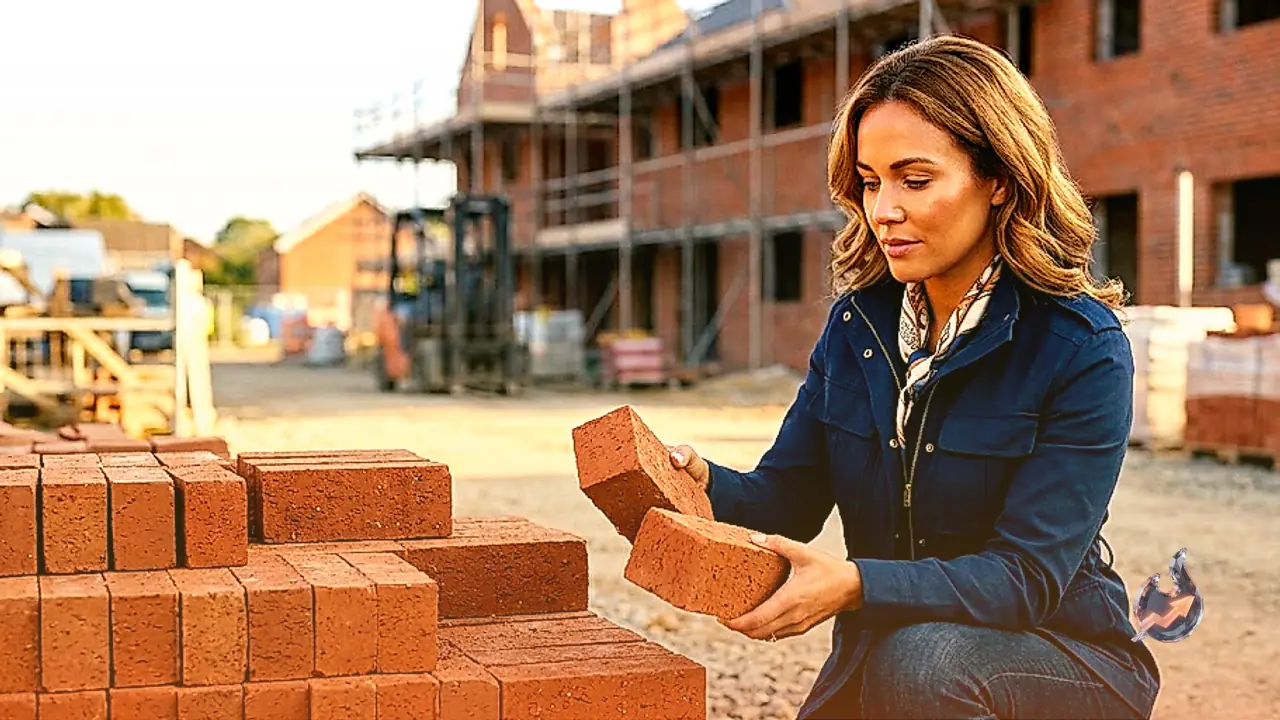
The simplest way to check how well a brick was fired is the sound test. Hold two bricks in your hands and strike them firmly against each other. If the units are thoroughly baked and structurally compact, the collision produces a clear, resonant, metallic ringing tone. Conversely, a dull, thudding, or muffled sound indicates that the brick is either undercooked, porous, or structurally defective internally.
Evaluating Brittleness with the Drop Test
Another reliable assessment is the drop test, which gauges shock tolerance. A sample brick is dropped flat from a height of approximately 4 to 5 feet onto level ground. A high-grade brick should withstand this fall without shattering into multiple pieces. If the brick breaks apart or crumbles upon impact, it lacks adequate compressive strength and should be rejected for load-bearing walls.
Surface Hardness via the Scratch Test
Surface hardness can be easily verified using an iron nail in what is known as the scratch test. Try scratching a line across the surface of the brick with the tip of the nail. Well-baked and dense bricks will resist the nail, leaving either no permanent dent or only a faint superficial line without shedding material. If the nail easily gouges out loose clay or leaves a deep groove, the brick lacks sufficient hardness to withstand environmental wear.
Visual Inspection of Color, Shape, and Edges
A brick's physical appearance reveals a great deal about its manufacturing standards. A top-grade brick exhibits a uniform deep red or copper hue throughout its exterior. Its surfaces should remain straight rather than warped or bulging. All four corners must be sharp, well-defined, and square. Bricks displaying irregular warpage, uneven shrinkage, or chipped edges should be culled from the batch.
Measuring Porosity Through Water Absorption
The most decisive check is the 24-hour water absorption test. First, record the exact weight of a completely dry brick. Submerge the brick entirely in clean water for a continuous period of 24 hours. After removing it and patting off surface moisture, weigh it once again. A high-quality red clay brick should generally not absorb more than 15 to 20 percent of its dry weight in water. Bricks exceeding this limit are overly porous. Walls constructed with excessively porous bricks are prone to continuous seepage, damp patches, paint peel-off, and destructive salt leaching over time.
Combining the Five Checks for Full Assurance
Relying on a single metric can be misleading. Combining the acoustic check, drop test, scratch assessment, visual examination, and water absorption analysis delivers a complete picture of structural safety. The first four checks require only a few minutes on the work site, while the weighing test provides definitive data regarding water resistance. Applying these five field procedures guarantees that only sound building materials go into constructing your home.