





















Ensuring the safety and natural quality of daily fruits remains a primary concern for everyday consumers shopping at local produce stalls. Bananas stand among the most affordable and nutrient-rich staples across households, yet regular market arrivals often raise doubts regarding harmful artificial treatments used to speed up sales. Identifying genuinely ripe produce from chemically treated bunches poses a regular challenge for ordinary buyers. Understanding the technical mechanics behind modern storage facilities provides valuable clarity on how safe ripening actually operates without compromising food hygiene.
Sourcing and Distribution Across Regional Markets
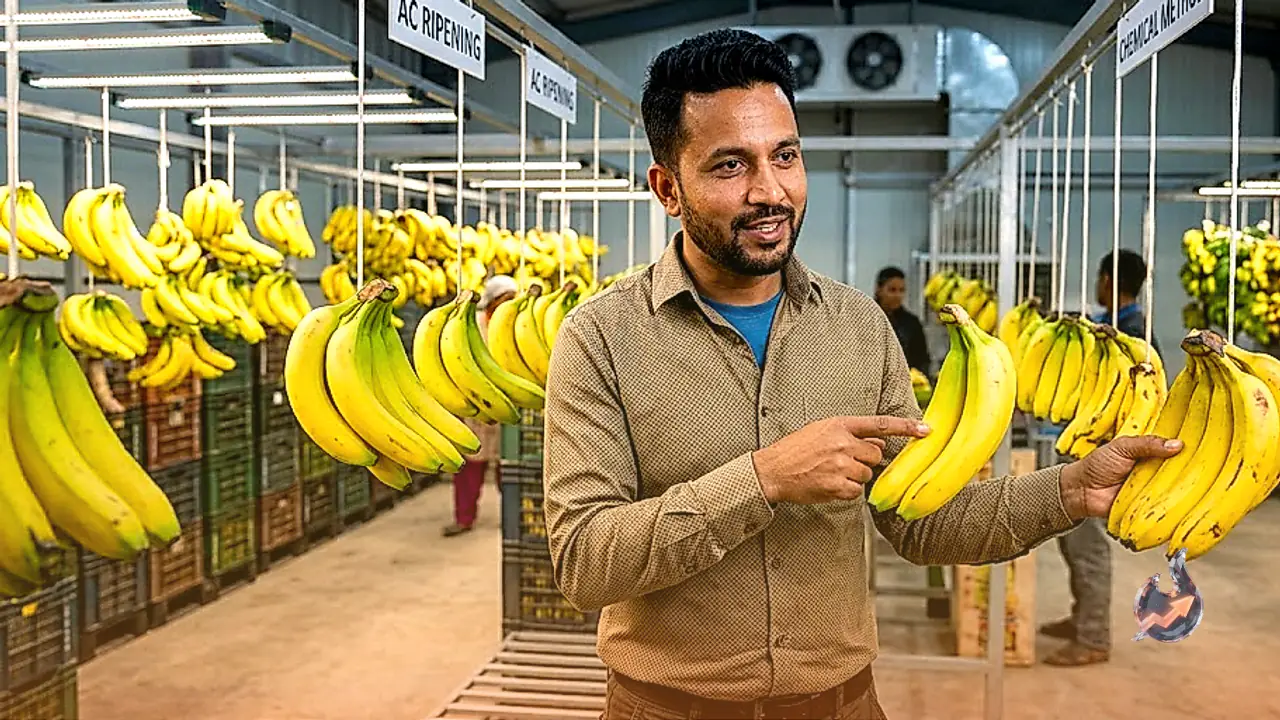
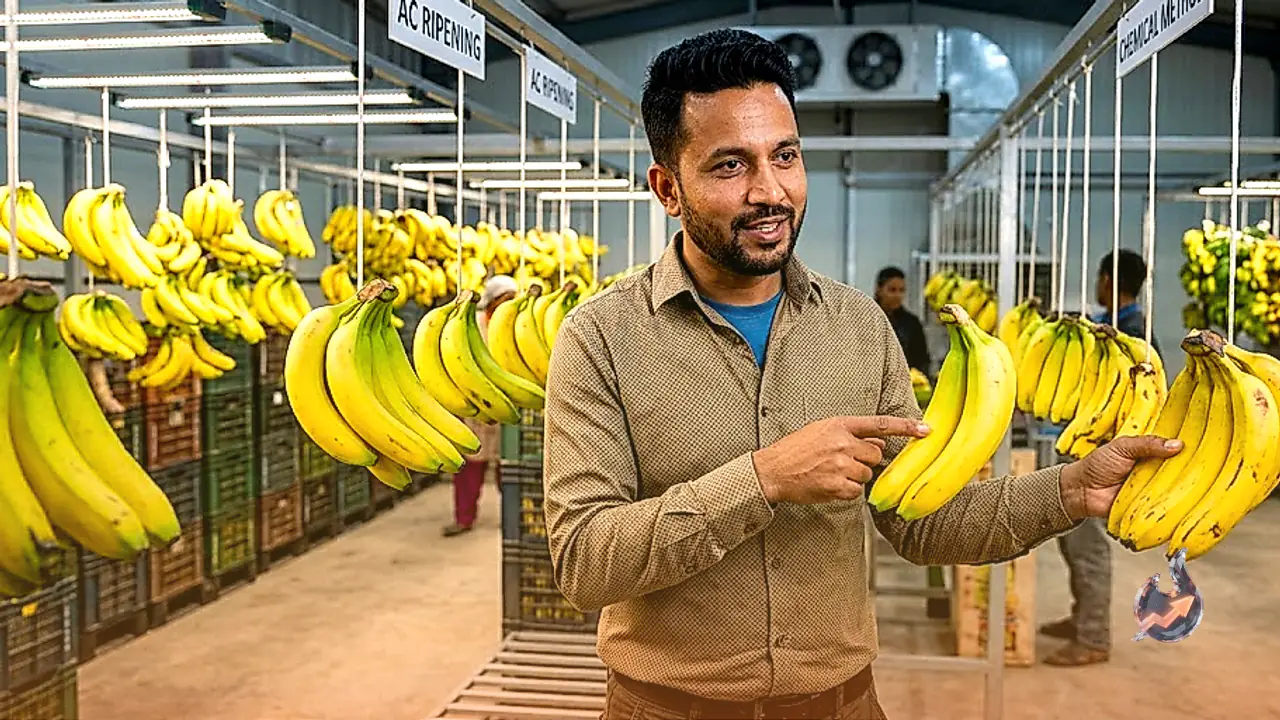
At Chhapwa in the East Champaran district of Bihar, a commercial ripening facility managed by Mohammad Naeem has been processing raw bunches for the past 7 years. The facility relies on temperature-regulated air-conditioned chambers to process harvest shipments arriving from four distinct states: Andhra Pradesh, Madhya Pradesh, Uttar Pradesh, and Bihar. Once ready, the batches move directly into wholesale and retail distribution channels across nearly every fruit market operating throughout the Champaran belt.
Visual Distinctions Between Chemical Treatment and Safe Maturation
Outlining the direct differences visible on the market shelf, Mohammad Naeem notes that chemically forced bananas betray distinct structural flaws. When toxic chemicals are deployed, the exterior peel often retains an uneven greenish tint while the fruit tissue beneath breaks down prematurely, turning mushy and decaying in patches. Conversely, bunches brought to maturity inside climate-controlled air-conditioned rooms turn an even, gentle shade of yellow, closely mimicking traditional natural ripening. They do not suffer from sudden internal rotting, making them fully safe for regular consumption. Naeem advises buyers to select only naturally matured or air-conditioned produce while strictly avoiding chemically treated lots.
The 72-Hour Climate Cycle Behind Controlled Maturation
The operational cycle inside the storage chamber spans 72 hours and works strictly through environmental regulation rather than artificial chemical coatings. Raw harvested bunches are initially placed inside the air-conditioned chamber maintained at approximately 20 degrees Celsius for an uninterrupted 24-hour window. Following this cooling duration, the produce is exposed to gentle warmth for 12 hours. During this phased temperature shift, the fruit naturally releases ethylene, an organic compound that drives the ripening process from within. By precisely managing this ambient balance over 72 hours, the raw crop completes its natural transformation and becomes ready for retail distribution.