























Roomali roti is widely celebrated for its delicate, paper-thin sheet and velvety soft texture that melts almost instantly. In commercial kitchens and roadside eateries, chefs traditionally bake these over massive dome-shaped inverted griddles, tossing the dough skillfully into the air until it stretches as thin as a fabric handkerchief. Because of these theatrical culinary methods, many home cooks assume that replicating the dish on a standard domestic stovetop is impossible. In reality, with precise preparation, correct resting times, and a clever inverted-pan technique, anyone can produce authentic, pliable rotis using standard kitchen cookware.
The Secret Behind Elasticity and Texture
The defining hallmark of an authentic roomali roti lies in its exceptional stretch and tender crumb. Achieving this characteristic texture requires more than simply combining ingredients; thorough kneading and adequate resting time are essential to develop the gluten structure properly. Once rolled to precision, the thin dough bakes over intense heat in merely a few seconds. By paying attention to a few foundational details, home cooks can match the softness and taste found in traditional restaurants without specialized commercial equipment.
Step-by-Step Dough Preparation and Resting
Begin the process by measuring 2 cups of all-purpose flour into a wide mixing bowl and combining it thoroughly with salt according to your taste. Gradually pour in lukewarm water in small increments while working the mixture into a remarkably soft dough. Knead the dough vigorously for about 8 to 10 minutes until the surface becomes entirely smooth, supple, and elastic to the touch. Once smoothed out, drizzle 1 teaspoon of cooking oil over the dough and knead briefly once more to incorporate the fat. Cover the dough completely with a damp cloth and let it rest undisturbed for at least 30 minutes. This mandatory resting stage relaxes the gluten, making rolling effortless later on.
Shaping Portions and Rolling Out Paper-Thin Sheets
After the dough has rested sufficiently, divide it evenly into uniform, small portions and shape them into smooth balls. Keep all portions covered beneath a damp cloth so exposure to ambient air does not dry out their surface. Dust a work surface with minimal dry flour and begin rolling a dough ball as thinly as humanly possible. Exercise caution with the dry flour, as an excess dusting will rob the roti of moisture and cause it to turn brittle during baking. Ensure the delicate sheet does not tear along the edges. If the dough constantly resists and snaps back while rolling, allow it to rest for another 5 to 10 minutes so the dough relaxes enough to roll out smoothly.
Quick Cooking Technique on an Inverted Griddle
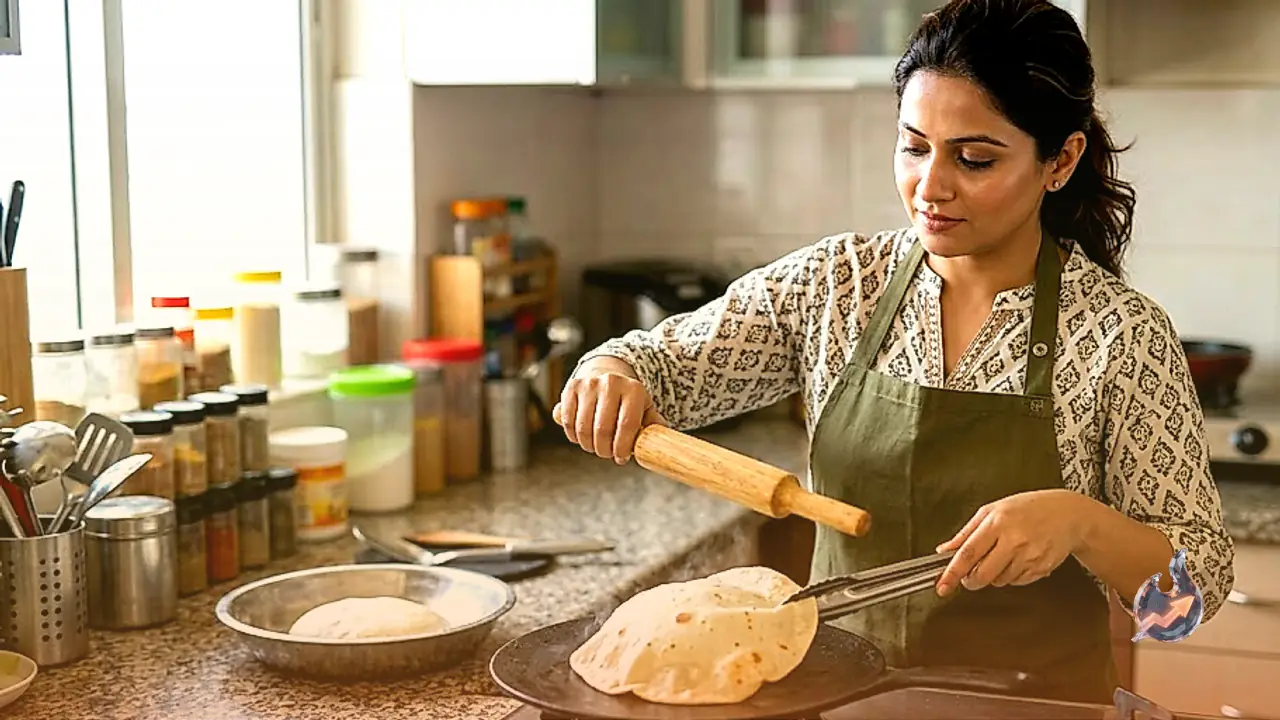
Heat a regular flat griddle over medium to high flame until it is thoroughly piping hot, then carefully turn the griddle upside down over the stove burner. Gently lift the paper-thin rolled sheet and spread it evenly across the convex outer base of the inverted pan. Within roughly 20 to 30 seconds, tiny air pockets and bubbles will begin to emerge across the surface. Immediately flip the roti over to cook the opposite side for just a brief couple of seconds. As soon as faint light-brown speckles appear, take the bread off the heat right away. Leaving it on the hot metal any longer will quickly turn the delicate roti rigid and dry.