























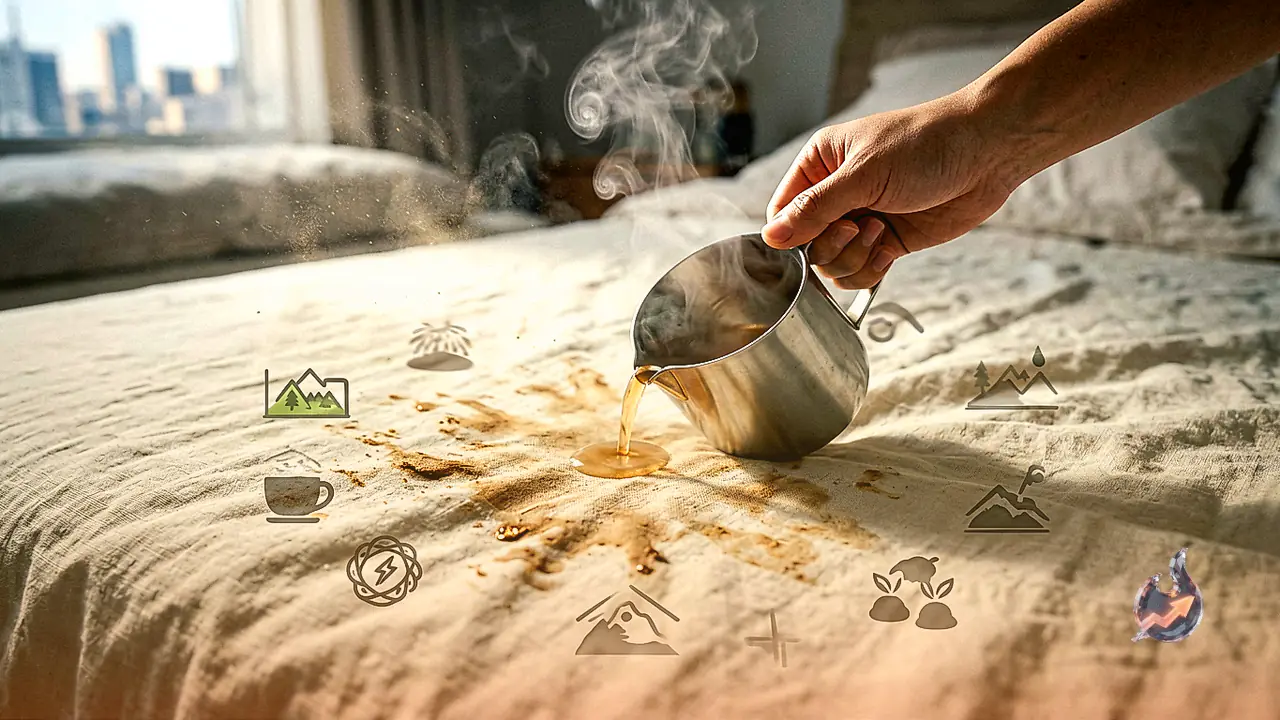

Spilling hot tea on a bedsheet can instantly ruin your mood, but panicking and immediately starting to scrub the fabric is the worst thing you can do. The very first step is to remove the sheet from the bed and place a clean cloth underneath the stained area. Next, take another dry cloth and gently press down on the stain to absorb as much of the liquid as possible. Make sure you do not rub the fabric at all, as friction will only cause the tea to spread further. The quicker you soak up the excess moisture, the easier it is to prevent a deep, permanent discoloration.
Using Talcum Powder and Dishwash Liquid
If the tea spill is still fresh and wet, ordinary talcum powder can come to your rescue. After blotting away the excess liquid, apply a generous layer of talcum powder directly over the affected area. Leave it on for a while so the powder can absorb the remaining moisture, then simply brush it off and wash the bedsheet normally. This particular method works exceptionally well on fresh spots. On the other hand, if the mark looks stubborn, you can turn to common dishwash liquid from your kitchen. Mix a small amount of dishwash liquid with water and apply the mixture to the stain. Let the solution sit for about 5 to 10 minutes, then gently rub it with a soft cloth or your hands before rinsing it thoroughly with water. Always test the solution on a small hidden corner of the fabric before applying it to the main stain.
The Power of White Vinegar and Baking Soda
White vinegar is widely known for its excellent cleaning properties. To lift a tea stain, prepare a solution by mixing one part white vinegar with two parts water. Apply a small amount of this mixture to the stained area, leave it on for a few minutes, and then rinse the spot completely with clean water. However, before using vinegar on colored or delicate bedsheets, always test it on an inconspicuous area first to check for any adverse reactions. If you have baking soda at home, you can create a thick paste by mixing it with a little water. Apply this paste gently onto the stain and let it rest for a few minutes. Clean it away slowly without applying excessive force and rinse with water. Scrubbing too hard can ruin the delicate fabric fibers, so always keep your touch light.
Handling Older Stains and Common Mistakes
If a tea stain was not treated immediately and has had time to set, getting rid of it may require a little extra time and patience. In such cases, soaking the bedsheet in water for a while helps loosen the pigment. Afterward, apply regular laundry detergent to the stained spot and clean it gently with your hands, repeating the wash if necessary. On older marks, taking a slow and steady approach is much better than rushing and scrubbing aggressively. One of the biggest mistakes people make after a spill is aggressive rubbing, which only widens the stain and damages the threads. Furthermore, hot water is not suitable for every type of fabric, so always tailor your cleaning method to the specific material of your bedsheet. Performing a small patch test before trying any home remedy on the entire sheet remains the safest approach.