
























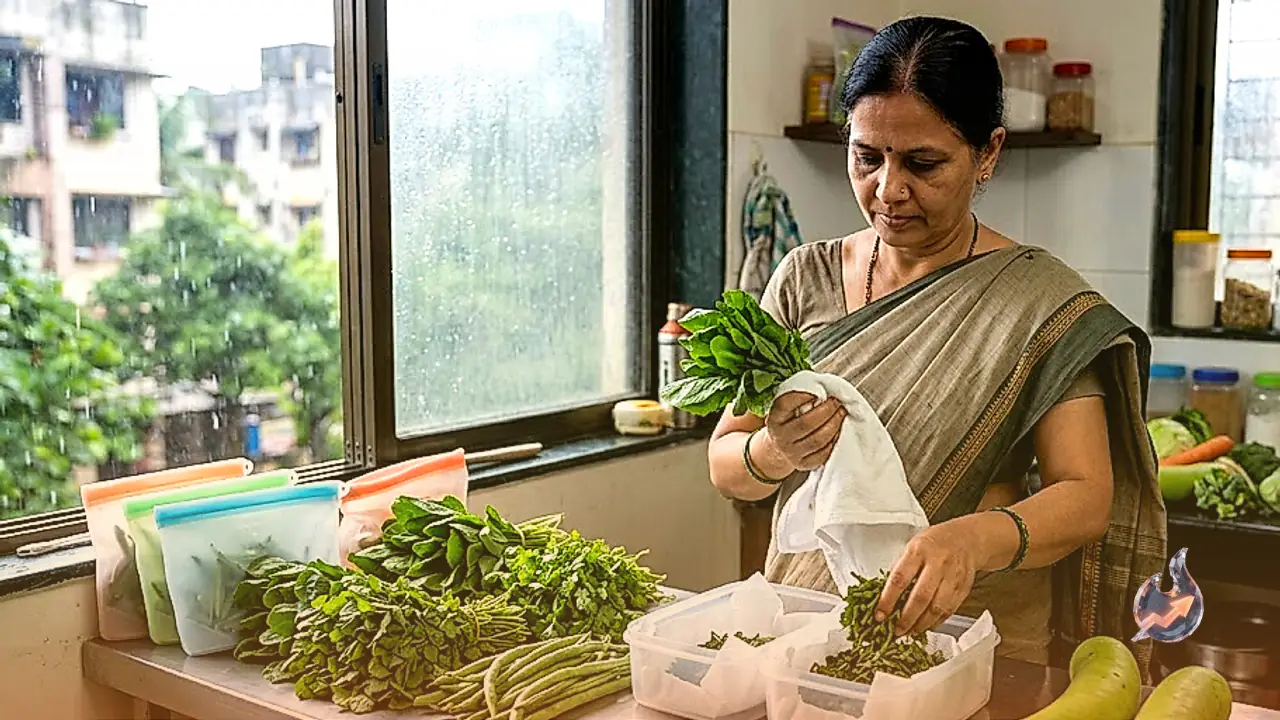

With the arrival of the monsoon season, local markets in Bhilwara are flooded with an abundance of fresh green vegetables. However, household kitchens face a major challenge during this period as vegetables tend to spoil at an alarming rate. High atmospheric humidity accelerates fungal growth, leading to rotting, decay, and a loss of natural flavor. Consumers frequently purchase vegetables in bulk, only to find them completely ruined within two to three days due to improper storage techniques.
High Risk Produce and Proper Care for Leafy Greens
Vegetables that are particularly vulnerable to quick spoilage during rainy weather include spinach, fenugreek, coriander, mint, green chillies, tomatoes, okra, mushrooms, cucumbers, and podded vegetables. Moisture settles rapidly on these items. To preserve leafy greens, the very first step is to carefully sort through them and remove any yellow, wilted, or damaged leaves. Crucially, these greens should never be washed prior to refrigeration. Storing wet leaves drastically speeds up decomposition. Instead, wrap unwashed greens loosely in a clean cotton cloth, paper towel, or dry tissue paper before placing them in the vegetable drawer of the refrigerator. Washing should strictly be done right before cooking.
Special Hacks for Coriander, Mint, and Dry Vegetables
To keep delicate herbs like coriander and mint fresh for extended periods, a simple water glass method works wonders. Place the root ends of the stems into a small glass containing a little water, and loosely cover the top with a plastic bag. This retains hydration without allowing the leaves to wither. For non-leafy produce such as okra, tomatoes, eggplants, capsicum, beans, bottle gourd, ridge gourd, and cucumbers, ensuring complete dryness is essential. Avoid sealing them in tight plastic bags; instead, use perforated bags or open mesh containers that facilitate proper air circulation. Free airflow prevents moisture accumulation. Furthermore, if a single vegetable shows signs of rot, isolate it immediately to prevent decay from spreading to adjacent produce.
Refrigeration Rules and Moisture Management
Choosing the right storage environment based on vegetable type is crucial for longevity. During the monsoon, potatoes, onions, and garlic should never be stored in the refrigerator. They thrive best in dry, cool, and well-ventilated room temperature spaces. Conversely, produce like cauliflower, cabbage, broccoli, and mushrooms remain fresh much longer when kept chilled in the fridge. Care should be taken not to tightly pack or squeeze vegetables together, as physical pressure causes structural damage and hastens decay. To tackle excess humidity inside the refrigerator drawer, lining the bottom with a dry tissue paper helps absorb moisture effectively.
Smart Shopping Habits and Waste Reduction
Adjusting purchasing habits during the rainy months can significantly reduce household food waste. It is advisable to buy smaller quantities of produce more frequently rather than stocking up heavily in one go. Practicing a first-in, first-out rule ensures that older inventory is consumed before newly bought items. Any vegetable displaying mold, softening, or unpleasant odors should be discarded promptly to protect the rest of the supply. Implementing these practical kitchen strategies ensures families enjoy fresh, nutritious meals while saving money and eliminating unnecessary food wastage.


