
























Even after thorough laundering, fresh towels often retain a lingering musty odor that resists standard washing routines. Over months of use, these fabrics frequently lose their original plush texture, turning stiff and scratchy against the skin. Most households assume that age is the primary factor behind degraded towels, but the actual culprit is residue accumulation. Everyday laundry detergents, liquid fabric softeners, and naturally occurring water minerals settle deep within the woven cotton loops during washing cycles. Over time, this hydrophobic film coats the individual fibers, reducing water absorbency and trapping unpleasant smells within the fabric structure.
Understanding Why Towel Fibers Harden Over Time
Regular laundering does not always fully flush out heavy laundry soaps from dense terrycloth fabric. Furthermore, frequent use of commercial fabric softeners backfires by depositing a waxy layer over the cotton loops, which prevents moisture absorption instead of improving texture. Household white vinegar offers a simple, chemical-free mechanism to break down this barrier. Rich in acetic acid, white vinegar neutralizes alkaline deposits and dissolves bound mineral scale left behind by hard water. Stripping these stubborn residues allows the cotton fibers to open up again, restoring their natural loft, softness, and water-absorbing capacity.
How Trapped Moisture Triggers Persistent Odors
Persistent towel odor is directly tied to retained dampness in the dense fabric weave. When towels remain damp on racks or inside washing machines for extended periods, stale odors develop rapidly. Rainy weather and high humidity exacerbate this issue, as towels struggle to dry completely between uses. Combining prompt drying habits with an occasional white vinegar rinse effectively neutralizes embedded odors that ordinary laundry detergents fail to wash away.
Step-by-Step Method for Machine Washing with Vinegar
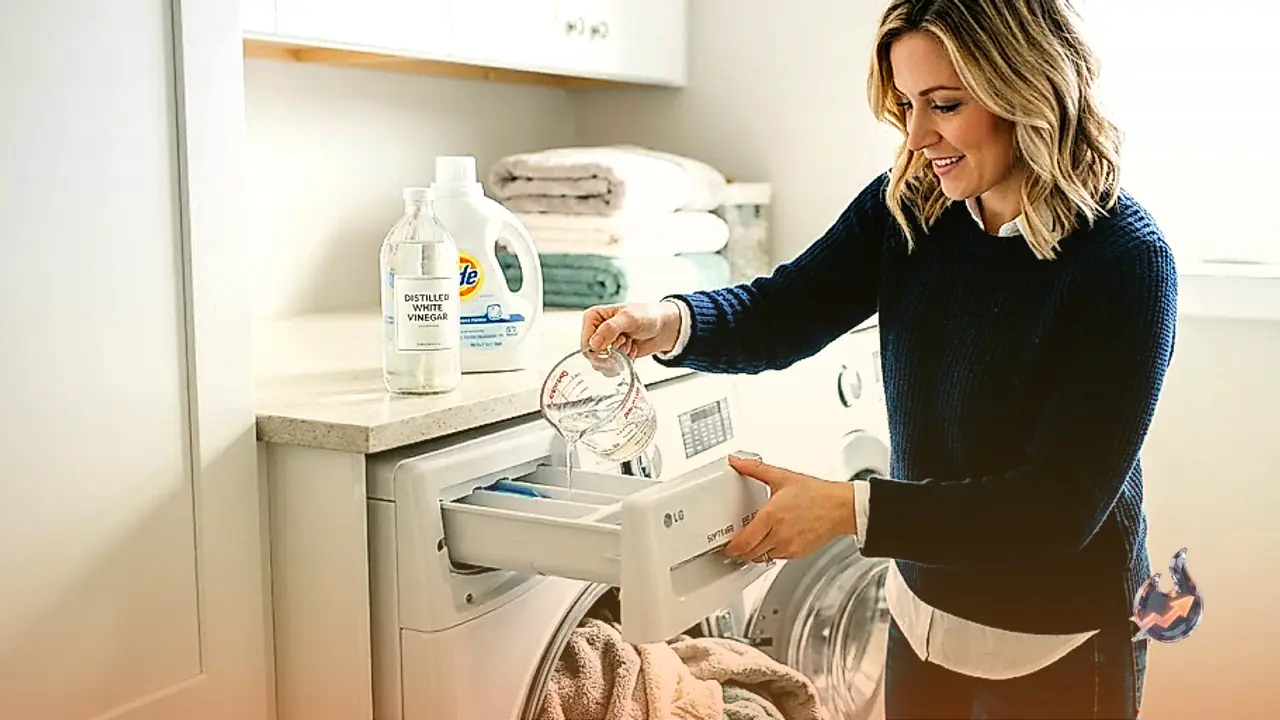
Applying white vinegar requires proper timing during the laundry cycle to achieve optimal results. Begin by loading towels loosely into the washing machine drum, avoiding overcrowding so that water can circulate freely between items. Add your usual amount of regular laundry detergent at the start of the wash. Next, pour approximately half a cup or 120 milliliters of distilled white vinegar directly into the fabric softener compartment. Dispensing the vinegar into this compartment ensures it releases during the final rinse cycle, stripping away loosened soap scum and residual detergent before the final spin.
Alternative Diluted Spray Method and Proper Drying Rules
For spot treatment or top-loading machines without specialized dispensers, white vinegar can be applied using a manual spray method. Dilute the vinegar with clean water in a spray bottle and mist it lightly across the towel surface. Full saturation or soaking in pure vinegar is unnecessary. After misting, run the towels through a standard laundry wash cycle with detergent. Once the cycle finishes, remove the towels immediately and dry them thoroughly in full sunlight or a high-heat dryer cycle. Leaving laundry damp inside the machine is the single largest cause of recurring mildew odors.
Frequency of Maintenance and Hard Water Considerations
Integrating vinegar into every laundry load is unnecessary and ineffective. When towels remain soft, odorless, and fully absorbent, standard wash cycles with minimal detergent are sufficient. Using white vinegar roughly once a month serves as an ideal maintenance routine to strip buildup. Homes operating on hard water supplies with high mineral content benefit most from this monthly routine, as mineral scale accumulates faster on heavy cotton fabrics.
Critical Safety Warning Regarding Chemical Mixing
A crucial safety precaution must be observed whenever using vinegar in household cleaning. Never mix white vinegar with chlorine bleach or any laundry product containing sodium hypochlorite. Combining an acid like vinegar with sodium hypochlorite triggers a chemical reaction that releases toxic chlorine gas, posing severe respiratory hazards. Always keep white vinegar and bleaching agents strictly separate throughout all washing procedures.