
























With the peak of the summer season fully active, many households find themselves struggling against a double whammy of intense heat and suffocating indoor humidity. Even as the calendar shifts deep into July, relief in the form of heavy monsoon showers remains elusive in many areas. For many families, their trusty room coolers, which should be providing a refreshing breeze, have instead started blowing warm, muggy air. This turns what should be a comfortable night's rest into a sweaty, restless ordeal. The root cause behind a cooler emitting humid air rather than crisp, cold air often boils down to three primary factors: a natural spike in atmospheric moisture, a lack of regular appliance maintenance, and improper placement within the living space. Fortunately, you do not have to endure this discomfort. By implementing a few straightforward and highly effective strategies, you can optimize your cooler's performance, significantly lower your room's humidity, and enjoy an AC-like chilling effect all summer long.
Positioning and Sunlight Control Make a Difference
To get the most out of your evaporative cooler, proper placement is absolutely vital. Coolers must always be positioned in areas where they can constantly draw in fresh, dry air from the outside. If you place your unit in a closed balcony or a completely sealed room, its cooling capacity drops drastically because it ends up recycling the same damp air. Because these appliances rely on fresh air to work efficiently, your best bet is to position the cooler directly inside a window frame or right next to an open door. Additionally, if your room receives direct, harsh sunlight during the hottest parts of the day, the indoor temperature will naturally skyrocket. To prevent this, make sure to install thick curtains, heavy blinds, or sun-control window films. By blocking external solar heat, you keep the room inherently cooler, which means your appliance does not have to work twice as hard to lower the temperature.
Mastering Ventilation to Keep Humidity at Bay
One of the most common mistakes people make is running a cooler in a fully sealed environment. When a room is completely closed off, the moisture evaporated by the cooler has nowhere to go. This water vapor accumulates rapidly, causing the indoor humidity levels to spike and leaving you feeling incredibly sticky and uncomfortable. To prevent this buildup of muggy air, you must ensure that there is a continuous exit route for the moisture. Keep your windows, internal doors, or an exhaust fan open. This structural setup allows the hot, damp air to escape seamlessly while maintaining a constant stream of fresh, dry air moving throughout the space.
The Double Power of Ceiling Fans and Coolers
Combining your room cooler with a ceiling fan is an incredibly effective way to combat both stuffiness and hot pockets of air. When you run both appliances simultaneously, the ceiling fan takes the concentrated stream of cold air coming from the cooler and disperses it evenly across the entire room. However, remember that even when both are running, you must not seal the room shut. Keep the windows and doors cracked open to allow the warm air to be pushed out. The ceiling fan acts as a circulation booster, ensuring that every corner of the room benefits from the cooling effect rather than just the area directly in front of the cooler vents.
Caring for Honeycomb and Grass Pads
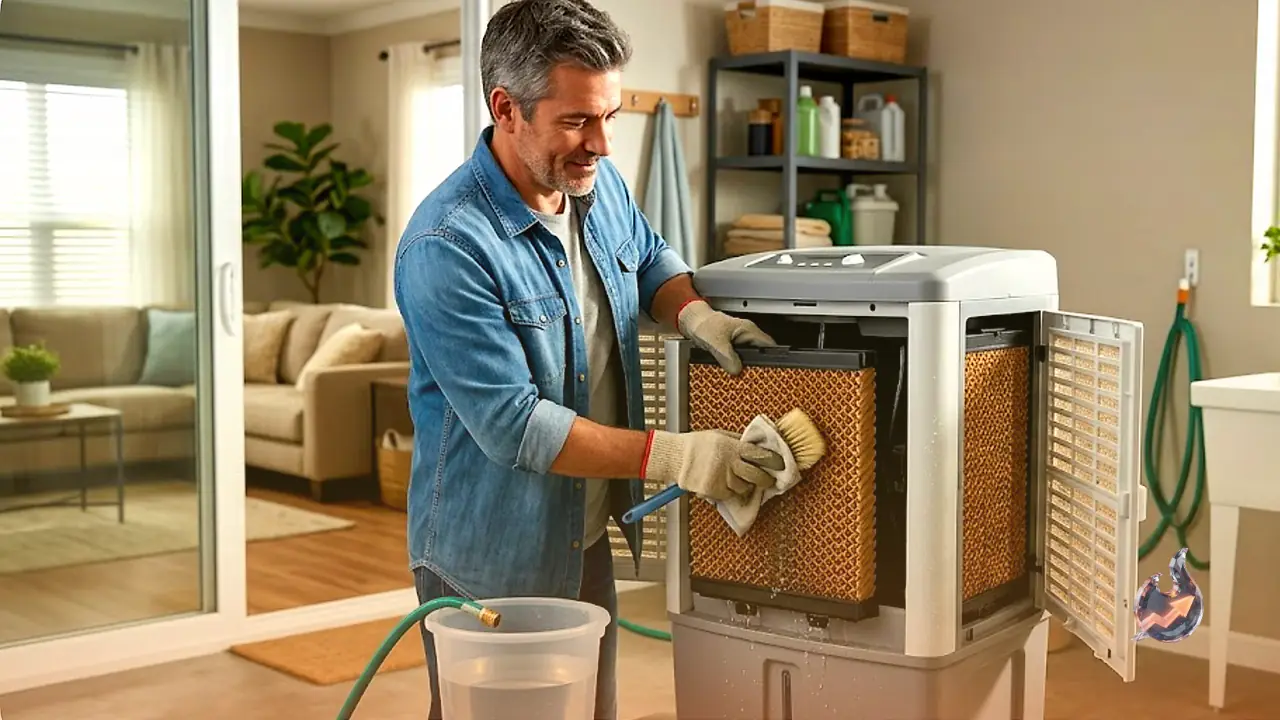
The efficiency of your cooler depends heavily on the state of its cooling pads, whether they are made of honeycomb material or traditional wood wool grass. Over time, these pads accumulate a thick layer of dust, mineral deposits, and dirt, which severely restricts the flow of water and blocks proper airflow. To maintain peak performance, you should clean these pads thoroughly at least once a week. If you notice that the pads have become too clogged, fragile, or worn out, replace them with fresh ones immediately. Furthermore, it is highly recommended to get your cooler fully serviced before the summer starts, as well as once more mid-season. Checking the fan blades, the water pump, and the motor ensures that everything runs at maximum efficiency, which not only improves cooling but also keeps your monthly electricity bills in check.
Ice and Cold Water Hacks for Instant Relief
On exceptionally scorching days when the air feels like a furnace, filling your cooler's tank with very cold water can make a massive difference. For an extra boost of icy freshness, you can also drop ice cubes or reusable ice packs directly into the water reservoir. While this particular trick offers a temporary burst of intense cooling, it is highly effective for getting a room temperature down quickly. To keep this chilling effect going, make sure to monitor the water level regularly. If the tank runs too low, the cooling pads will dry out, and the machine will start blowing dry, hot air. Always keep an eye on the water level and ensure that your water pump is functioning correctly to keep those pads thoroughly saturated.
Navigating High-Humidity Seasons and Essential Maintenance
During the pre-monsoon phase or the actual monsoon season, the ambient air naturally carries a very high level of humidity. During these periods, the natural evaporative process of any air cooler slows down, which inherently reduces its cooling efficiency. When the outdoor air is already saturated with water vapor, relying solely on your cooler might not be enough. In such scenarios, focusing on excellent room ventilation becomes your most powerful tool to stay comfortable. To ensure trouble-free operation, always try to use window-mounted coolers that draw air from the outside. Additionally, clean your water tank regularly to prevent the growth of harmful bacteria and unpleasant, musty odors. When the hot season finally ends and you need to store the appliance away for a long period, make sure to clean and dry it completely. Lastly, never neglect safety; periodically inspect all electrical connections and wiring to avoid any potential hazards.