























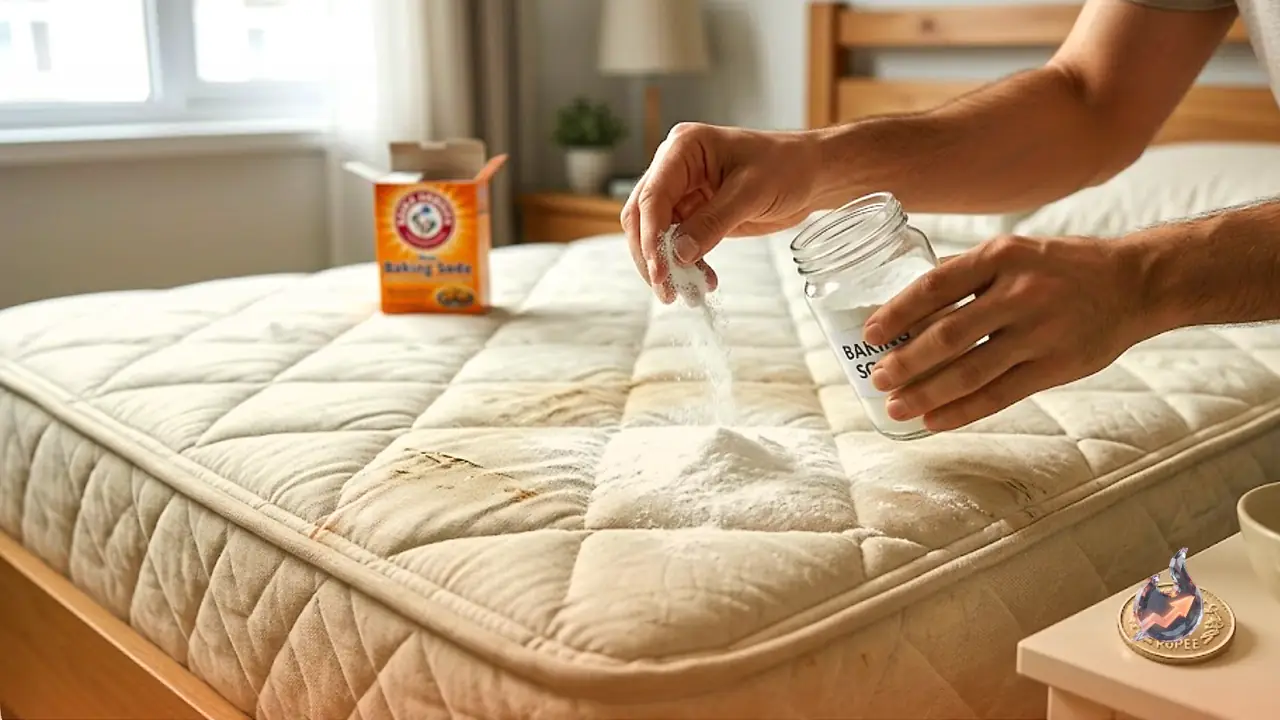

Your mattress absorbs sweat, body oils, dust, and moisture every single night, and yet it rarely ever gets a proper clean. Over weeks and months, this buildup becomes a source of stubborn odour, particularly during summer and the monsoon season when heat and humidity accelerate the process considerably. The smell can make even a tidy bedroom feel stale and uncomfortable. The solution costs about 5 rupees and is almost certainly already sitting in your kitchen: baking soda.
Why Baking Soda Works
Baking soda is a natural deodoriser. It has the ability to draw out and absorb both the moisture and the odour-causing particles that settle into the surface of a mattress over time. This property makes it a widely used ingredient in general household cleaning, where many people rely on it for a range of tasks around the home.
How to Clean Your Mattress Step by Step
Start by stripping the bed completely, removing the bedsheet and the mattress cover. Sprinkle a light, even layer of baking soda across the entire surface of the mattress, making sure no patch is left uncovered. Leave it undisturbed for 20 to 30 minutes, giving the powder enough time to draw the odour and trapped moisture out of the mattress.
Once the time is up, give the mattress a thorough shake or run a vacuum cleaner over it to remove all the baking soda from the surface. For an additional benefit, if your space and circumstances allow, place the mattress in direct sunlight or a well-ventilated spot for a while after cleaning. This helps drive out any lingering dampness and leaves the mattress feeling noticeably fresher.
How Often Should You Do This
For a mattress that gets daily use, once a month is a solid and sufficient routine. During summer and the monsoon months, when the body sweats more and indoor humidity rises, you can increase how often you clean it based on how the mattress smells and feels at the time.
Important Precautions to Keep in Mind
If any liquid spills on the mattress, the immediate priority is to blot it up with a dry cloth as thoroughly as possible. Do not rush to apply baking soda onto a wet mattress; let it dry out as much as it can first, since the powder works best on residual dampness rather than active wetness. Additionally, if you notice large stains or visible patches of mould on the mattress, baking soda on its own is unlikely to be sufficient. In those situations, consult the manufacturer's care instructions or arrange for a professional cleaning service to handle it properly.