















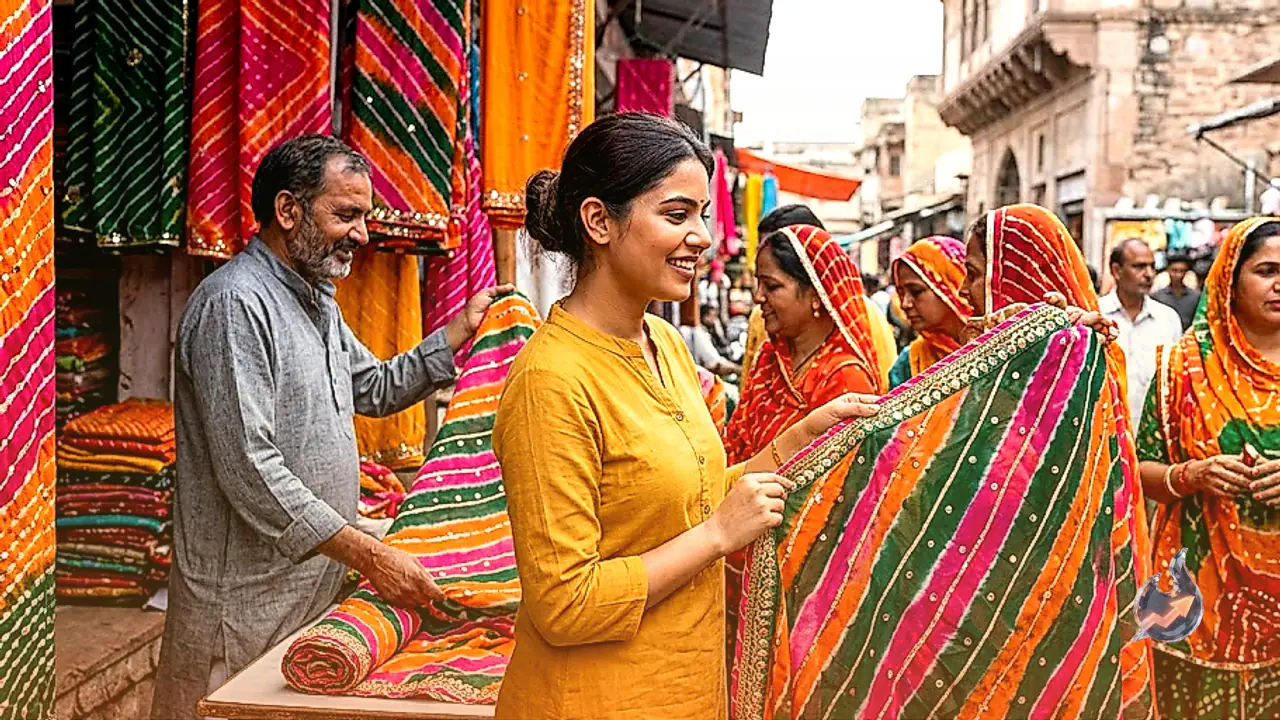

As the auspicious month of Sawan begins, women's traditional attire naturally transforms to reflect the vibrant mood of the season. Alongside shades of green, pink, and bright magenta, the demand for Lahariya sarees surges significantly in local markets. While numerous modern designs and varieties of Lahariya remain available to shoppers, one specific pattern retains its unmatched traditional identity, known widely as Motra Lahariya.
The Return of Vintage Ethnic Fashion
Once a staple of classic women's fashion, Motra Lahariya has successfully staged a major comeback in contemporary wardrobes. According to local textile merchants, sales of this particular saree spike notably throughout the Sawan season. Consequently, shopkeepers ensure that diverse ranges and fresh designs of this ethnic wear reach store shelves well ahead of the festive rush.
Merchant Insights on the Timeless Trend
Local saree merchant Pankaj Gupta explains that Motra Lahariya is by no means a newly introduced variety. Its origins run deep, with women embracing it as a quintessential traditional outfit for Sawan across generations. Although the market experienced a phase dominated by newer designer sarees for a brief period, shoppers are actively gravitating back toward the classic appeal of Motra Lahariya.
Distinctive Patterns and the Popular Magenta Shade
The core identity of this garment lies in its unique coloring technique and rhythmic wave patterns. While multiple color choices populate the market, the vibrant magenta shade remains the top preference among buyers. Pricing for these sarees varies according to the underlying fabric and the extent of handwork involved.
Lightweight Chiffon and Georgette Fabrics
This season, Motra Lahariya is accessible across several fabric types in Karauli. Among them, chiffon and georgette variants remain immensely popular for daily wear and festive Sawan occasions. Because the fabric is remarkably lightweight, women find it convenient to wear comfortably for extended hours during humid festive days.
Textile traders note that plain Motra Lahariya material is primarily manufactured in Surat. Meanwhile, specialized variants featuring traditional Gota and Jaipuri handwork are crafted in Jaipur. This distinct division in production explains the wide price and design variations found under the same banner in retail stores.
Pricing Tiers and Sogi Rituals During Raksha Bandhan
Plain Motra Lahariya options generally start around 300 rupees and scale up to 1500 rupees, whereas premium varieties featuring Jaipuri Gota work can command prices between 3000 and 4000 rupees. Furthermore, embellished varieties witness an extraordinary surge in demand around Raksha Bandhan, particularly for traditional Sogi gifting rituals.