





















Having a Tulsi plant at home is considered highly auspicious as it purifies the ambient air and offers numerous medicinal benefits. The leaves are packed with anti-bacterial and anti-viral properties that help fight common colds and boost immunity. Moreover, its distinct fragrance keeps minor insects away, while religious beliefs associate it with bringing peace and positive energy to the household. However, this delicate plant requires proper attention, and a lack of adequate care can cause it to wither and dry up quickly.
Choosing the Right Time and Direction
Nurseries primarily feature two main varieties known as Rama Tulsi and Shyama Tulsi. The primary difference lies in the color and taste of their foliage, where Rama Tulsi features light green, sweet-tasting leaves, while Shyama Tulsi has dark green to purplish leaves with a much sharper aroma. Shyama Tulsi is often referred to as Krishna Tulsi due to its association with Lord Krishna and is mostly utilized for medicinal preparations. For home worship and overall positivity, Rama Tulsi is widely regarded as the best choice. The most auspicious days to plant it are Thursdays and Fridays, ideally during the months of October to November or February. It should always be placed in the northeast or east direction of the house.
A basic Tulsi plant typically costs between thirty and sixty rupees at a nursery, while one that comes pre-potted ranges from eighty to one hundred rupees. When making a purchase, ensure the plant is mature and at least a month old. Since it thrives in warmth, it requires a minimum of eight hours of sunlight daily. Overwatering must be strictly avoided as excessive moisture leads to root rot and fungal infections. Repotting and pruning should ideally be carried out during the monsoon season or in February, while summer repotting should be avoided. Fallen yellow leaves must be cleared from the pot immediately as they can harbor pests that harm the soil.
Soil Composition and Pruning Techniques
The potting mixture must always be well-drained to prevent water stagnation around the roots. Lightly tilling the soil every ten to fifteen days helps provide adequate aeration and sunlight to the roots. During the rainy season, the plant should be sheltered where it receives only gentle moisture, and in peak summers, it should be protected from harsh all-day sun. An ideal soil mix consists of forty percent garden soil, thirty percent vermicompost or old cow dung manure, and thirty percent cocopeat or rice husk.
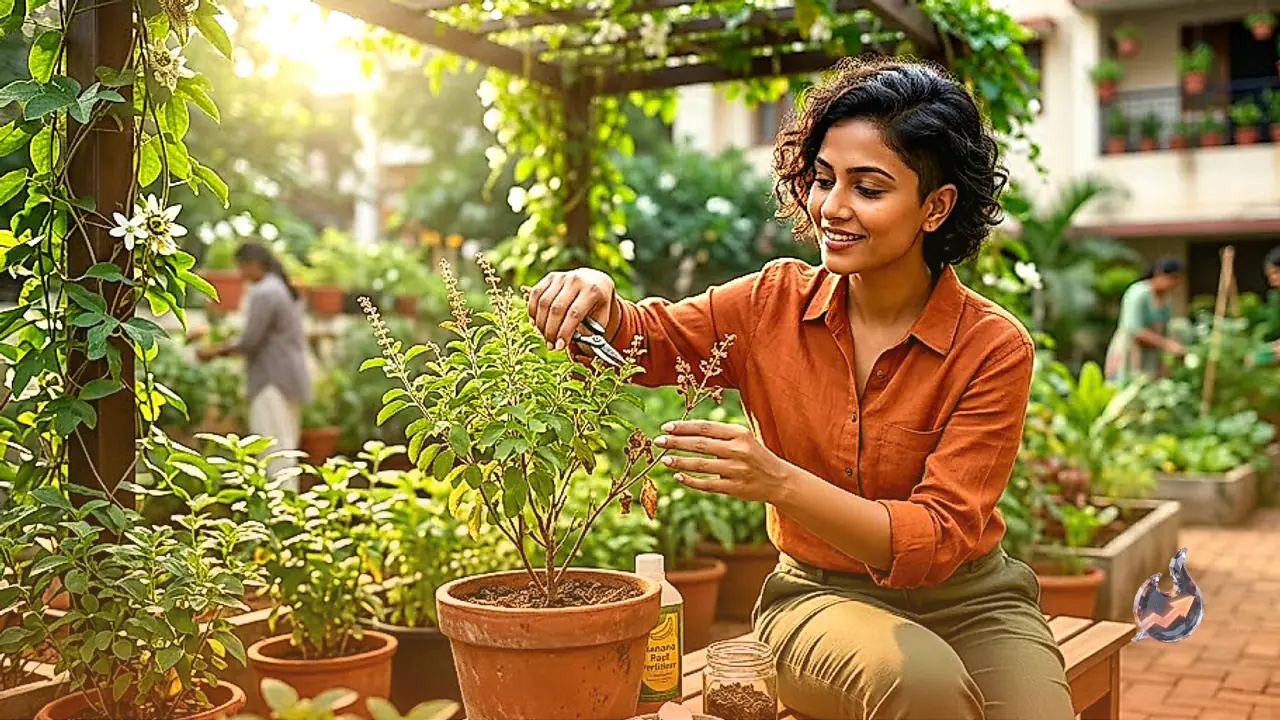
To encourage a bushy growth, the main tip of the plant should be pinched off once it reaches a height of six to seven inches, allowing the plant to redirect its energy into developing multiple side branches. Pruning can be repeated every three to four months. Additionally, removing the flowering shoots known as manjari is crucial, as letting them form seeds diverts the plant's energy and stunts its overall expansion. Spraying neem oil every fifteen to twenty days effectively keeps pests at bay.
To maintain lush greenery, two to three handfuls of vermicompost or aged cow dung can be added along with a teaspoon of neem cake powder after lightly loosening the soil. If these are unavailable, substituting them with a spoonful of fresh tea leaves, coffee powder, or turmeric powder provides essential nutrients and prevents fungal growth. Mustard cake, diluted buttermilk that is four to five days old, or a powder made from dried potato and banana peels also work wonders for plant health.
If the Tulsi plant is turning yellow or completely drying up, the first step is to trim away all dead branches through hard pruning. Adding two spoons of borax powder to the soil acts as an effective fungicide and fertilizer. Another traditional remedy involves dissolving fifty grams of jaggery in one litre of water and applying it to the plant after twenty-four hours to successfully revive dried stems.