






















Live: Mumbai deluged as Juhu Airport logs 205 mm in 24 hours; BMC warns of more intense rain tonightLive
2 Jul 2026, 11:37 am (45 days ago)· 2

Live: Mumbai deluged as Juhu Airport logs 205 mm in 24 hours; BMC warns of more intense rain tonight

A man died after being swept into an uncovered manhole on Khairani Road in Mumbai's Chandivali area during heavy monsoon rains, with floodwater having masked the open drain at a BMC work site. Maharashtra Assembly Speaker Rahul Narwekar termed the tragedy culpable homicide and demanded a government statement in the House. Meanwhile, Char Dham routes in Uttarakhand are disrupted by rainfall and landslides, and Gujarat has positioned 1,036 SDRF troops at sensitive locations statewide.

Mumbai is once again bearing the brunt of the monsoon. The Juhu area recorded 205 millimetres of rain in the past 24 hours, the highest anywhere in the city, and the Brihanmumbai Municipal Corporation (BMC) has warned that rainfall could turn even heavier tonight and through Friday morning, July 3, 2026, with gusty winds of 50 to 60 kilometres per hour expected on and off. At the same time, Delhi has finally seen the monsoon arrive in July for the first time in five years, while Himachal Pradesh, Kerala, Karnataka and Uttarakhand have all been grappling with monsoon-related disruption and loss of life.

Mumbai's monsoon fury, Juhu the wettest spot

According to BMC data, the city recorded an average of 172mm of rain in the 24 hours between 8am on July 1 and 8am on July 2, with the eastern suburbs logging 189mm and the western suburbs 165mm. The fuller picture emerged from the slightly shifted window between 8:30am on July 1 and 8:30am on July 2, during which several parts of Mumbai recorded more than 150 millimetres of rain, underlining just how intense this spell of the monsoon has been. Juhu airport was the wettest spot with 205 millimetres, followed by Santacruz with 204.6 millimetres and Vikhroli with 192.5 millimetres. Heavy rain was also recorded in Sion, Byculla, Chembur, Vidyavihar, Bandra, Ram Mandir and Colaba, making clear that this downpour was not confined to one corner of the city but battered it almost uniformly.

Also read

Readings from individual rain gauges add further texture to the scale of the deluge. The Santacruz SWM Workshop and the S Ward office in Bhandup logged the highest figure at 238.8mm, followed by Pasapoli Municipal School in Powai at 234.6mm, Tagore Nagar Municipal School in Vikhroli at 233.2mm, Mithagar Municipal School in Mulund at 226mm, the Andheri Fire Station at 225.4mm, the F South ward office in Parel at 222mm, and the G South ward office in Prabhadevi at 220.4mm. With so many stations recording close to or above 200mm, it is evident that almost every part of Mumbai, whether the island city, the eastern suburbs or the western suburbs, has been soaked this time around.

BMC also shared details of the tidal cycle. A high tide of 4.27 metres was expected at 1:45pm on Thursday, with the next high tide of 3.71 metres due at 1:31am on Friday, July 3, 2026. A low tide of 1.82 metres was expected at 7:49pm on Thursday evening, with the following low tide due at 7:11am on Friday morning. Heavy rainfall coinciding with high tide often worsens waterlogging in Mumbai's low-lying areas, which is why the civic administration is tracking both factors closely.

Roads flooded, local trains running late

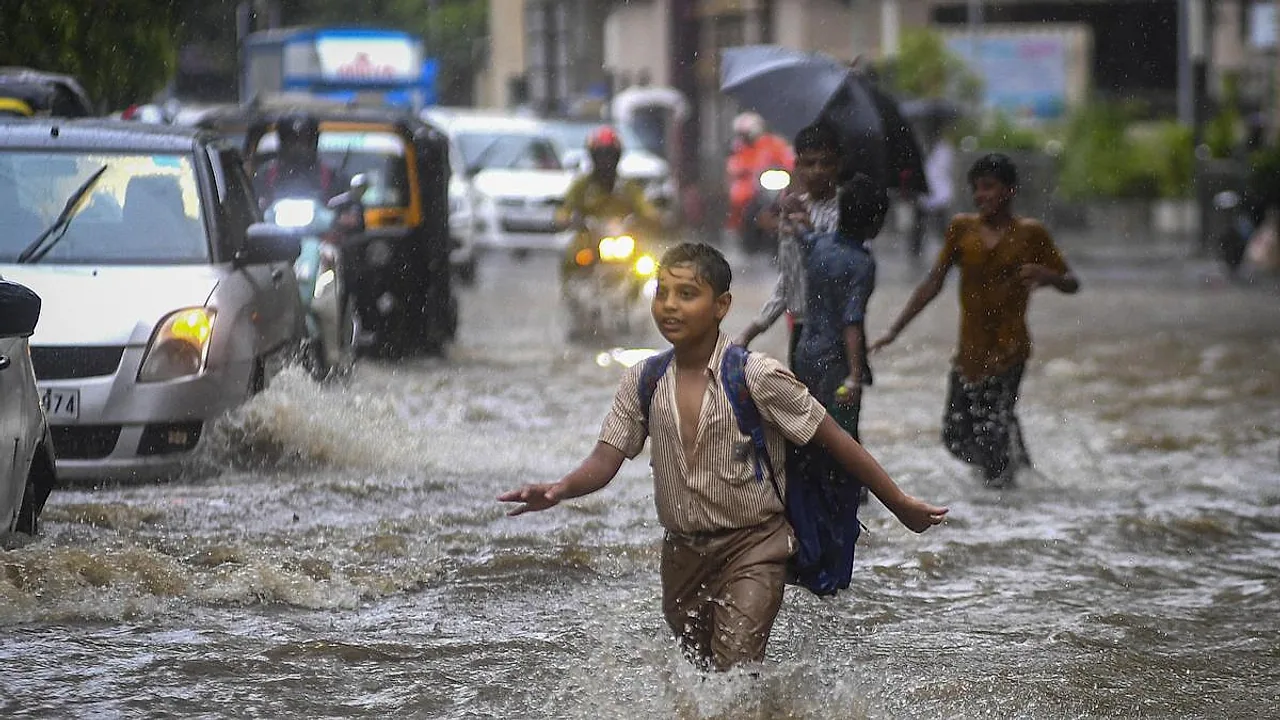
Heavy rain returned to Mumbai on the morning of Thursday, July 2, 2026, submerging low-lying areas once again. The downpour slowed both road and rail traffic across the city. Waterlogging was reported in major areas including Dadar, Parel, Hindmata, Charkop, Worli, Goregaon and Andheri, causing significant hardship for commuters and reducing vehicles to a crawl. Relief looked unlikely, with the India Meteorological Department forecasting rain through the day.

While the tracks themselves did not go under water, waterlogging in surrounding areas still affected the movement of local trains. Commuters said several local trains were running 10 to 15 minutes behind schedule, which led to heavy crowding at stations during the morning rush. A Central Railway spokesperson said that despite more than 180mm of rain in the preceding 24 hours, there was no major waterlogging on their network, and local services ran normally across all four corridors, though passengers did complain of delays. Western Railway similarly posted on X that suburban services on its network were running normally, but passengers there too claimed that some trains were running behind their scheduled times, exposing a gap between official statements and commuters' actual experience.

A manhole tragedy claims a life, sparks uproar in the assembly

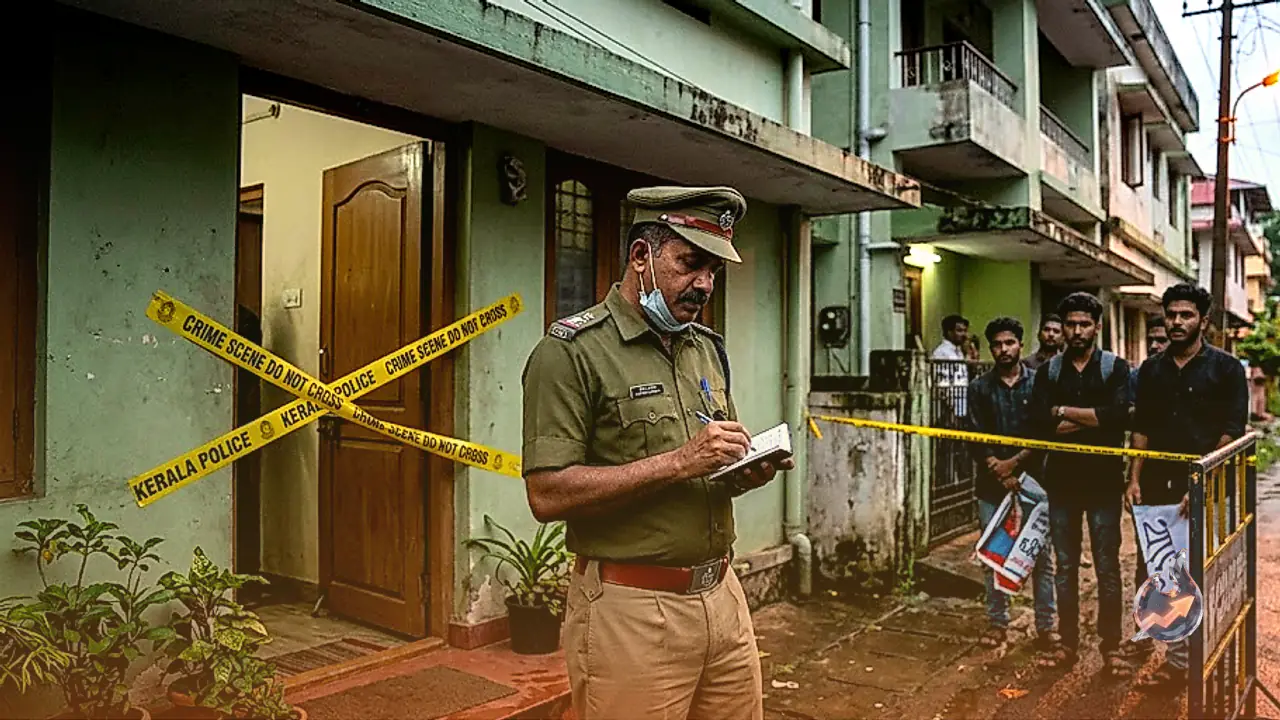
Amid Mumbai's relentless downpour, a deeply tragic incident also occurred. A man died after being swept into an open manhole. The incident took place in the Chandivali area of the eastern suburbs, where waterlogging had made the open manhole on the road invisible. An official said on Thursday, July 2, 2026, that the fire brigade and the civic body's disaster management teams launched a joint search operation, following which the man's body was recovered the same day. BJP MLA Amit Satam told the assembly that the incident occurred on Khairani Road in the same area, where the BMC itself was carrying out drainage work at the time.

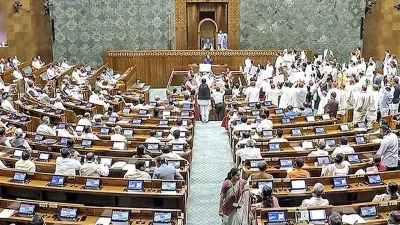
The death triggered a sharp debate over administrative accountability. Deputy Mayor Sanjay Ghadi said the civic body would file a case against the contractor concerned and treat the incident as culpable homicide. Maharashtra Assembly Speaker Rahul Narwekar, on the same day, called the incident extremely serious, saying it amounted to culpable homicide. After MLA Amit Satam raised the matter in the House and demanded immediate criminal action against those responsible, the Speaker directed the state government to present a detailed account of the incident to the House before the day's proceedings concluded.

Thane orders survey of dangerous trees after a school bus tragedy

A tree fell on a school bus during Mumbai's heavy rain, killing a student. Following this tragedy, Thane Mayor Sharmila Pimplolkar has ordered a citywide safety survey of dangerous trees. The mayor called an emergency meeting of the Thane Municipal Corporation's Tree Authority department on Wednesday, July 1, 2026, and directed officials to inspect trees around schools, colleges, housing societies, hospitals and major junctions without delay. She also asked for a fresh check on the stability of trees that had previously been flagged as risky.

Stressing coordination between departments to avert any potential danger, the mayor said dangerous, dry or leaning trees and large branches must be identified as quickly as possible and necessary action taken. She also directed that branches left by the roadside after pruning be cleared immediately so that traffic is not disrupted during the monsoon. The public has also been urged to report any dangerous tree they notice directly to the Thane Municipal Corporation.

Minister Sanjay Shirsat's remark sparks outrage, walked back a day later

Maharashtra cabinet minister Sanjay Shirsat found himself at the centre of a controversy over a remark he made. After the death of the student when a tree fell on a school bus in Mumbai, he had said that the falling of trees and electric wires was not something within human control, a comment that drew widespread criticism. A day after being attacked from all sides over the remark, the Shiv Sena minister tried to contain the damage on Wednesday, July 1, 2026. He claimed his words had been twisted and distorted, and added that the civic body should have already ensured proper pruning of trees to prevent such accidents. The episode has opened up a fresh debate over government accountability when it comes to tree maintenance and urban safety.

Delhi finally gets its monsoon, first July arrival since 2021

While Mumbai battles the rain, the national capital's long wait for the monsoon has ended. The southwest monsoon reached Delhi on Thursday, July 2, 2026, five days later than its normal arrival date of June 27. According to the India Meteorological Department (IMD), this is the first time since 2021 that the monsoon has arrived in Delhi in the month of July. In 2021, it had arrived on July 13. Looking at the past five years, the southwest monsoon reached Delhi on June 29 in 2025, June 28 in 2024, June 25 in 2023 and June 30 in 2022. So while a five-day delay may not sound dramatic on its own, a July arrival is a clear departure from the pattern of the last four years.

Even before the official arrival, parts of Delhi saw light to moderate rain on Thursday morning, bringing down temperatures and offering relief from humid weather. The IMD said cloudy skies and moderate rain are likely across Delhi through the day, and the weather office has also forecast thunderstorm activity continuing on Friday, Saturday and Sunday, July 3 to 5, 2026. The minimum temperature was recorded at 22.8 degrees Celsius, 5.1 degrees below the seasonal average, while the maximum is expected to hover around 33 degrees Celsius. Intermittent rain accompanied by light winds in the morning brought relief to residents after days of heat and humidity. According to data from the Central Pollution Control Board (CPCB), the Air Quality Index (AQI) stood at 100 at 9am, placing it in the satisfactory category. The IMD also said the monsoon is expected to advance further and cover parts of Haryana, Punjab, Rajasthan and Madhya Pradesh over the next three days.

Himachal Pradesh reels under the monsoon, four dead, roads buried in debris

The hill state of Himachal Pradesh has seen the monsoon turn deadly. Four people have died in separate rain-related incidents. Heavy monsoon rain across several parts of the state, including Shimla, Manali and Dharamshala, has triggered landslides, swollen rivers, blocked numerous roads and caused widespread power outages. According to the Shimla Meteorological Department, the southwest monsoon entered Himachal Pradesh on Tuesday, June 30, 2026, and had covered the entire state by Wednesday, July 1, 2026. The department has issued an orange alert for heavy to very heavy rain in isolated places between July 2 and July 6, excluding July 4.

The individual deaths make for grim reading. A woman from Solan district died after a large rock fell on her as she was stepping out of her car on the Chandigarh-Manali National Highway near Aut. According to the State Emergency Operations Centre, three deaths were recorded in Kangra district on the very first day of the monsoon, one due to electrocution and one due to a fall from height. In Chamba district's Lanot and Fagdog villages, continuous rain has created flood-like conditions, with debris sliding down and entering two houses, causing cracks in walls and heavy damage.

The State Emergency Operations Centre (SEOC) had initially reported that a total of 35 roads had been closed to vehicles across the state, including 18 in Kullu, 11 in Mandi, and two each in Lahaul-Spiti, Sirmaur and Una, along with 127 power transformers disrupted statewide. But the situation worsened, and officials said on Thursday, July 2, 2026, that the number of closed roads had risen to 46, comprising 18 in Kullu, 15 in Mandi, nine in Sirmaur, and two each in Lahaul-Spiti and Una. The SEOC said a total of 181 power transformers have now been knocked out by the heavy rain, and six water supply schemes have also been affected.

On the rainfall figures, Paonta Sahib recorded the highest rainfall since Wednesday evening at 100.4mm, followed by Kasauli at 86mm, Dharampur at 83.4mm, Jattan Barrage at 77mm, Dhaulakuan at 69mm, Pachhad at 60mm, Rampur at 53mm, Una at 50.4mm, Nahan at 38.3mm, Palampur at 37.8mm and Dharamshala at 34.1mm. Lightning strikes were also reported in Kangra, Jubbarhatti and Bhuntar.

Meanwhile, the National Highways Authority of India (NHAI) has taken steps to ensure safe, smooth and uninterrupted movement on highways in Himachal Pradesh through the rainy season. In a statement issued on Thursday, NHAI said vulnerable locations prone to landslides, rockfalls, debris accumulation, flooding and other monsoon-related hazards have been identified, and restoration work has already begun on a priority basis at these spots. The authority has also completed a detailed survey of vulnerable and landslide-prone stretches of the national highway network in the state, and corrective measures have been initiated at identified locations based on these assessments. To strengthen highway infrastructure and minimise the impact of bad weather, several technical works are underway, including hill protection works, slope stabilisation, construction of retaining walls, improved drainage systems and anti-erosion measures.

Karnataka: landslide in Mangaluru kills three of one family, schools shut in Dakshina Kannada

Karnataka's Mangaluru also lost a family to the rain. A landslide in the Nagori area, triggered by overnight heavy rain, buried a house under debris. Three members of one family were killed in the incident, including two young girls, while three others were rescued safely. A preliminary investigation found that a large amount of soil from the hill above the house had slid down due to continuous rain, causing the entire structure to collapse.

Meanwhile, in view of a red alert for extremely heavy rain, Dakshina Kannada Deputy Commissioner H.V. Darshan declared a holiday for all schools, PU colleges and anganwadis in the district on Thursday, July 2. He appealed to people to stay away from beaches and riverbanks and advised fishermen not to venture into the sea. District and taluk-level officials have also been directed not to leave their headquarters, so that action can be taken immediately in the event of any emergency.

Kerala's Idukki reservoir drops to just 23%, deepening farmers' worries

Kerala has also delivered a worrying monsoon update, though here the concern is too little rain rather than too much. With the first month of the water year over, the water level in the reservoir of the Idukki hydroelectric project, one of the state's key power schemes, has fallen to just 23%. The water year runs from June 1 to November 30, and the dam currently holds more than 43 feet less water than it did at the same time last year. According to data from the Kerala State Electricity Board's (KSEB) dam safety department, the water level stood at 2,321.24 feet on July 1, compared with 2,364.18 feet, or 58%, on the same date last year. Most worryingly, despite 30 days of monsoon rain, the reservoir's water level rose by just 4.14 feet, a rise of only 3.54% for the entire month. The drop to 23% due to weak monsoon rainfall has raised the risk of a power crisis in Kerala in the coming months.

The concern is not limited to the dam alone. The southwest monsoon's onset in Kerala was gentle, with light showers across the state and no extreme weather events recorded, but the first month of the rainy season still ended with a 34% rainfall deficit. The IMD has now forecast below-normal rainfall for July as well, adding to the worries of the farming community. This concern carries extra weight because June and July together account for around 65% of Kerala's annual southwest monsoon rainfall. If both months remain weak, the state faces the risk of drought-like conditions without a strong revival of the monsoon in August or September. Deep concern is being expressed in the agriculture and water resources sectors, and the farming community is demanding close monitoring during these decisive monsoon months.

Rajasthan gets the monsoon seven days late, heavy rain alert for the week ahead

Rajasthan's wait for the monsoon has also ended, though with its own delay. The India Meteorological Department said the southwest monsoon entered parts of Rajasthan on Thursday, July 2, 2026, seven days later than its scheduled date. According to the Jaipur Meteorological Centre, the monsoon has advanced into the eastern parts of the state, with its northern boundary currently passing through Tonk, Jaipur and Alwar. The IMD said that a day earlier, on Wednesday, July 1, 2026, the monsoon had already spread to additional areas of Gujarat, the remaining parts of Uttar Pradesh, the entire Delhi region, most of Madhya Pradesh, large parts of Haryana and Punjab, and some areas of Rajasthan. The weather office said conditions remain favourable for the monsoon to spread further into more parts of Rajasthan over the next two to three days.

The department has also forecast torrential rain in several districts of eastern and southeastern Rajasthan in the coming days. On Thursday, scattered places in the Udaipur, Kota, Ajmer, Bharatpur and Jaipur divisions were expected to see moderate to heavy rain accompanied by thunderstorms. The IMD said extremely heavy rain is also possible at some places in districts under the Kota division. Over the next week, the monsoon is forecast to remain active across the Jaipur, Bharatpur, Kota, Udaipur and Ajmer divisions, with widespread rain activity likely, and very heavy rain is also possible at isolated places in eastern and southeastern Rajasthan during this period.

Uttarakhand: Char Dham routes hit, alerts issued across several districts

The hill state of Uttarakhand has also seen the monsoon disrupt both travellers and pilgrims. On Thursday, July 2, 2026, the weather department issued warnings for Dehradun and several other districts amid moderate to heavy rain across most of the state. Continuous rain and falling rocks and debris have disrupted movement on the Badrinath National Highway in Chamoli district and on the Kedarnath Yatra route in Rudraprayag district. Keeping pilgrims' safety in mind, authorities have temporarily halted vehicle and pedestrian movement on the Sonprayag-Munkatiya route in Rudraprayag district as a precaution.

The Dehradun Meteorological Centre has declared an orange alert for Dehradun, Tehri, Pauri, Nainital and Bageshwar districts, warning of heavy to extremely heavy rain at some places, while a yellow alert has been issued for Haridwar, Uttarkashi, Rudraprayag and Chamoli districts for heavy rain at some locations. Rainfall recorded over the past 24 hours includes 110mm at Narendranagar, 100mm at Dhanolti, 85.5mm at Khatima, 80.4mm at Jolly Grant, 79.6mm at Dehradun, 77.8mm at Mussoorie, 73.5mm at Laksar, 72mm at Banbasa, 70.6mm at Pantnagar, 65mm at Barkot, 64.5mm at Rudraprayag, 63mm at Jakholi and 60mm at Yamkeshwar. Moderate rain was also recorded at several other places across the state.

Kishtwar on alert in Jammu and Kashmir, Gujarat deploys SDRF in force

In Jammu and Kashmir's Kishtwar, the administration too has gone on alert. The Kishtwar district administration has issued a weather advisory until Sunday, July 5, 2026, citing the possibility of heavy rain, thunderstorms, flash floods and landslides in the region. It has specifically urged people living near rivers to stay alert and avoid vulnerable areas. According to the advisory from the Deputy Commissioner's office, the sky is expected to remain mostly cloudy, with light to moderate rain and thunderstorms likely at many places, while some areas could see heavy rain, strong winds and brief spells of intense showers. The administration has warned that the current weather conditions could trigger flash floods, landslides and debris slides at vulnerable spots, and has advised people living near reservoirs, springs and streams to stay away from these areas until the weather improves and to take all necessary precautions. The district administration has directed all concerned departments, including revenue, public works, mechanical engineering, power, jal shakti, health and medical education, irrigation and flood control, NHIDCL and the Border Roads Organisation (BRO), to remain on high alert.

In Gujarat, the police have carried out a detailed review of disaster management and pre-monsoon preparedness across the state. As part of the review held on Thursday (June 2, 2026), a total of 1,036 personnel from 11 companies of the State Disaster Response Force (SDRF) have been deployed at vulnerable sites. The review meeting was held on Wednesday (June 2, 2026) at Police Bhavan under the chairmanship of Director General of Police G.S. Malik, and was attended by superintendents of police from various districts along with officers from several units. The meeting emphasised working in coordination with the NDRF, SDRF, Home Guard, GRD, TRB and local administration during any disaster situation. An official release stated that, under advance planning, 1,036 personnel from 11 SDRF companies have already been deployed at vulnerable and designated sites since June 28, so that relief operations can begin immediately in case of an emergency.


ENDED

Closed

  1. Gujarat: Police review monsoon preparedness, deploy 1,036 SDRF personnel across sensitive sites

    Gujarat police on Thursday (June 2, 2026) undertook a thorough assessment of pre-monsoon preparations and disaster management across the state, deploying 1,036 personnel from 11 companies of the State Disaster Response Force (SDRF) as part of this exercise, officials said. The review meeting was chaired by State Director General of Police (DGP) G.S. Malik at Police Bhavan on Wednesday (June 2, 2026), with district superintendents of police and officers from various units in attendance. "The focus has been on coordinated joint action with NDRF, SDRF, Home Guard, GRD, TRB and local administration during any disaster situation. As part of advance planning, 1,036 personnel from 11 SDRF companies have been positioned at sensitive and designated locations since June 28," an official release stated.
  2. Uttarakhand: Downpour and falling debris hit Char Dham routes; orange and yellow alerts issued for multiple districts

    The weather office on Thursday (July 2, 2026) put out alerts for several Uttarakhand districts including Dehradun, as moderate to heavy rain continued battering most parts of the state. Ceaseless rainfall combined with boulders and debris cascading from hillsides has disrupted traffic on the Badrinath National Highway in Chamoli district and on the Kedarnath Yatra route in Rudraprayag district. To safeguard pilgrims, officials have temporarily suspended movement of both vehicles and pedestrians on the Sonprayag-Munkatiya road in Rudraprayag district as a precautionary step. The Dehradun Meteorological Centre has declared an "orange alert" for Dehradun, Tehri, Pauri, Nainital, and Bageshwar districts, cautioning of heavy to very heavy rainfall at isolated spots. A "yellow alert" warning of heavy rain at isolated locations has been issued for Haridwar, Uttarkashi, Rudraprayag, and Chamoli districts. Rainfall figures over the past 24 hours: Narendranagar 110 mm, Dhanaulti 100 mm, Khatima 85.5 mm, Jolly Grant 80.4 mm, Dehradun 79.6 mm, Mussoorie 77.8 mm, Laksar 73.5 mm, Banbasa 72 mm, Pantnagar 70.6 mm, Barkot 65 mm, Rudraprayag 64.5 mm, Jakholi 63 mm, and Yamkeshwar 60 mm. Moderate showers were additionally recorded at several other stations.
  3. Mumbai manhole death: Assembly Speaker Rahul Narwekar calls it culpable homicide, directs government to make statement in House

    Maharashtra Assembly Speaker Rahul Narwekar on Thursday (July 2, 2026) described the death of a man who plunged into an exposed manhole in Mumbai as an extremely grave matter, stating that the incident amounted to "culpable homicide". After a legislator flagged the issue in the House, the Speaker instructed the state government to place a comprehensive account of the incident before the House before the day's session concluded. "A man lost his life on Thursday afternoon after being swept into an uncovered manhole during heavy rain in the city," an official said. The tragedy took place in the Chandivali locality of Mumbai's eastern suburbs, where waterlogging had apparently concealed the open drain. BJP MLA Ameet Satam raised the matter on the Assembly floor, demanding that criminal proceedings be launched immediately against those responsible for the negligence. Satam informed the House that the incident happened on Khairani Road in that area, where the Brihanmumbai Municipal Corporation was carrying out drainage work at the time.
  4. Himachal Pradesh | NHAI steps up surveillance of high-risk, accident-prone highway zones

    To maintain safe, seamless, and continuous vehicular flow on national highways in Himachal Pradesh during the rainy season, the National Highways Authority of India (NHAI) has put extensive safety plans into action. In an official statement released on Thursday (July 2, 2026), the NHAI noted that high-risk zones susceptible to landslides, collapsing slopes, debris pileups, floods, and other rain-induced dangers have been marked, with preventive steps being rolled out as a matter of priority. The authority conducted thorough assessments of fragile and landslide-prone segments throughout the state's national highway grid. Following these evaluations, corrective actions have commenced at the flagged sites, the release mentioned. To fortify the highway network and curb the damage caused by harsh weather, technical solutions such as hillside protection, slope stabilization, construction of retaining walls, upgraded drainage facilities, erosion prevention, and other safety measures have been implemented.
  5. Himachal Pradesh | 46 roads closed amid torrential rain; orange alert sounded

    Normal life was thrown out of gear in several parts of Himachal Pradesh as moderate to heavy downpours forced the closure of 46 roads for traffic, authorities confirmed on Thursday (July 2, 2026). Except for July 3, the Shimla Meteorological Centre has issued an orange alert for heavy to extremely heavy rainfall at isolated spots across the state from July 2 through July 5. Data from the State Emergency Operations Centre (SEOC) revealed that 18 roads in Kullu, 15 in Mandi, nine in Sirmaur, and two each in Lahaul and Spiti as well as Una districts have been shut down. The SEOC further stated that the heavy rainfall has disrupted 181 power transformers and impacted six water supply projects. Since Wednesday evening (July 1, 2026), Paonta Sahib received the maximum rain at 100.4 mm. Other areas that experienced heavy showers include Kasauli at 86 mm, Dharampur at 83.4 mm, Jatton Barrage at 77 mm, Dhaulakuan at 69 mm, Pachhad at 60 mm, Rampur at 53 mm, Una at 50.4 mm, Nahan at 38.3 mm, Palampur at 37.8 mm, and Dharamshala at 34.1 mm. Additionally, lightning and thunderstorms were reported in Kangra, Jubberhatti, and Bhuntar.
  6. Maharashtra | Tragic death in Mumbai as man falls into open manhole during heavy downpour

    Amidst intense rainfall in Mumbai, a man lost his life after being dragged into an uncovered manhole, an official reported on Thursday (July 2, 2026). The mishap took place in the Chandivali neighborhood, where deep waterlogging seemingly hid the open manhole from view. A search operation was launched by the local fire brigade and municipal disaster response units, leading to the recovery of the man's body on Thursday, the official added. Reacting to the incident, Deputy Mayor Sanjay Ghadi stated that the municipal corporation plans to register a case of "homicide" against the responsible contractor.
  7. Jammu and Kashmir | Kishtwar administration issues weather advisory valid up to July 5

    An official weather warning of torrential downpours, lightning, sudden flash floods, and landslides until Sunday (July 5, 2026) has been issued by the Kishtwar district authorities. Residents, especially those residing alongside rivers, have been advised to exercise extreme caution and steer clear of high-risk spots. As per the alert released by the Kishtwar Deputy Commissioner's Office, the region is expected to remain mostly overcast. Many parts will likely experience intervals of light to moderate rainfall and thunderstorms, while some spots could see heavy rain, short periods of severe downpours, and strong winds. The local government warned that these meteorological conditions might lead to flash floods, landslides, and mudslides in sensitive zones. The alert suggested that people living near rivers, streams, and storm drains should keep away from these water bodies and implement all essential safety measures until the weather clears up. Furthermore, the local administration has instructed all key departments to stay highly vigilant. This includes Revenue, Public Works Department, Mechanical Engineering, Power, Jal Shakti, Health and Medical Education, Irrigation and Flood Control, NHIDCL, and the Border Roads Organisation (BRO).
  8. Delhi | IMD issues forecast of rain with thunderstorms

    The Southwest Monsoon made its entry into Delhi on Thursday, July 2, 2026, arriving five days past its standard onset date of June 27 and ushering in widespread showers across multiple parts of the capital. The India Meteorological Department (IMD) noted that this marks the first occasion since 2021 that the monsoon has reached Delhi during the month of July. With thunderstorms and rainfall expected alongside the monsoon's arrival on July 2, 2026, Delhi is experiencing its first July onset in five years.
  9. Rajasthan | Southwest Monsoon arrives one week behind normal schedule, IMD says

    The India Meteorological Department announced that the Southwest Monsoon entered portions of Rajasthan on Thursday, July 2, 2026, arriving seven days later than its normal onset date. The Meteorological Centre in Jaipur stated that the monsoon has pushed into the eastern sections of the state, with its northern boundary presently passing through Tonk, Jaipur, and Alwar. The IMD said that on Wednesday, July 1, 2026, the monsoon extended its coverage into additional parts of Gujarat, the remaining areas of Uttar Pradesh, the entire Delhi region, most of Madhya Pradesh, large stretches of Haryana and Punjab, and certain sections of Rajasthan. The weather office indicated that conditions are favourable for the monsoon to push further into Rajasthan over the next two to three days. The department has forecast torrential rainfall across several districts in eastern and southeastern Rajasthan in the coming days. A heavy rain alert has been issued for multiple districts in eastern Rajasthan, with moderate to heavy precipitation accompanied by thunderstorm activity expected at scattered locations in the Udaipur, Kota, Ajmer, Bharatpur, and Jaipur divisions on Thursday. The IMD also warned that extremely heavy rainfall could strike isolated pockets within districts under the Kota division. The monsoon is expected to remain vigorous over the Jaipur, Bharatpur, Kota, Udaipur, and Ajmer divisions throughout the coming week, with widespread rainfall activity likely across the broader region. "Torrential downpours are anticipated at isolated locations across eastern and southeastern Rajasthan during this period," the IMD stated.
  10. Monsoon's deadly sweep: Floods, landslips and lightning throw life out of gear across states

    Heavy monsoon rains unleashed destruction across numerous states, setting off a chain of floods, landslips, lightning incidents and widespread disruption to daily life.
  11. Karnataka: Landslide buries house in Mangaluru, three from one family dead

    A rain-triggered landslide struck the Nagori locality of Mangaluru, Karnataka, early in the morning after relentless overnight rainfall, flattening a house. Three members of the same family perished in the incident, including two girls, while three others were pulled to safety from the wreckage. Preliminary findings indicated that a massive section of hillside earth gave way under persistent rain and cascaded down onto the structure, bringing it down completely. — PTI
  12. Himachal Pradesh: Monsoon blankets entire state; four dead, 35 roads shut to traffic

    Four people have died in weather-related incidents across Himachal Pradesh as heavy monsoon downpours hit several parts of the hill state, including Shimla, Manali and Dharamshala, triggering landslips, swelling rivers, forcing road closures and knocking out power supply across wide areas. The Shimla weather office said the southwest monsoon entered Himachal on Tuesday, June 30, 2026, and had spread to cover the entire state by Wednesday, July 1, 2026. An orange alert for heavy to very heavy rainfall at isolated locations has been issued for July 2 through July 6, excluding July 4. A woman from Solan district died after a boulder broke loose and struck her as she was stepping out of her car near Aut on the Chandigarh-Manali National Highway. The State emergency operations centre reported three fatalities in Kangra district on the monsoon's first day, including one death from electrocution and another from a fall from height. Ceaseless rain has produced flood-like conditions in the villages of Lanot and Phagdog in Chamba district, where debris sliding off a hillside forced its way into two homes, inflicting heavy structural damage including cracks in the walls. The State Emergency Operations Centre (SEOC) reported that 35 roads have been sealed to vehicular movement — 18 in Kullu, 11 in Mandi, and two each in Lahaul-Spiti, Sirmaur and Una districts — while 127 electricity transformers across the state have gone out of service. — PTI
  13. Kerala: 34% June deficit and below-normal July forecast deepen farming community's fears

    Kerala's southwest monsoon arrived on a mild note, with gentle spells of rain across the state and no extreme weather incidents. However, the rainy season's opening month wound up on a sombre footing, logging a 34% rainfall shortfall. Forecasts for July have further deepened anxieties in the farming community, with IMD projecting below-normal precipitation across the state. Since June and July together account for around 65% of Kerala's total annual southwest monsoon rainfall, a weak showing in both months could push the state toward early drought-like conditions, unless a vigorous monsoon resurgence in August or September compensates for the gap. The outlook has sparked serious concern among those in agriculture and water resource circles, with farmers calling for close monitoring as these critical rainy months unfold.
  14. Maharashtra: Minister Sanjay Shirsat's remarks on Mumbai school bus tragedy stir row; backtracks next day

    Maharashtra Cabinet Minister Sanjay Shirsat sparked a controversy by claiming that falling trees and lightning strikes lie beyond human control — a statement made following the death of a student after a tree toppled onto a school bus in Mumbai. A day after the remarks drew sharp criticism, the Shiv Sena minister moved to limit the political fallout on Wednesday, July 1, 2026, insisting that his words had been misrepresented and that the civic body should have arranged proper tree trimming well in advance of the monsoon to prevent such tragedies. The episode has reignited a broader debate around government accountability in urban tree maintenance and public safety during the rainy season.
  15. Karnataka: Holiday for schools and PU colleges announced in Dakshina Kannada

    Due to a red alert warning of extremely heavy rains, Dakshina Kannada Deputy Commissioner H.V. Darshan declared Thursday (July 2) a holiday for all educational institutions, including schools, PU colleges, and anganwadis in the district. He cautioned citizens to steer clear of beaches and riverbanks, and requested fishermen not to venture into the sea. Additionally, taluk and district-level officials have been directed to remain at their respective stations.
  16. Kerala: Low water levels in Idukki dam raise concerns

    At the end of the water year's initial month, the Idukki hydel power project—a key electricity generation source in the state—is struggling with a critically low water storage level of just 23%. Compared to the previous year, the reservoir currently has a deficit of more than 43 feet. The water year spans from June 1 to November 30. Data from the dam safety wing of the Kerala State Electricity Board (KSEB) indicates that on July 1, the water level stood at 2,321.24 feet, whereas it was 2,364.18 feet (58%) on the same date last year. Even with a month of monsoon precipitation, the dam's water level registered an increase of only 4.14 feet, which translates to a marginal 3.54% rise. With the Idukki reservoir's storage dropping to 23% due to weak monsoon rains, Kerala faces a potential power crisis.
  17. Maharashtra: Western Railway says trains running normally, but passengers report delays

    The Western Railway shared on X that local train services across its network were operating normally, although commuters asserted that some trains were running late. According to the BMC, the eastern suburbs recorded the maximum average rainfall of 189 mm in the 24 hours ending 8 a.m. on Thursday. The island city logged 172 mm, and the western suburbs saw 165 mm during this period. Some of the heaviest rainfall figures were recorded at Santacruz SWM Workshop and the S Ward Office in Bhandup, both registering 238.8 mm. This was followed by Paspoli Municipal School in Powai at 234.6 mm, Tagore Nagar Municipal School in Vikhroli at 233.2 mm, Mithagar Municipal School in Mulund at 226 mm, Andheri Fire Station at 225.4 mm, F South Ward Office in Parel at 222 mm, and G South Ward Office in Prabhadevi at 220.4 mm.
  18. Mumbai: Several local trains run late due to water accumulation

    Even though railway tracks were not flooded, water logging impacted the movement of local trains. Passengers reported that several services were running 10 to 15 minutes late, causing heavy crowding during peak morning hours. The India Meteorological Department (IMD) has predicted heavy to very heavy rains for Mumbai and its suburbs, with a warning of extremely heavy showers late Thursday night and early Friday morning (July 2 and 3, 2026). Winds gusting up to 50-60 kmph are also anticipated. The BMC stated that a high tide of 4.27 metres is forecast for Thursday at 1:45 p.m., while the subsequent high tide of 3.71 metres will occur at 1:31 a.m. on Friday (July 3, 2026). A low tide of 1.82 metres is expected at 7:49 p.m. on Thursday. A Central Railway spokesperson mentioned that despite recording over 180 mm of rain in the last 24 hours, there was no severe waterlogging on its routes, and local trains on all four lines were operational, though commuters complained about delays.
  19. Mumbai: Heavy rainfall inundates low-lying areas, slowing down city life

    Mumbai faced another morning of heavy rainfall on Thursday (July 2, 2026), with waterlogging reported in low-lying areas. The intense downpour has slowed down road and rail transport, and there seems to be no immediate respite as the IMD forecasts continued rainfall. Data from the Brihanmumbai Municipal Corporation (BMC) shows that multiple areas received over 200 mm of rain in the last 24 hours. The continuous rain since Thursday morning has caused water accumulation in major areas like Dadar, Parel, Hindmata, Charkop, Worli, Goregaon, and Andheri, making travel difficult for office-goers and slowing traffic.
  20. India: Monsoon expected to cover Punjab, Haryana, and parts of Rajasthan and Madhya Pradesh soon

    According to the IMD, the monsoon has reached Delhi. This marks the first time since 2021 that the seasonal rains have entered the capital in July, delaying past its usual arrival date of June 27. The weather department expects the monsoon to spread over Haryana, Punjab, and parts of Rajasthan and Madhya Pradesh within the next three days.
  21. Maharashtra: Thane mayor orders inspection of dangerous trees following school bus tragedy

    Following the tragic death of a student when a tree fell on a school bus in Mumbai during heavy rains, Thane Mayor Sharmila Pimpalolkar has ordered a safety survey of dangerous trees throughout the city. During an urgent meeting of the Thane Municipal Corporation's Tree Authority Department on Wednesday (July 1, 2026), Ms. Pimpalolkar directed officials to inspect trees inside schools, colleges, housing complexes, hospitals, and busy traffic junctions. She also asked for a re-assessment of trees that had been pruned earlier to verify their structural stability. The mayor emphasized the importance of coordination between different departments to prevent mishaps, instructing that weak, dried, or bent trees, along with large branches, must be identified and action taken immediately. Furthermore, she ordered that branches left on road margins after pruning must be cleared immediately to prevent traffic jams during the rains. Citizens have been asked to report any hazardous trees to the Thane Municipal Corporation immediately.
  22. Delhi: Monsoon arrives in July for the first time since 2021, reports IMD

    The Southwest monsoon made its onset in Delhi on Thursday (July 2, 2026), five days later than its typical arrival date of June 27, bringing widespread showers across several areas of the city. According to the IMD, this is the first July onset for Delhi since 2021, when the monsoon arrived on July 13. Over the last five years, the monsoon reached Delhi on June 29 in 2025, June 28 in 2024, June 25 in 2023, and June 30 in 2022. The weather agency has predicted cloudy skies and thunderstorms with rain in different parts of Delhi during the day.
  23. Delhi: Light to moderate showers cool down the national capital

    Several areas of the national capital experienced light to moderate rainfall on Thursday morning (July 2, 2026), lowering temperatures and offering relief from the humid weather. The IMD indicated that Delhi is likely to witness overcast skies and moderate showers during the day. Additionally, thunderstorms and rain are forecast for Friday, Saturday, and Sunday (July 3 to July 5, 2026). The minimum temperature was recorded at 22.8 degrees Celsius, which is 5.1 degrees below the normal temperature for this season, according to the weather department. The maximum temperature is expected to reach around 33 degrees Celsius. Morning showers accompanied by light winds were seen in several parts of Delhi, bringing a welcome change for residents after several days of hot and sticky weather. Meanwhile, the city's air quality was in the 'satisfactory' range, with the Air Quality Index (AQI) recorded at 100 at 9 a.m., according to the Central Pollution Control Board (CPCB) data.
  24. Mumbai Rain: Juhu records 205 mm of rainfall in 24 hours

    Mumbai experienced torrential rainfall over the past 24 hours, with multiple areas recording more than 150 mm of rain between 8:30 a.m. on July 1 and 8:30 a.m. on July 2, 2026. Juhu Airport recorded the maximum rainfall at 205 mm, followed closely by Santacruz at 204.6 mm and Vikhroli at 192.5 mm. High-intensity showers also battered Bandra, Ram Mandir, Byculla, Chembur, Vidyavihar, Sion, and Colaba, reflecting the widespread nature of the monsoon across the city.
  25. Juhu Airport leads Mumbai's rain tally with 205 mm in 24 hours

    Over the 24-hour stretch from 8:30 a.m. on July 1 to 8:30 a.m. on July 2, 2026, multiple pockets across Mumbai registered rainfall surpassing 150 millimetres, reflecting the monsoon's fierce intensity over the city. Juhu Airport came out on top as the wettest spot in Mumbai with 205 millimetres. Santacruz trailed just behind at 204.6 millimetres, with Vikhroli clocking 192.5 millimetres. Rainfall also swept through Sion, Byculla, Chembur, Vidyavihar, Bandra, Ram Mandir, and Colaba, underlining how far the monsoon had spread its reach across Mumbai.
  26. BMC flags extremely heavy rain over Mumbai tonight and through Friday morning

    The Brihanmumbai Municipal Corporation (BMC) has issued a forecast of heavy to very heavy rain across Mumbai and its suburbs, cautioning that rainfall intensity may climb to extremely heavy levels through the night and into the morning of Friday, July 3, 2026. The civic authority additionally flagged the possibility of sporadic strong gusts over the city, expected to reach between 50 and 60 kmph. On the tide front, the BMC said a high tide is due at 1:45 p.m. today, with a second one arriving at 1:31 a.m. on July 3. Low tide, meanwhile, is forecast for 7:49 p.m. this evening and 7:11 a.m. on Friday, July 3, 2026. The BMC also released figures for the 24-hour window from 8 a.m. on July 1 to 8 a.m. on July 2, showing the city proper averaging 172 mm, the eastern suburbs at 189 mm, and the western suburbs at 165 mm.

Questions & Answers

How much rain did Mumbai's Juhu area record?
Juhu airport recorded the highest rainfall in Mumbai at 205mm in the 24 hours between July 1 and July 2, 2026.
What alert has BMC issued for the coming hours?
BMC has warned of heavy to very heavy rain through Thursday night and Friday morning, July 3, 2026, along with gusty winds of 50-60 km/h.
When did the monsoon reach Delhi and why does it matter?
The monsoon reached Delhi on Thursday, July 2, 2026, five days later than usual, and it is the first time since 2021 that the monsoon has arrived in Delhi in July.
What happened in Mumbai's manhole tragedy?
A man was swept into an open manhole that was hidden by waterlogging in the Chandivali area and died, and the BMC has said it will file a case against the contractor involved.
How much damage has the rain caused in Himachal Pradesh?
Four people have died in rain-related incidents in Himachal Pradesh, 46 roads are closed across the state, and 181 power transformers have been disrupted.
What is the monsoon situation like in Kerala?
Kerala recorded a 34% rainfall deficit in June, the Idukki dam's water level has dropped to 23%, and the IMD has forecast below-normal rainfall for July as well.
What accident occurred in Mangaluru, Karnataka?
A landslide in Mangaluru's Nagori area buried a house, killing three members of one family, while three others were rescued safely.
How has the monsoon affected the Char Dham Yatra in Uttarakhand?
Heavy rain and debris disrupted the Badrinath National Highway in Chamoli and the Kedarnath Yatra route in Rudraprayag, and movement on the Sonprayag-Munkatiya route was temporarily halted as a precaution.

Comments 0

No comments yet — be the first.

Citizen journalism

Become a TrendKia journalist

Voice of the people

Share news, photos and videos from your area with TrendKia and let your voice reach the nation. Every citizen a journalist.

Join now
CH 01 LIVE
TrendKia TV ON AIR