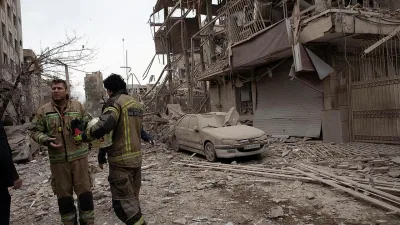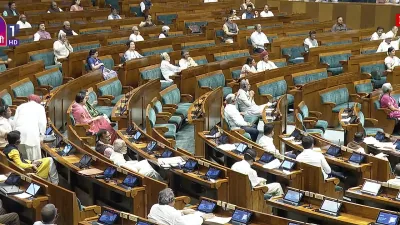
Tensions in West Asia have escalated dramatically after the United Arab Emirates accused Iran of launching ballistic missiles at its territory. In response to the alleged attack, the UAE has severed all commercial and financial ties with Tehran, while Iranian authorities have rejected the allegations as completely unfounded.
 Numerology Number 9 Horoscope 19 August 2026: Avoid Haste Under Mars' Influence and Exercise Caution in Career and Financial Decisions
 Indore Khajrana Ganesh Temple Sets Offerings Record as Donation Boxes Yield Over Rs 1.81 Crore
 Sanjay Manjrekar and Murali Kartik Trade Personal Jabs During Live Broadcast of Galle Test
 E20 Petrol Controversy: Akhilesh Yadav Questions Government vs Advisors Over Vehicle Engine Damage
 Gopalganj Chowkidar Gaya Yadav Dismissed by DM Following Dowry Inquiry and Certificate Fraud Probe
 Jharkhand Cancels 44 Recruitment Exams Conducted Since 2014 and Blacklists Outsourcing Agency TDPL
 Rishabh Pant Surpasses Shubman Gill to Become India's Leading Run Scorer in World Test Championship
 Fresh Momentum in India Bangladesh Ties as Expected Summit Between Modi and Rahman Promises Solutions to Pending Issues
 Strong 5.6 Magnitude Earthquake Strikes Qinghai Province in Northwestern China
 Abhijeet Dipke Responds to NDA Joining Offer, Questions Past Anti-National Labels
 Live
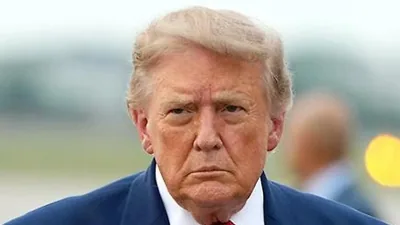
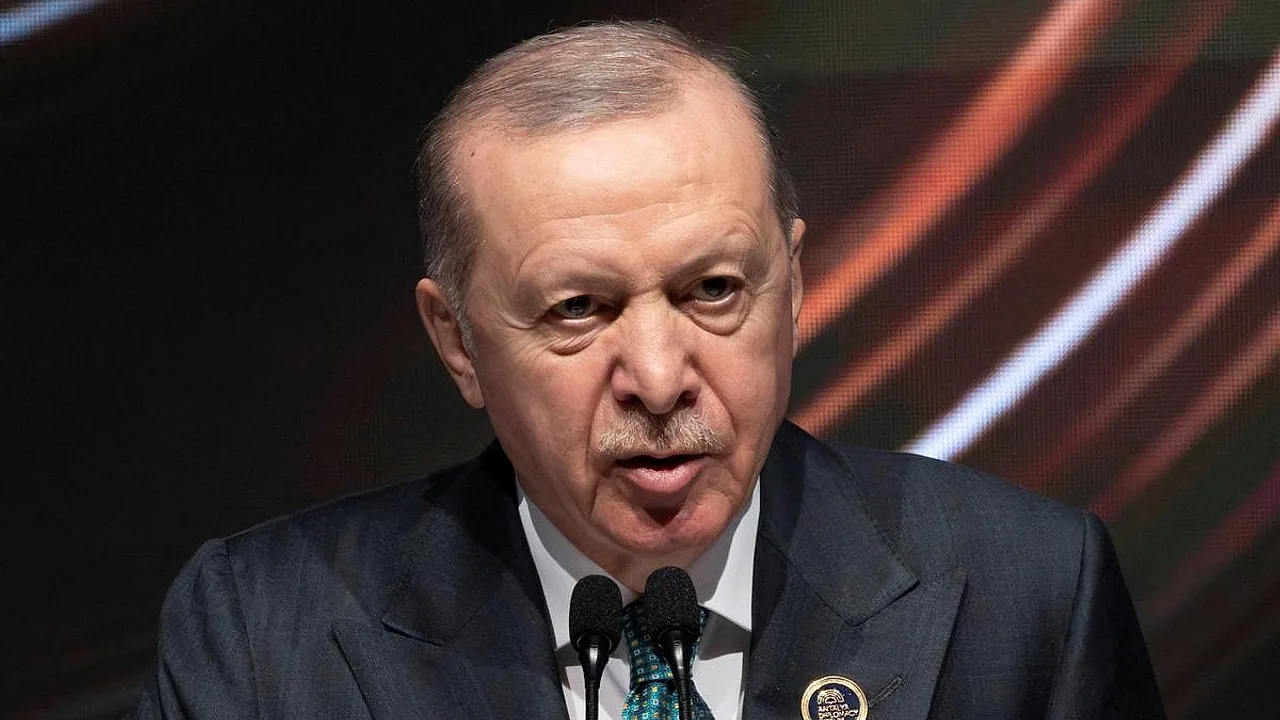
LiveLive: West Asia Conflict: Erdogan asks Trump to pursue dialogue with Iran, promises support
Tensions in West Asia have escalated dramatically after the United Arab Emirates accused Iran of launching ballistic missiles at its territory. In response to the alleged attack, the UAE has severed all commercial and financial ties with Tehran, while Iranian authorities have rejected the allegations as completely unfounded.
Also read
ENDED
Closed
Iranian ambassador meets four citizens detained in Kuwait, confirms Tehran
Tehran's diplomatic envoy to Kuwait has visited four Iranian nationals who have been held in Kuwaiti custody for three months, Iranian state media reported the embassy as saying on Tuesday (August 18, 2026). The meeting took place shortly after an Iranian military official accused Kuwait of withholding information regarding their status. Iran's embassy in Kuwait stated in a post on X that the ambassador was briefed on the health and current situation of the four detainees. In May, Iran stated that four personnel associated with the Revolutionary Guards were conducting a maritime patrol when they entered Kuwaiti territorial waters due to a navigation malfunction. However, Kuwaiti officials have said the four were suspected of plotting hostile actions against the country.Iran dismisses UAE allegations over missile launches from its territory
Iran's Foreign Ministry spokesperson Esmaeil Baghaei turned down statement by the UAE early on Wednesday (August 19, 2026), which claimed Iran was responsible for missiles directed towards the Gulf state a day prior. He stated in an official release that the allegations made by the UAE were entirely "baseless."UAE suspends all trade and financial operations with Iran
The United Arab Emirates declared on Tuesday (August 18, 2026) that it has halted all commercial and financial interactions with Iran. "In light of regional escalations... all trade, commercial exchanges, and financial transactions with Iran have been halted until further notice," confirmed Afra Al Hameli, the communications director at the UAE Foreign Ministry.UAE accuses Iran of launching two ballistic missiles toward its borders
The United Arab Emirates on Tuesday (August 18, 2026) stated that Iran fired a pair of ballistic missiles toward its region, representing the first targeted strike detected by the Defence Ministry in months. In an official update shared on X, the Defence Ministry noted that UAE air defense units tracked two ballistic missiles originating from Iran. The initial projectile splashed down outside the nation's territorial waters, whereas the second dropped within its maritime boundaries. This release was published nearly two hours after a brief emergency phone alert had notified UAE inhabitants regarding a potential missile hazard.Trump asserts no discussions currently underway or scheduled with Iran
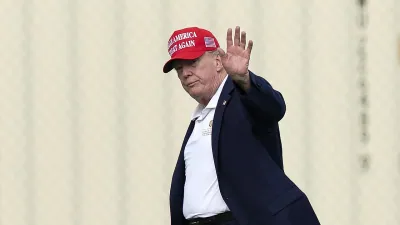
American President Donald Trump stated on Tuesday that Washington is neither holding nor planning any negotiations with Tehran, emphasizing that the maritime siege on Iranian ports stays active. “No dialogues or discussions are in progress, or on the calendar, with the Islamic Republic of Iran. The Naval Blockade is fully active and effective. The Strait of Hormuz is clear and functioning. Every naval mine has either been cleared or set off,” Trump posted on Truth Social.Trump shares graphic depicting Strait of Hormuz as American territory
U.S. President Donald Trump uploaded an image of a map on Tuesday to Truth Social labeling the Strait of Hormuz as a “NEW U.S. Territory,” heightening his threats to assert control over the key maritime route. Tehran has largely blocked the passage, which handles approximately 20% of global oil shipments, responding to the military conflict initiated by Trump alongside Israel in late February. Trump initially floated the concept of taking over the waterway on Friday, lightly mentioning that an official declaration of U.S. domain was imminent, which led Tehran to counter that the shipping lane “will remain Iranian.” The American leader brought up the proposal once more on Monday while talking to journalists inside the Oval Office, describing the move as a solid concept. This instance adds to previous occasions where Trump has responded to international diplomatic hurdles by raising the prospect of seizing foreign lands.Qatar stresses Strait of Hormuz pact vital for restarting US-Iran peace talks
Qatar, playing a pivotal role in mediating the halted discussions between Washington and Tehran, stated on Tuesday that a potential pact involving Iran and Oman regarding the Strait of Hormuz could pave the way for restarting peace talks aimed at ending the West Asia conflict. Following the outbreak of military hostilities between the United States and Iran in late February, Tehran effectively shut down the vital maritime passage, through which nearly 20% of global LNG and crude oil flows under normal circumstances. As coastal nations along the passage, Iran and Oman have been conferring for weeks regarding the future rules of navigation through the waterway, with Tehran indicating that both countries have successfully finalized the geographical coordinates for the proposed shipping route. Qatari Foreign Ministry spokesman Majed Al Ansari informed reporters that officials in Doha are awaiting a finalized understanding between Oman and Iran over the strait, which would create a suitable atmosphere to return to the diplomatic framework. He further noted that achieving an accord on the Strait of Hormuz would significantly simplify efforts to bring both Washington and Tehran back to the negotiation table.Yemeni Houthis launch drone strike on Saudi oil refinery in Jazan
Yemen's Iran-aligned Houthi insurgents struck a petroleum refinery situated on Saudi Arabia's southern Red Sea coastline on Tuesday, August 18, 2026, according to rebel media outlets, marking an escalation in their attacks against Saudi territory. Citing an unnamed military source, the Houthi-controlled Saba news agency reported that multiple unmanned aerial vehicles were deployed to hit the Aramco refinery facility in Jazan. The rebel group claimed the assault was executed in retaliation for alleged airspace breaches over the Saada and Hajjah governorates in Yemen.Commercial vessel hit by unidentified projectile in Strait of Hormuz, crew member injured
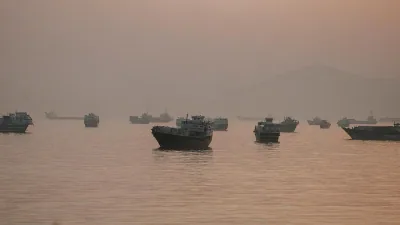
A commercial ship passing through the Strait of Hormuz was hit by an unidentified projectile on Tuesday, August 18, 2026, resulting in a casualty among the crew, according to an update from a British maritime security entity. The United Kingdom Maritime Trade Operations published a statement on X indicating that the collision inflicted damage on the vessel's engine room and caused a casualty among personnel on board. The agency added that the remaining crew members are receiving assistance from the Omani Coast Guard. Tehran has effectively blockaded the key shipping lane through repeated strikes on commercial vessels and is seeking to impose transit fees on ships—a demand strongly rejected by Washington.Blast at fuel depot in Iraqi Kurdistan leaves 18 injured
An explosion occurred at a petroleum storage facility located in eastern Iraqi Kurdistan on Tuesday, August 18, 2026, causing injuries to 18 individuals, as reported by Kurdish news channel Rudaw. The media outlet did not immediately clarify the reason behind the blast. Hirsh Salim, serving as the deputy director general of health for Sulaimaniyah governorate, confirmed to the news organization that no fatalities were recorded during the incident.Jared Kushner notes positive dialogue between US and Iran, says Trump won't rush agreement
Jared Kushner, serving as US President Donald Trump's envoy and son-in-law, stated that Washington and Tehran are engaging in "very positive and active conversations," though he acknowledged that decades of strain have left limited trust between the two nations. In an interview with Fox News, Kushner highlighted that President Trump intends to show significant patience rather than hurrying to finalize an accord prematurely. He added that the US President will sign off on a deal only when conditions are fully suitable. These remarks follow Trump's statements on Monday, August 17, 2026, where he noted that Iranian leaders are keen to strike a deal but remain reluctant to accept the terms he considers indispensable, reiterating his firm condition that Iran must never acquire nuclear weapons capabilities.Trump issues warning to Oman over Strait of Hormuz discussions, demands Iran's surrender
US President Donald Trump issued a blunt warning to Oman, stating Washington would launch strikes against the nation if it interferes with American efforts to secure an agreement with Iran regarding the Strait of Hormuz. He also reiterated demands for Iran's total surrender. During an interview with Fox News on Monday, August 17, 2026, Trump warned that if Oman creates obstacles, military force would be used against them. His comments came as Muscat conducts independent negotiations with Tehran concerning maritime control over the Gulf export corridor, parallel to US diplomatic attempts. Tehran and Muscat have been holding discussions for several weeks to establish future frameworks for maritime movement through the waterway, with the Iranian foreign ministry confirming that both sides are preparing a joint statement.Baghdad orders inquiry into drone strike targeting Iraqi Kurdistan Prime Minister's office
The federal administration in Iraq announced it will conduct an official investigation regarding an assault directed at the office of the autonomous Kurdistan region's prime minister, an incident local leaders attributed to Iranian forces. Iranian Foreign Minister Abbas Araghchi denounced the strike and urged Iran's allies in the Kurdish region to remain vigilant against false-flag operations designed to frame Tehran. Earlier, Iraqi Kurdistan Prime Minister Masrour Barzani disclosed that regional counter-terrorism investigations revealed his executive office and the residence of the Security and Intelligence Agency chief were targeted by Iranian drones. No casualties were reported from the strike.Iranian negotiator Mohammad Bagher Ghalibaf scheduled to visit Baghdad for high-level regional talks
Iranian Parliament Speaker Mohammad Bagher Ghalibaf, who has been leading Tehran's diplomatic engagements with the US to halt the West Asia conflict, is scheduled to arrive in Iraq on Wednesday, August 19, 2026, for high-level discussions, according to Iranian media reports. Iranian news agency Fars reported that Ghalibaf will lead a delegation of senior lawmakers to address regional security developments, bolster strategic cooperation between Tehran and Baghdad, and explore collaborative solutions to enhance stability across the region. The trip takes place as Iraq comes under increasing pressure from Washington to disarm influential Iran-aligned militia groups that hold substantial political and financial power in the country. Baghdad has instructed these armed factions to relinquish their weapons by September 30, aligning with the end of the US-led anti-jihadist coalition mission. This conflict began on February 28 following joint US-Israeli strikes on Iran, triggering hostilities across West Asia. Ghalibaf's two-day visit also follows a recent drone attack on the office of Iraqi Kurdistan's prime minister, which Kurdish officials initially blamed on Tehran—a charge Iran rejected as a scheme to damage bilateral ties. Iranian Ambassador to Baghdad Mohammad Kazem al-Sadeq confirmed the visit was planned well in advance.Hormuz transit will stay restricted until Washington fulfills agreement obligations, asserts Ghalibaf
Iran's chief negotiator Mohammad Bagher Ghalibaf announced in state media broadcasts on Tuesday, August 18, that the Strait of Hormuz will not be reopened until the United States fully satisfies all conditions outlined in the interim agreement. These demands include terminating the naval blockade, ending oil sanctions, and releasing frozen Iranian assets located overseas. Speaking on national television, Ghalibaf emphasized that the strategic waterway will remain restricted until Washington complies with its commitments specified in the memorandum of understanding.Damascus accuses Israeli air force of targeting Syrian military airfield in northwest
Syrian state authorities accused Israel of conducting an air raid on a military airfield in the northwestern region of the country on Tuesday, August 18, following reports that an inactive military facility had been targeted. Syrian state television cited an unnamed military official stating that Israeli aircraft launched eight strikes against the runway at the Abu Duhur military airport early Tuesday morning. The report noted that while the assault inflicted structural damage on the airport infrastructure, no casualties were reported.Iran prohibits online debate show citing dissemination of 'false information'
The judicial authorities in Iran have prohibited a YouTube-based debate program, accusing it of broadcasting "false information." The channel's creator stated that law enforcement officers interrogated him and pressed charges before releasing him on bail. Press controls have been significantly tightened throughout Iran since the February 28 U.S.-Israeli strikes, which triggered the current war in West Asia. According to the Mizan Online news site, Iranian judicial officials launched a formal inquiry on Monday (August 17) into the YouTube outlet "Azad" after it aired an episode allegedly containing inaccurate details.Strait of Hormuz vessel transits record slight rise post-weekend but stay in single digits, data shows
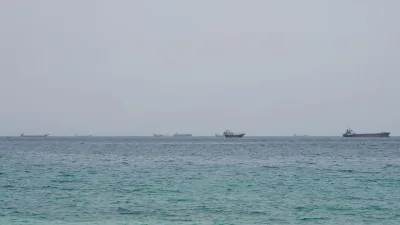
Initial shipping statistics released on Tuesday (August 18) reveal that vessel traffic through the Strait of Hormuz remained in single digits on Monday (August 17), despite a slight increase over the weekend, amid an ongoing deadlock in peace negotiations between the U.S. and Iran. According to tracking data from Kpler, six commercial vessels transited the strategic waterway on Monday—three exiting the Gulf and three entering—compared to the 10-day daily average of 11 ships. By comparison, only three vessels completed the transit on Saturday, followed by just two on Sunday.Trump warns Oman of potential military strikes if it blocks Tehran deal
U.S. President Donald Trump warned on Monday (August 17) that Oman could face military bombardment if it obstructs an American pact with Tehran concerning the Strait of Hormuz, while demanding Iran's total surrender in a war that is becoming an increasing political liability. Authority over the key waterway, which Tehran has virtually shut down since hostilities erupted on February 28, remains at the core of the standoff between Tehran and Washington.Crude advances and equities wobble as Middle East peace prospects fade
Petroleum rates pushed higher while equity markets struggled today, with an agreement between Washington and Tehran to restore traffic through the Strait of Hormuz looking unlikely, following the expiration of a truce deadline between the two rivals yesterday. Although weak economic indicators from America this month have reduced fears of an immediate interest rate increase by the Federal Reserve, market participants anticipate persistent high inflation as the Middle East conflict drags on and crude oil trades near $90 per barrel. These factors have driven long-dated U.S. Treasury yields to their highest marks since June 2007 — right before the onset of the global financial meltdown — fueled further by growing American public debt and extensive corporate bond offerings intended for AI investment. Prospects for a breakthrough between the United States and Iran stay slim after Donald Trump declared he had no intention to prolong the 60-day truce tied to a June agreement, while Tehran dismissed the truce as meaningless due to alleged early violations by Washington.Saudi Aramco proposes off-Hormuz oil deliveries to select Asian buyers, sources say
State energy giant Saudi Aramco is privately negotiating to supply crude oil outside the Strait of Hormuz to select Asian refining companies, according to two individuals familiar with the developments yesterday, mirroring a tactic previously used by the UAE's Abu Dhabi National Oil Co (ADNOC). In an unusual arrangement, Aramco is conducting discussions with clients to deliver Arab Medium and Arab Heavy grades using ship-to-ship (STS) transfers located off the coast of Fujairah in the United Arab Emirates, the sources revealed. A source noted that these shipments were intended for loading during September. However, it remained unclear how Aramco transported its crude supplies out to the Fujairah hub. These trade proposals mark the newest attempt by oil suppliers to bypass the ongoing shipping blockages through the Strait of Hormuz.Ship hit by unidentified projectile in Hormuz Strait, engine damaged and crew injured: UKMTO
The United Kingdom Maritime Trade Operations (UKMTO) reported an incident where an outbound ship was struck by an unidentified projectile while passing through the Strait of Hormuz. The impact resulted in damage to the vessel's engine room and caused a casualty among the crew, who are currently receiving assistance from the Omani Coast Guard. According to UKMTO, no environmental damage has been detected so far, and local maritime authorities have launched an investigation into the attack. This fresh attack occurred against the backdrop of critical disruptions in the Strait of Hormuz, where daily ship transits have plummeted to single digits compared to over 130 vessel movements recorded per day prior to the war's outbreak.Strait of Hormuz ship movement sees minor uptick but remains critically low, data reveals
Preliminary tracking details show that ship movement through the Strait of Hormuz barely reached single digits yesterday, despite a slight improvement over the weekend, amidst a stalemate in diplomatic talks between Washington and Tehran. According to figures from Kpler shiptracking, six cargo vessels crossed the strategic passage yesterday—three exiting the Gulf region and three entering it—which is significantly lower than the 10-day daily average of 11 vessels. Over the weekend, three maritime vessels traversed the strait on Saturday, whereas only two ships navigated the passage on Sunday. Notably, no supertankers carrying liquefied natural gas or very large crude oil carriers were recorded passing through the narrow waterway. Experts note that certain ships might be navigating the strait after disabling their location transponders, meaning they are excluded from the official tracking counts.Iraq orders investigation into drone attack targeting Kurdistan Prime Minister's office
The Iraqi government announced yesterday that an official probe will be launched regarding an overnight drone strike directed at the Prime Minister's office in Iraqi Kurdistan, while Iran characterized the event as a scheme meant to damage bilateral ties. Authorities in Kurdistan had previously assigned responsibility for the strike—which also targeted the home of the autonomous region's intelligence chief—to Tehran, stating that the two drones were launched from inside Iran's territory. Since the outbreak of the West Asia war, the Kurdistan region, which accommodates American forces, foreign energy corporations, and exiled Iranian dissidents, has experienced more than 1,000 strikes from Tehran and aligned armed factions operating within Iraq. Numerous drones have been intercepted over Erbil, the capital of Kurdistan, though others have successfully hit foreign dissidents and American interests.Iranian fishermen return to Strait of Hormuz despite persistent threat of clashes
Aboard his vessel anchored near the Strait of Hormuz, 47-year-old Iranian fisherman Mohammad-Amin mended a torn net following a long day in waters that have provided his livelihood for years, but are now overshadowed by safety risks. It has been under a month since he resumed his schedule of setting out before dawn and returning hours later with his catch, a routine he was forced to suspend during months of active clashes between Iran and the United States across the vital waterway. According to Iranian news reports, nearly a dozen fishermen lost their lives off Bandar Abbas and nearby southern islands, while 17 others from the adjacent Sistan-Baluchistan province south of Hormuz went missing during the months of hostilities.Explained: Why the Strait of Hormuz is vital for worldwide energy transit
Since late February, the Strait of Hormuz has turned into the focal point of an intensifying security and energy breakdown. This deterioration began after military strikes by the U.S. and Israel targeting Iran, which prompted Tehran to enforce stricter controls along the narrow maritime passage. Nearly twenty percent of the world's daily petroleum supply alongside substantial quantities of liquefied natural gas (LNG) pass through this narrow corridor, cementing its position in international commerce and energy distribution. Any blockade or hostile threat in this region drastically curtails maritime traffic, drives up fuel costs, and destabilizes global supply chains.Crude oil prices rise as shrinking hopes of U.S.-Iran peace increase supply concerns
Crude oil prices edged higher today as prospects for a diplomatic settlement to the West Asia conflict grew faint, following Iran's declaration of an offensive posture and Washington's refusal to lengthen a truce, raising alarms over fuel supplies. A high-ranking Iranian official informed Reuters yesterday that Tehran plans to transition to a completely offensive strategic stance since discussions with Washington for a lasting ceasefire have broken down, particularly after the U.S. dismissed extending the temporary pause in hostilities. Visible advancement toward formal peace negotiations and the return of tanker movement through the crucial Strait of Hormuz has come to a standstill, creating fears of a prolonged crisis that originally erupted when the U.S. and Israel carried out strikes against Iran on February 28. Brent crude futures increased by 27 cents, or 0.3%, reaching $91.14 per barrel by 0003 GMT, building on gains that reached their highest mark since July 30 during the previous session. - ReutersDistress call from Indian mariners: 'Employer pushing us to hazard our lives in Strait of Hormuz'
Indian crew members stationed on a vessel in the Persian Gulf have released an SOS video recording, accusing their management company of forcing them to navigate through the hazardous Strait of Hormuz and placing their safety at extreme risk. This emergency video surfaced on the same day reports indicated Tehran's readiness to intensify friction in the maritime passage amid stalled diplomatic efforts with Washington to conclude the hostilities. The Indian seafarers are begging for protection, turning down demands to sail across the dangerous Strait of Hormuz despite intense pressure from their employer in the middle of worsening regional strife.Tehran warns of escalation if Washington fails to uphold agreement within weeks
Iran is prepared to step up hostilities within the Strait of Hormuz and surrounding areas, and will execute military strikes if Washington does not execute the temporary peace agreement completely within a few weeks, a top Iranian official informed Reuters yesterday. Tehran has threatened targeted military action in coming weeks should the U.S. neglect to honor the framework agreement, further inflaming regional instability.Erdogan encourages Trump to continue diplomatic talks with Iran, extends Ankara's backing
During a telephonic conversation, Turkish President Tayyip Erdogan encouraged U.S. President Donald Trump to engage in negotiations with Tehran to ease bilateral frictions, promising Ankara's complete backing for peace initiatives, according to a statement from the Turkish presidency today. Turkiye, which commands NATO's second-biggest armed forces and shares a direct border with Iran, has continuously advocated for a cessation of hostilities. Ankara has preserved active communications with the U.S., Iran, and key facilitators including Pakistan and Qatar, while playing a direct mediating role between the sides. An official statement from the presidency quoted Erdogan as saying that utilizing diplomatic channels to the fullest extent is critical for resolving U.S.-Iran friction, expressing hope for ongoing discussions and reaffirming Turkiye's commitment to supporting peace endeavors. - Reuters
Comments 0
Sign in to join the conversation.
Sign inNo comments yet — be the first.
Citizen journalism
Become a TrendKia journalist
Voice of the peopleShare news, photos and videos from your area with TrendKia and let your voice reach the nation. Every citizen a journalist.
Join nowCH 01 LIVE
TrendKia TV ON AIR