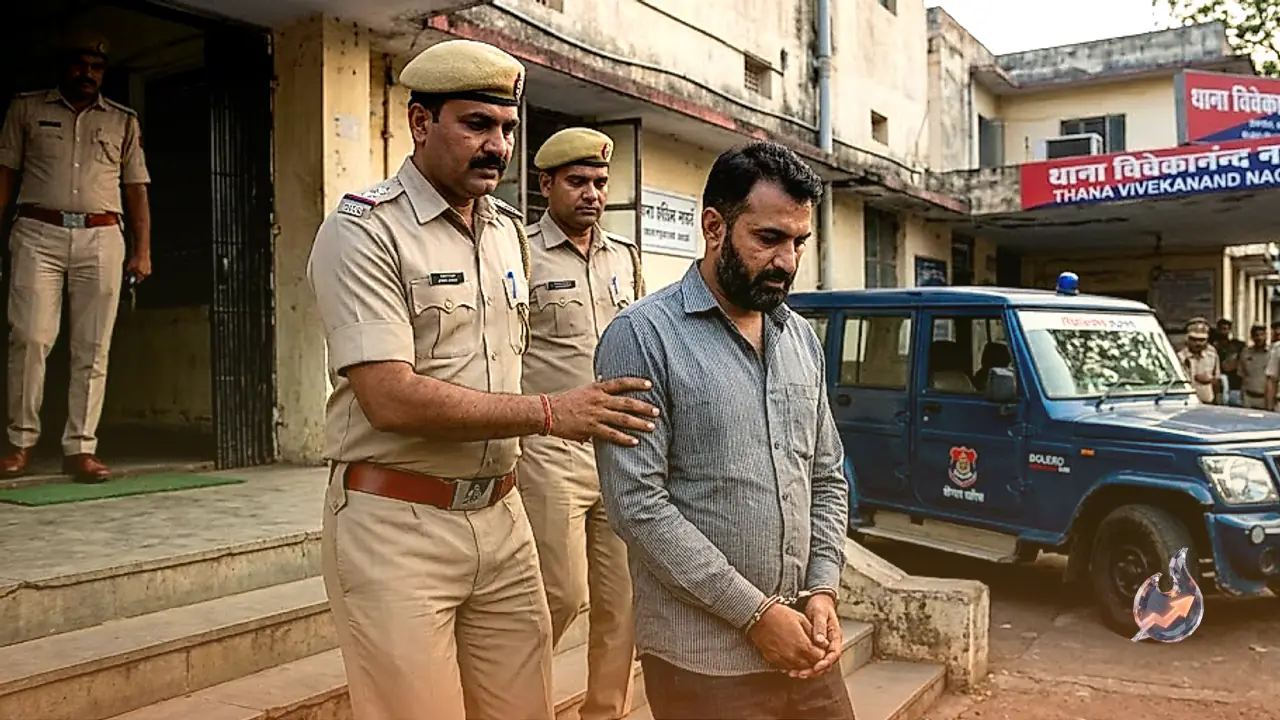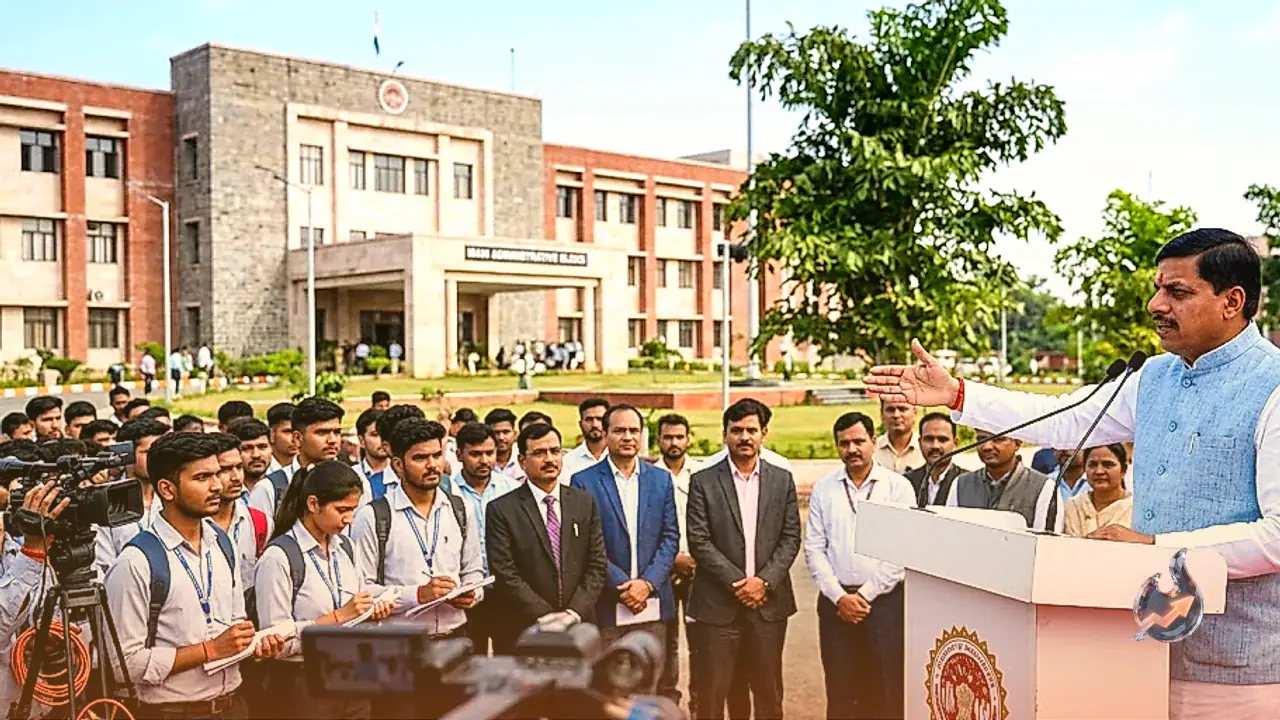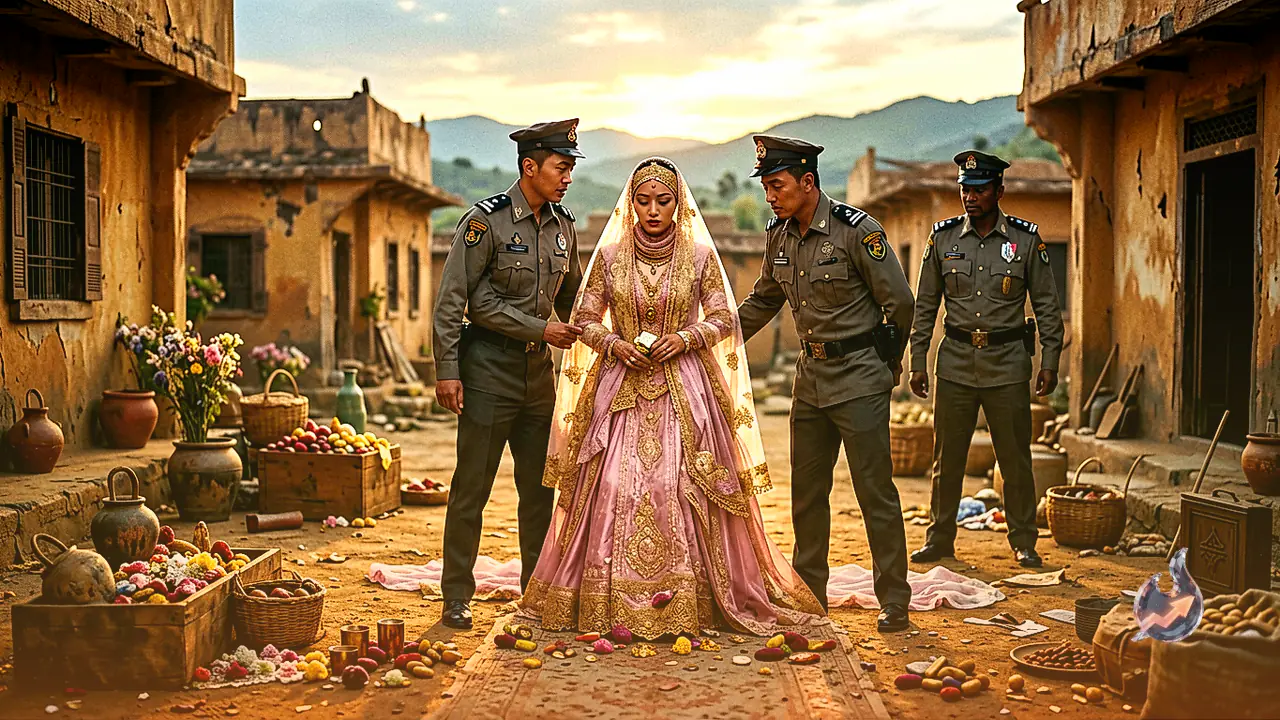
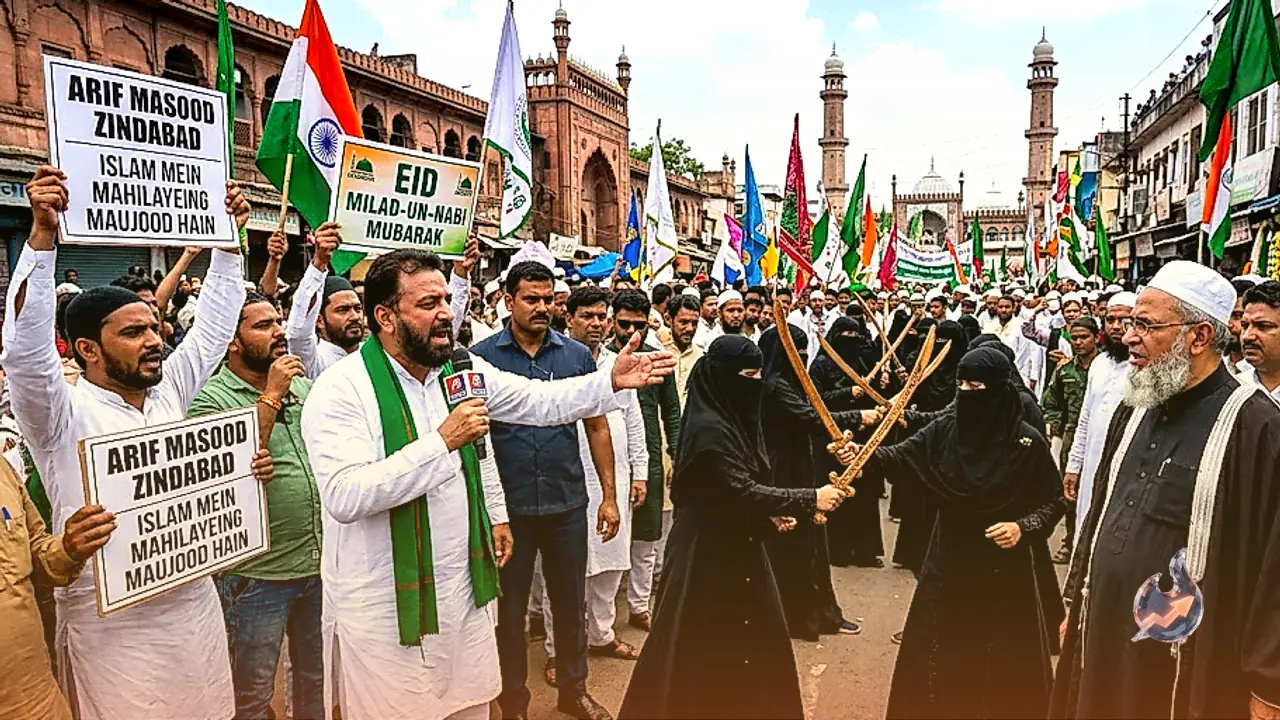


















A sharp ideological dispute has erupted in Bhopal, Madhya Pradesh, following public demonstrations of traditional martial arts by female participants during a religious procession. The controversy began during the Eid Milad-un-Nabi procession, where several burqa-clad young women performed martial stunts utilizing wooden swords. After video footage of the event circulated widely online, Bhopal City Mufti Abdul Kalam voiced strong objections, declaring the public performance contrary to Islamic tenets. The cleric's stance provoked severe backlash from local Congress MLA Arif Masood and his supporters, who publicly criticized the religious leader, labeled him an adversary of societal progress, and demanded legal action against him.
Stunts at Procession Trigger Verbal Clash
The public procession in Bhopal, organized under the leadership of Congress lawmaker Arif Masood, featured a segment where women wearing burqas showcased athletic skills and swordplay with wooden weapons. As video clips of the display gained traction across digital platforms, Bhopal City Mufti Abdul Kalam issued a formal statement disapproving of the event. He remarked, "Women taking to the streets with swords cannot be tolerated." The Mufti emphasized that such public street demonstrations by women run counter to Islamic teachings and ethics, asserting that he felt morally obligated to speak out against what he perceived as a violation of religious norms.
Demands for Mufti's Removal and Legal Action
The City Mufti's stern rebuke drew immediate condemnation from MLA Arif Masood and associated community leaders, who viewed the remarks as a direct insult to the young participants. Shamsul Hasan, patron of the All India Muslim Tyohar Committee, vehemently denounced Mufti Abdul Kalam's position and demanded his immediate dismissal from his clerical post. Hasan asserted that any religious figure who disrespects women and daughters should face immediate imprisonment. Supporters of the procession maintained that displaying physical skill and martial heritage is an expression of empowerment and does not breach any religious code.
Petition Filed With State Women's Commission
As tensions escalated, family members of the girls who took part in the sword performance intervened directly. Women representing these families visited the office of the Madhya Pradesh State Women's Commission to lodge a formal complaint against City Mufti Abdul Kalam. The parents argued that if young women step out of their homes to showcase their talents, religious leaders should not raise objections or pass derogatory comments. Taking note of the grievance, the Madhya Pradesh Women's Commission announced plans to serve an official notice to Mufti Abdul Kalam, seeking a formal explanation for his statements.
Parallel Controversy Over Women's Public Role in Kerala
The debate surrounding the public visibility of Muslim women extends beyond Madhya Pradesh, reflecting broader national discussions. In Kerala, prominent Sunni cleric Kanthapuram A.P. Abubacker Musliyar, who serves as the Grand Mufti of India and General Secretary of the Kanthapuram faction of the Samastha Sunni organization, sparked a major controversy with similar restrictions. Musliyar issued an official circular declaring that Muslim women should remain within their domestic spheres, claiming that public exposure could lead to detriment. His directive called for an explicit ban on women appearing on stage at religious gatherings or being present among men in public functions.
The Grand Mufti's circular met with strong resistance from major political parties in Kerala. Both the Communist Party of India (Marxist) and the Congress criticized the stance as regressive, arguing that such views push women back by centuries. Conversely, the Indian Union Muslim League, a constituent of the United Democratic Front coalition in Kerala, defended the cleric. The organization characterized Musliyar's directive as the legitimate opinion of a respected Islamic scholar rather than a political issue.