
















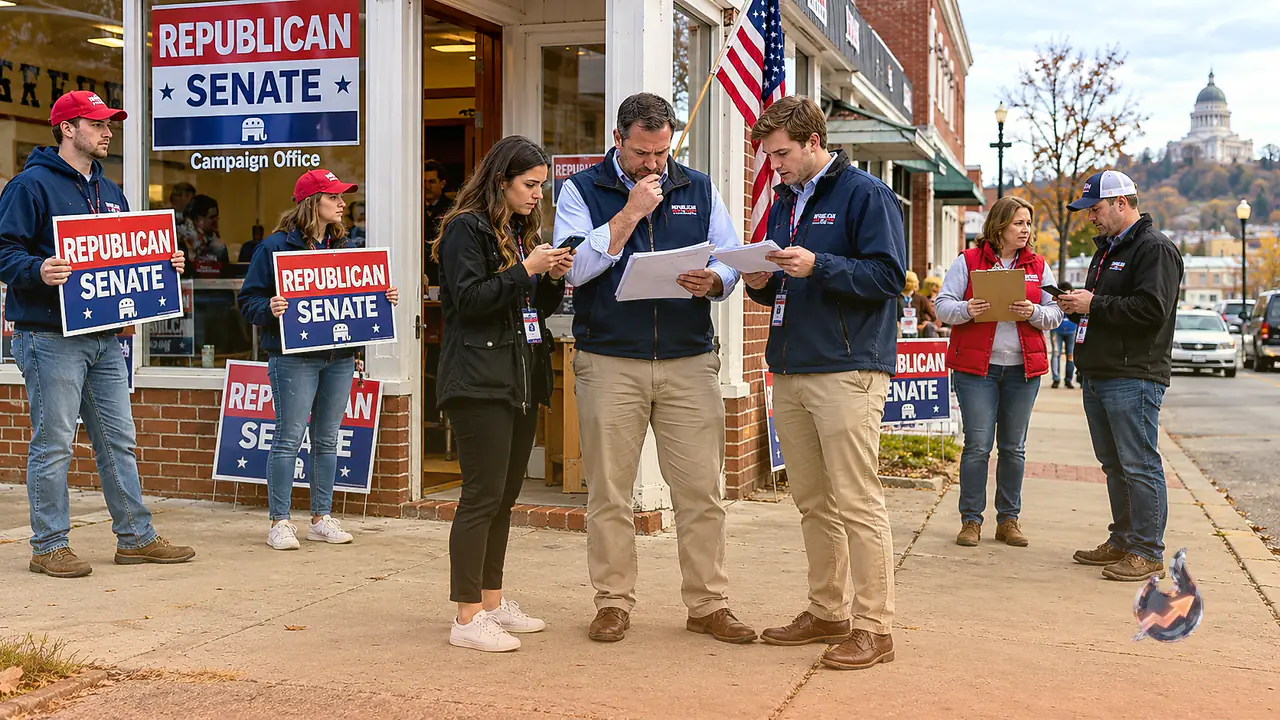

Republicans are spending the final week leading up to the midterm elections defending historically red Senate seats that have unexpectedly turned into fierce, competitive battles, according to recent federal filings and sources close to the matter. The unexpected tightening of these races has created severe anxiety within the party as they fight to maintain their hold on the upper chamber of Congress.
A significant portion of party resources and attention is now squarely focused on four crucial Senate races in Kansas, South Carolina, Nebraska, and Mississippi. All of these contests involve seats that have traditionally voted reliably red, making this sudden shift an ominous development for Republican leaders who had anticipated an easier path to keeping their majority.
Operatives aligned with Donald Trump have indicated to insiders that they do not realistically expect Democrats to capture these specific Senate seats. Instead, their strategy has involved directing outside Republican groups to pour money into these regions primarily to prop up incumbent candidates who currently hold only dangerously narrow leads over their challengers.
At the same time, these same operatives readily concede that they are being forced to divert a rapidly increasing amount of financial resources into states that President Donald Trump carried by double digits during the 2024 election. These are areas where party leaders never imagined they would need to spend tens of millions of dollars just to secure a victory.
During the penultimate week of the campaign cycle, federal filings analyzed show that the Senate Leadership Fund, a major political committee aligned with Senate Republicans, poured a staggering $14 million across those four specific states. The heaviest spending occurred in Kansas, where the fund abruptly dumped more than $5 million to shore up support.
Trump operatives note that Kansas has remained a persistent headache for the campaign since the beginning of October. At that time, the Trafalgar Group, a prominent Republican polling firm, released numbers showing Democratic candidate Adam Hamilton leading the incumbent Republican senator, Roger Marshall, by a single point.
Senator Roger Marshall, who is a medical doctor by profession, has navigated an unusually rocky reelection campaign following a wave of negative publicity. Local reports highlighted that he pursued aggressive legal action against patients who had unpaid medical bills, alongside criticism regarding the substantial amount of time he spends residing in Florida. Several political operatives have also voiced frustration that he failed to take the threat of his opponent seriously from the outset.
This emergency last-minute spending is also flowing heavily into states like South Carolina. In that race, the Senate Leadership Fund deployed approximately $5 million to assist incumbent Senator Darline Graham. Despite securing a primary victory fueled directly by the endorsement of President Donald Trump, Graham has struggled significantly to energize and unite the broader local base of Trump supporters.
Additional financial investments by the fund include nearly $3 million directed toward Nebraska to support Republican incumbent Senator Pete Ricketts, who has found himself trailing behind in several local polls. In Mississippi, the fund allocated just under $1 million to bolster Republican incumbent Senator Cindy Hyde-Smith.
This frantic final sprint has laid bare the deeply fraught predicament facing Republican strategists, who find themselves scrambling to patch together an ever-growing list of unexpected vulnerabilities across the map.
The demanding travel schedule for Donald Trump has similarly expanded to include multiple deep-red states that are flashing warning signs, supplementing his mandatory campaign stops in crucial battleground states. Over the past week, Trump made campaign trips to Kansas and South Carolina. This week, his schedule includes stops in Mississippi alongside return visits to both Kansas and South Carolina.
Despite these mounting challenges, several Trump operatives share that they have found some measure of encouragement in recent polling data. Specifically, Democratic candidates in several key Senate races have failed to expand their leads over the final stretch, a trend that has likewise caused quiet anxiety among top aides within the Senate Democratic leadership.
At the very center of Democratic anxieties is Michigan, which represents the single best pickup opportunity for the Republican Party. Many of the most viable strategic pathways for Democrats to secure the Senate majority run directly through the state. However, the Democratic candidate, Abdul El-Sayed, has encountered persistent difficulties in solidifying support among crucial voting blocs.
Historically, Black voters turned out in massive numbers to help propel Barack Obama to victory in the state during the 2008 and 2012 presidential elections. Washington political wisdom dictates that El-Sayed will desperately need to recreate a similar level of enthusiastic turnout if he hopes to keep the seat safely in Democratic hands, according to accounts from a Democratic aide.
Complicating matters further for El-Sayed, aides note, is the decades-long underlying tension that has existed between the Arab and Black communities within Michigan. This delicate divide was exacerbated significantly during the primary election when supporters of his primary opponent, Haley Stevens, broadcast campaign advertisements featuring former President Barack Obama praising Stevens for her past work during the financial crisis.
In a direct bid to mend at least a portion of that fractured electoral coalition, Barack Obama appeared alongside El-Sayed at a joint campaign rally in Detroit over the weekend. Campaign aides are quietly hoping this high-profile appearance will persuade hesitant voters to head to the ballot box, though operatives remain deeply uncertain whether it will ultimately prove to be enough.
Only time will reveal how these closely watched electoral battles will finally conclude as election day approaches.