






















A complex tactical operation extending over forty-eight hours in the distant expanses of the Indian Ocean has reaffirmed the operational readiness and strategic reach of India's maritime armed forces. The successful liberation of the Iranian fishing vessel Azini, which had been captured by heavily armed pirates off the northeastern coast of Somalia, was far more than an isolated boarding intervention. It served as a clear reflection of the structural and institutional transformations undertaken by the maritime service over the past decade, moving steadily from reliance on foreign acquisitions to establishing comprehensive domestic design and production capabilities while shedding colonial-era symbolism.
The Tactical Boarding and Recovery of the Azini
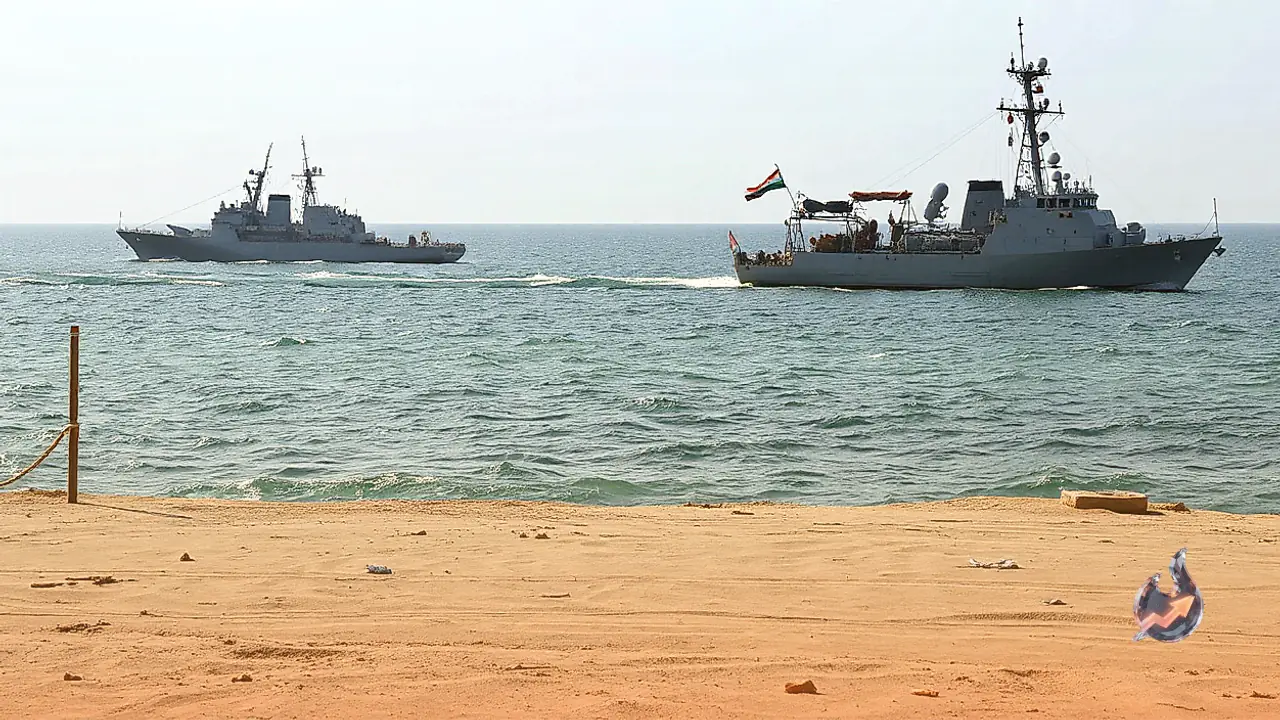
In early November 2026, long-range maritime patrols and tracking networks picked up signals from the hijacked vessel Azini, positioned more than three thousand kilometers away from the western coast of Mumbai in the Arabian Sea. Somali sea bandits had seized the boat weeks earlier with the tactical objective of utilizing it as an armed mother vessel to mount wider attacks on merchant shipping lanes traversing the northern Indian Ocean. In response, a forward-deployed mission-ready warship task group, including INS Kolkata, was assigned to close the distance alongside maritime reconnaissance aircraft that maintained continuous surveillance over the vessel's movement.
After tracking and shadowing the craft across international waters, forces executed calibrated non-kinetic maneuvers to halt its navigation without endangering the hostages. This was swiftly followed by a high-altitude precision airdrop of elite marine commandos deployed from an Indian Air Force C-17 strategic transport aircraft. The assault team boarded the boat in a rapid tactical maneuver, neutralized the pirate threat without weapon discharges that could endanger the captives, and secured the release of all twenty crew members without a single injury or casualty. The engagement demonstrated seamless joint-service coordination while validating India's operational profile as a dependable primary responder in international shipping corridors.
Severing Colonial Ties and Honoring Maratha Naval Heritage
Alongside its tactical modernization, the maritime force underwent a fundamental realignment of its official identity, shedding vestiges inherited from British colonial administration. In 2022, during the official commissioning ceremony of the indigenous aircraft carrier INS Vikrant, Prime Minister Narendra Modi introduced a redesigned naval ensign. The change removed the traditional Saint George Cross, replacing it with a navy blue octagonal crest inspired by the royal seal of Chhatrapati Shivaji Maharaj, the founder of the historic Maratha naval armada whose sea forts and tactics defended India's coastline centuries ago.
This cultural reclamation extended into uniform traditions when, in December 2023, senior naval officers received redesigned epaulettes featuring the iconic octagonal motif drawn directly from the Maratha seal. These administrative changes were deliberate, intended to ground naval institutional pride in authentic domestic seafaring history rather than colonial legacies, signaling that the service draws its core inspiration from indigenous maritime traditions as it projects strength across regional waters.
Transitioning from a Fleet Buyer to an Indigenous Fleet Builder
The domestic manufacturing drive has altered the composition of naval assets, raising the domestic equipment ratio across the force to nearly seventy-six percent, with an active target to push indigenous content to ninety-five percent by the year 2030. More than forty domestically built warships and submarines have joined the active fleet over the last ten years. Demonstrating this building tempo, January 2025 witnessed the simultaneous triple commissioning of guided-missile destroyer INS Surat, stealth frigate INS Nilgiri, and attack submarine INS Vagsheer.
Shipbuilding momentum continued into mid-2026 when Prime Minister Narendra Modi dedicated three advanced vessels to the nation at Kolkata: INS Dunagiri, INS Sandhayak-class survey vessel INS Sanshodhak, and anti-submarine warfare craft INS Agray. Every one of these platforms was conceptualized by the in-house Warship Design Bureau and constructed in domestic shipyards, including Kolkata-based Garden Reach Shipbuilders and Engineers. Building upon this base, the Cabinet Committee on Security sanctioned a major project valued at over forty thousand crore rupees in October 2026 to construct eight next-generation corvettes entirely designed and fabricated within domestic shipyards. That same month, a Rafale Marine fighter jet completed its maiden arrested landing on the flight deck of INS Vikrant on its very first approach, integrating with the carrier alongside INS Vikramaditya to form two floating tactical airfields safeguarding sea lines of communication.
Statutory Backing, SAGAR Strategy, and Humanitarian Interventions
Operational flexibility on the high seas is underpinned by domestic legislation enacted in 2022 known as the Maritime Anti-Piracy Act, a statute described by the naval leadership as an indispensable enabler that gives naval commanders precise legal authority to apprehend pirates and seize hijacked vessels in international waters. This legal framework has supported continuous deterrence patrols under Operation Sankalp, which has shielded commercial traffic across the Persian Gulf, Arabian Sea, and Gulf of Aden from predatory actions.
This expanded naval capacity also powers extensive non-combatant evacuations and disaster assistance initiatives under the SAGAR framework, which envisions security and growth for all regional maritime partners. When violence engulfed Yemen, naval ships deployed under Operation Rahat successfully extracted more than three thousand citizens, including numerous foreign nationals trapped in combat zones. Similarly, following the destructive earthquake in Myanmar in 2025, naval vessels INS Satpura and INS Savitri carried thousands of tons of critical medical supplies and emergency provisions under Operation Brahma. The bloodless interdiction of the Azini fits directly into this operating history, confirming the navy's readiness to deter aggression, safeguard commercial sealanes, and provide swift humanitarian relief across the Indo-Pacific expanse.