























The grand vision of transforming Madhya Pradesh's revered Salkanpur Devi Dham into a magnificent spiritual corridor has hit a major roadblock as the very first monsoon showers exposed severe vulnerabilities in its construction. Developed on the ambitious lines of Ujjain's Mahakal Lok, the 'Devi Lok' project was greenlit with a massive budget of approximately 97 crore rupees to provide a world-class experience for visiting pilgrims. However, instead of a pristine religious site, devotees are now greeted by leaking roofs, cracked walls, and widespread waterlogging. The glaring contrast between the massive financial investment and the crumbling infrastructure has raised serious questions about the work ethic and quality control measures of the construction agencies involved.
Civil Work Flaws in the 64 Yogini Temples
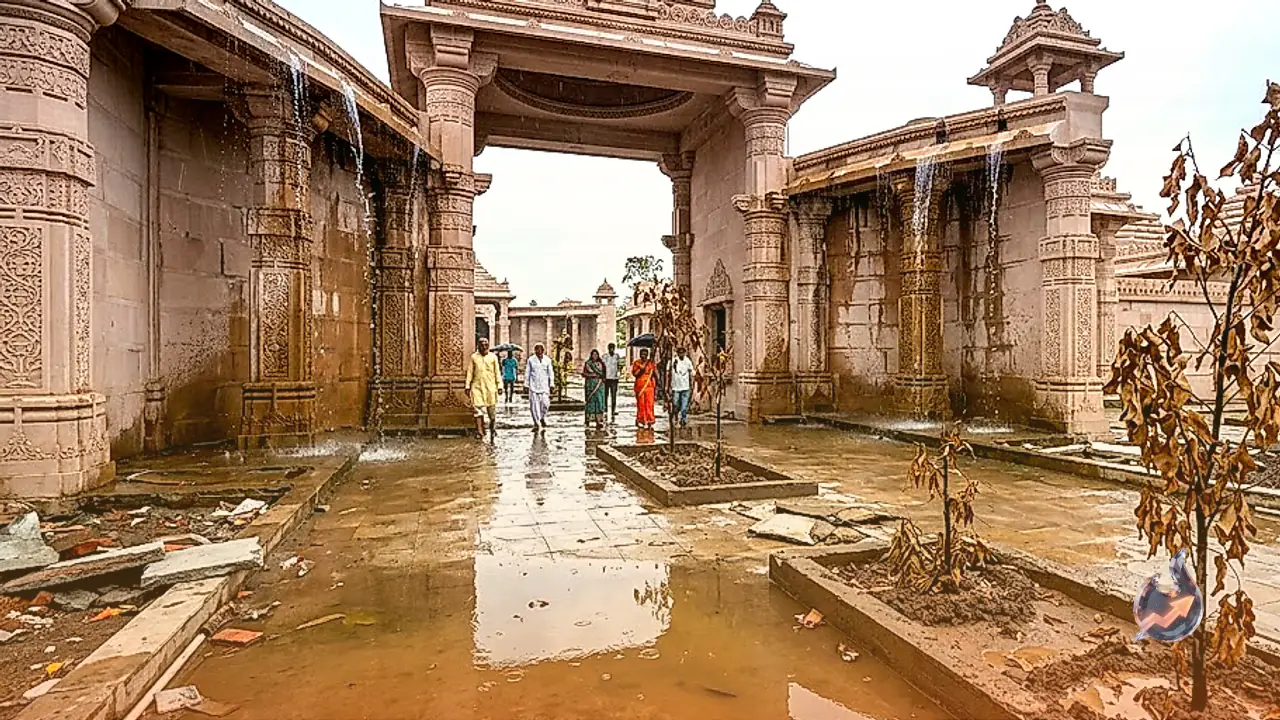
A closer look at the financial breakdown reveals that out of the total budget, a substantial 90.35 crore rupees was allocated strictly for civil construction works across the campus. The centerpiece of this architectural endeavor includes the 64 Yogini temples, designed to be a major spiritual attraction. Alarmingly, the very first spell of rain resulted in water visibly leaking and seeping from the edges of the pillars supporting these structures. For a project that has barely opened, such rapid structural compromise has sparked massive outrage among the devotees. Visitors are questioning how such a premium budget could yield such fragile results, expressing deep concern over the long-term safety and durability of the corridor.
Beautification Fails: Thousands Wasted on Dead Plants
Beyond the concrete structures, the project also heavily emphasized environmental conservation and campus beautification. To create a lush, green environment, authorities planted 444 saplings across the premises, each carefully fitted with a tree-guard for protection. Financial records indicate that approximately 1,800 rupees were spent on every single plant, pointing to a significant investment in landscaping. Unfortunately, due to a severe lack of regular watering and maintenance, around 80 percent of these expensive plants have already dried up and died. This massive botanical failure not only shatters the aesthetic promises made by the authorities but also highlights a blatant waste of public funds and gross negligence in basic upkeep.
Waterlogging at Mani Deep Creates Safety Hazards
The situation is equally grim in the Mani Deep area of the Devi Lok campus, a zone specifically designed for heavy foot traffic. The pathways here were constructed using premium Bansi Paharpur stones, renowned for their aesthetic appeal. However, flawed leveling and a complete lack of proper drainage systems have caused rainwater to heavily accumulate over these stone surfaces. This waterlogging has transformed the walkways into a severe slipping hazard. If the drainage infrastructure is not urgently rectified, the accumulated water poses a persistent threat of accidents and injuries to the thousands of devotees who navigate the area daily.
Missing Idol and Widespread Mismanagement
Adding to the disappointment is the incomplete state of the Adishakti Pedestal, the intended focal point of the entire project. The central Devi idol has still not been installed. Although the construction agency had firmly assured that the installation would be completed by the last week of July, there has been absolutely no concrete progress on the ground. Furthermore, the contract clearly dictates that the construction agency is fully responsible for the maintenance of the premises for a period of three years post-completion. Defying this mandate, crucial areas like the Dharamshala, the main market, and the Mela Ground are currently plagued by mud, uncollected garbage, and general chaos. Even basic utilities are failing, with several high-mast lights completely non-functional while others hang dangerously loose.
Devotee Disappointment and Official Promises
The ground reality has left regular visitors deeply frustrated. Ramesh Kumar Dhakad, a devotee who traveled from Udaipura in the Raisen district, shared his disappointment. He noted that he frequently visits the shrine to organize Bhandara, but despite the government spending crores of rupees, the site lacks adequate lighting and basic, functional arrangements. Confronted with these widespread failures, the administration has been forced to respond. Manisha Bharti, the Executive Engineer of the Madhya Pradesh Tourism Development Corporation, acknowledged receiving the complaints regarding the water leakage and the dead saplings. She has offered an assurance that a thorough site inspection will be conducted very soon, promising that all identified shortcomings will be rectified on a priority basis. For now, the glaring flaws exposed by a single rain spell continue to cast a dark shadow over the integrity of this 97 crore rupee mega-project.